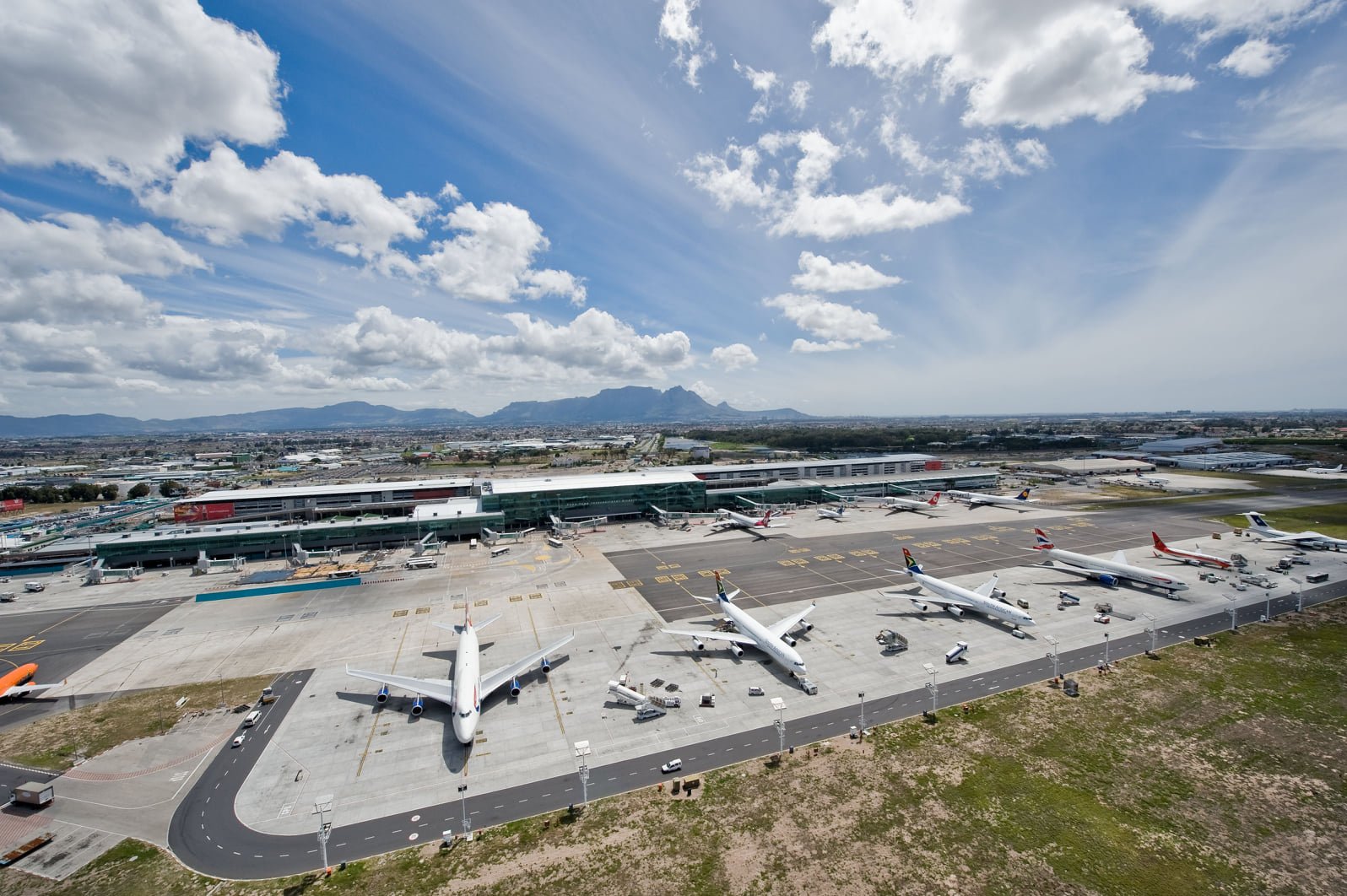
South Africa Plans Airport Refurbishments
By Tanveer Ahmed, CEO, Ahmed Construction Company (ACCO) · Updated · Reviewed by ACCO architects and engineers
Quick Answer
South Africa plans airport refurbishments worth R21.7 billion: terminal, gate and runway upgrades at OR Tambo, Cape Town and more, with lessons for Pakistan. Ahmed Construction Company (ACCO), based in Gulberg-III Lahore since 1998, provides ACCO design & construction services with design drawings free on award of construction.
South Africa plans airport refurbishments and expansions worth about R21.7 billion (roughly US$1.2 billion) over five years, according to a press briefing given by the then Minister of Transport, Sindisiwe Chikunga, on 5 March 2024. The programme, run by Airports Company South Africa (ACSA), focuses on refurbishing existing terminals, improving efficiency and meeting statutory compliance, with targeted expansions where passenger numbers have outgrown facilities. This article sets out what is planned at each airport, why refurbishment rather than new build is the main strategy, and what Pakistan’s airports can learn from the approach.
South Africa Airport Refurbishment Programme at a Glance
| Operator | Airports Company South Africa (ACSA), which runs nine principal airports |
|---|---|
| Budget | About R21.7 billion (around US$1.2 billion) over five years, as announced in March 2024 |
| Main aims | Asset availability, airport safety, passenger experience, efficiency and statutory compliance |
| International gateways | OR Tambo (Johannesburg), Cape Town and King Shaka (Durban) |
| Early priorities | Terminal expansion at George Airport and Chief Dawid Stuurman International; midfield cargo terminal at OR Tambo |
| Other works | New bussing gates at OR Tambo, domestic terminal reconfiguration and realigned runway at Cape Town, hotel and terminal expansion at King Shaka, upgrades at King Phalo |
Why Refurbishment Comes First
Many airports are tempted to build new terminals when they become crowded. ACSA’s programme shows a different priority: get more out of existing assets first. Refurbishment and reconfiguration usually cost less than new terminals, can be phased around live operations, and deliver benefits sooner.
- Asset availability. Ageing baggage systems, lifts, escalators and boarding bridges cause delays when they fail. Replacing them improves reliability.
- Safety and compliance. Fire systems, structural elements and airside infrastructure must meet current regulations and international standards set through the International Civil Aviation Organization (ICAO).
- Passenger experience. Larger lounges, better toilets, clearer circulation and more retail make busy terminals more pleasant.
- Efficiency. Reconfigured layouts can move more passengers through the same building.
OR Tambo International, Johannesburg
OR Tambo is South Africa’s busiest airport and main international hub. Plans include:
Midfield cargo terminal
A new cargo terminal in the midfield area is to be developed as a priority to meet freight demand.
Midfield passenger terminal
A passenger terminal in the midfield area is planned to follow the cargo development.
Bussing gates
Six bussing gates are to be added to Terminal A, with larger seating and holding lounges and more retail space.
Mezzanine
A second phase adds a mezzanine level to improve circulation and create more seating and holding space.
Bussing gates, where passengers are taken to remote aircraft stands by bus, are a quick way to add capacity without building new piers and boarding bridges.
Cape Town International
At Cape Town, the priority is reconfiguring the domestic arrivals terminal to meet growing demand. The works include:
- Enlarging the meet-and-greet and baggage reclaim areas
- Expanding the domestic departures lounge
- More retail space and upgraded toilet facilities
- Three additional contact gates with fixed boarding bridges
The realigned runway project at Cape Town is also expected to be completed within the five-year period. Runway realignment is a major civil engineering project, involving earthworks, pavement construction, airfield lighting and navigation aids, typically delivered while the existing runway stays in use.
Regional Airports: George, Chief Dawid Stuurman, King Shaka and King Phalo
George Airport (Western Cape)
Terminal expansion at George was set to start at the earliest opportunity, because passenger numbers had already passed the terminal’s design capacity before the Covid-19 pandemic.
Chief Dawid Stuurman International (Eastern Cape)
The airport serving Gqeberha is to see its terminal expanded within the following one to two years.
King Shaka International (KwaZulu-Natal)
Plans include a hotel at the airport and an expansion of the terminal.
King Phalo Airport (Eastern Cape)
At East London’s airport, the focus is on expanding the departure lounge, relocating the security checkpoint, upgrading toilets, improving retail in the departure lounge, and adding office and lounge space on the first floor.
Designing Better Terminal Space
Many of the planned works, such as larger lounges, bigger reclaim halls and better toilets, are about the quality of space rather than raw capacity. Good terminal design follows a few consistent principles.
Clear, short routes
Passengers should be able to see where they are going. Straight routes, high ceilings, daylight and simple signage reduce stress and help people move quickly from kerb to gate.
Right-sized holding areas
Departure lounges must hold passengers for the busiest hour, not the average one. When seating is short, people crowd corridors and slow down boarding. Expanding holding lounges, as planned at OR Tambo and King Phalo, tackles this directly.
Meeters and greeters
Arrivals halls are often undersized for the families and drivers waiting for passengers. Enlarging meet-and-greet areas, as planned at Cape Town, improves both comfort and safety at peak times.
Toilets and accessibility
Clean, well-located toilets are among the facilities passengers notice most. Upgrades should include accessible toilets, baby-changing rooms and prayer rooms where appropriate, together with step-free routes, lifts and assistance points.
Commercial space
Retail and food outlets improve the passenger experience and earn revenue that helps fund future upgrades. They work best when placed after security, along the main route to the gates, without blocking circulation.
Refurbishment vs New Terminal
| Factor | Refurbish and reconfigure | Build a new terminal |
|---|---|---|
| Capital cost | Lower | Much higher |
| Time to benefit | Months to a few years, in phases | Several years before opening |
| Disruption | Works inside a live terminal need careful phasing | Separate site, less disruption until switchover |
| Capacity gain | Moderate | Large |
| Best suited to | Terminals with a sound structure and outdated layouts | Airports where demand far exceeds existing buildings |
Working in a Live Airport
Refurbishing an operating terminal is one of the hardest jobs in construction. Passengers, airlines and security operations must continue while the works go on around them.
Phasing plan
Divide the works into zones so that capacity is never reduced below what operations need.
Temporary facilities
Provide temporary gates, lounges, toilets or check-in desks while permanent areas are closed.
Security and segregation
Keep airside and landside separated, with vetted workers and controlled material routes.
Fire and life safety
Maintain escape routes, detection and suppression throughout, following principles such as those of NFPA.
Night and off-peak work
Schedule noisy or disruptive works when passenger numbers are lowest.
Building Systems That Drive Airport Upgrades
Much of an airport refurbishment budget goes into systems passengers rarely notice:
- Baggage handling systems and screening equipment
- HVAC for large, high-volume halls with high occupancy
- Power supply resilience, standby generation and UPS for critical systems
- Fire detection, sprinklers and smoke control in large open spaces
- Lifts, escalators, travelators and boarding bridges
- Wayfinding, flight information displays and IT networks
Funding and Governance
ACSA is a state-owned company that funds much of its capital programme from aeronautical and commercial revenue, such as airport charges, retail, parking and property. Linking investment to revenue gives a strong incentive to prioritise projects that relieve bottlenecks and improve commercial income, such as larger retail areas and hotels, alongside safety and compliance works.
Transparent publication of capital plans, as in the ministerial briefing, also helps contractors, suppliers and airlines prepare. When the industry knows which projects are coming and in what order, it can plan resources, and the operator benefits from better tender competition and fewer delays.
Lessons for Pakistan
Pakistan’s airports, managed largely by the Pakistan Airports Authority, face similar pressures: growing passenger numbers, ageing terminals in some cities and limited budgets. Projects such as the New Gwadar International Airport show the scale of new-build investment, but refurbishment can often deliver faster results.
- Audit existing terminals before committing to new ones.
- Use bussing gates and remote stands for quick capacity gains.
- Upgrade toilets, lounges and circulation, which shape passenger perception most.
- Phase works carefully around live operations.
- Invest in fire safety, power resilience and HVAC, which are essential in Pakistan’s climate.
For more airport design reviews, see our articles on Techo International Airport by Foster + Partners and Senegal’s airport development. ACCO’s construction services cover renovation and upgrading of large public and commercial buildings, priced through an itemised BOQ.
Frequently Asked Questions
How much is South Africa spending on airport upgrades?
ACSA earmarked about R21.7 billion, around US$1.2 billion, for airport infrastructure over five years, as announced in March 2024.
Which airports are included?
The plans cover OR Tambo, Cape Town, King Shaka, George, Chief Dawid Stuurman International and King Phalo airports, among others operated by ACSA.
What is planned at OR Tambo?
A midfield cargo terminal, later a midfield passenger terminal, six additional bussing gates at Terminal A with larger lounges and retail, and a mezzanine level in a second phase.
Why is George Airport a priority?
Its passenger numbers had passed the terminal’s design capacity before the Covid-19 pandemic, so expansion was needed as early as possible.
What is a bussing gate?
A gate where passengers board buses to reach aircraft parked on remote stands. It adds capacity without building new piers or boarding bridges.
What can Pakistan learn from this programme?
That refurbishment, reconfiguration and phased upgrades of existing terminals can relieve congestion quickly and at lower cost than new terminals.
Conclusion
South Africa’s airport refurbishment plans show a practical, phased approach to growth: fix and reconfigure what exists, add capacity where demand is greatest, and build new facilities such as cargo terminals where they are clearly needed. For airport operators in Pakistan and elsewhere, it is a reminder that the best investment is often in making existing terminals work harder and better.
Related articles
ACCO services
Contact ACCO
- +92 322 8000190
- info@acco.com.pk
- Office 2, 3rd Floor, Bigcity Plaza, Gulberg-III, Lahore
Planning a Project with ACCO?
Architecture, engineering and construction from one Lahore team since 1998. Design drawings are free when ACCO is awarded the construction.
Discuss Your ProjectWhatsApp +92 322 8000190
Grey Structure Construction Cost in Pakistan 2027: What You’ll Actually Pay