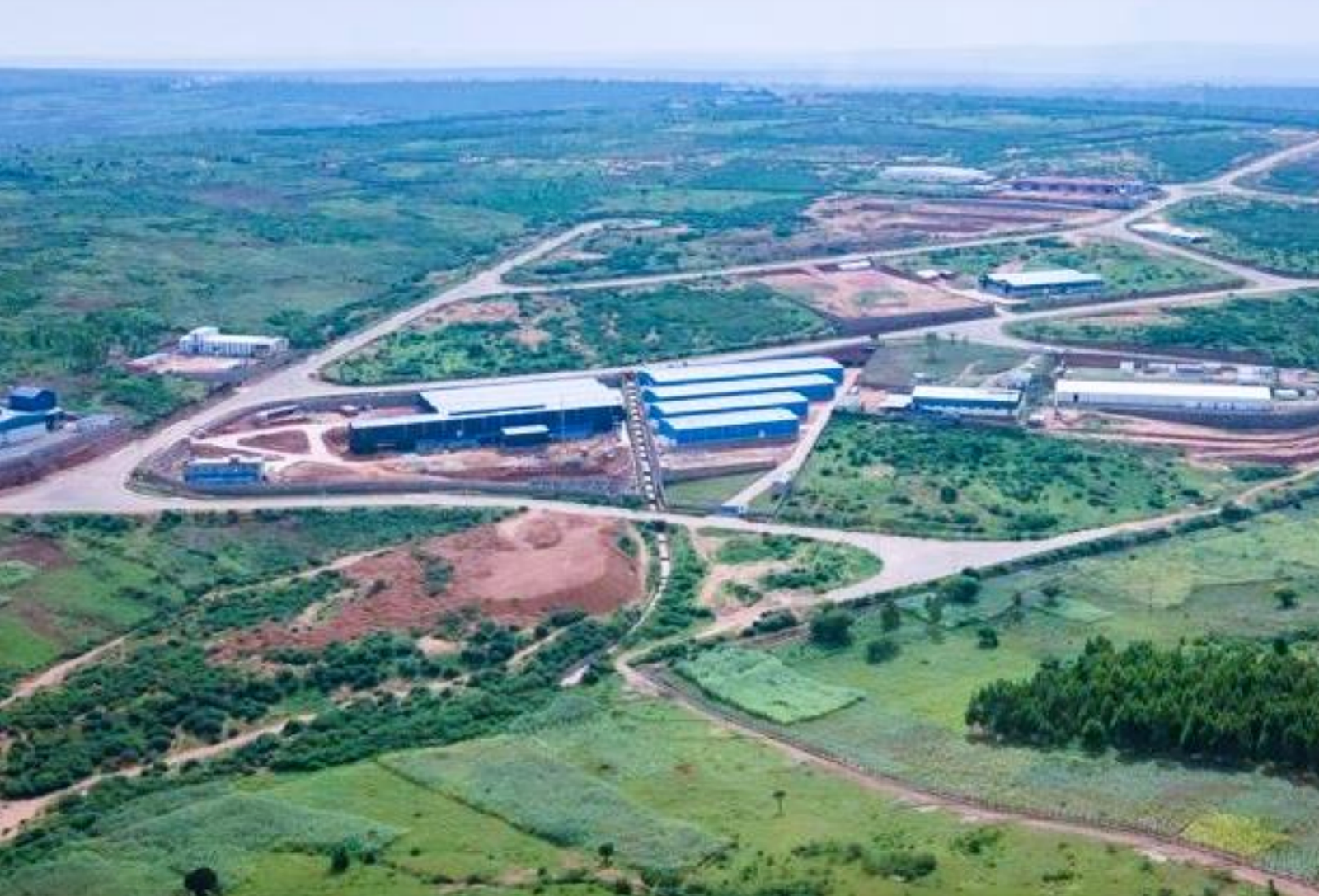
Rwanda’s Bugesera Industrial Zone Passes 60% Occupancy
By Tanveer Ahmed, CEO, Ahmed Construction Company (ACCO) · Updated · Reviewed by ACCO architects and engineers
Quick Answer
Rwanda’s Bugesera industrial zone passes 60% occupancy: phases, investors, infrastructure and planning of the economic zone, with lessons for Pakistan. Ahmed Construction Company (ACCO), based in Gulberg-III Lahore since 1998, provides ACCO design & construction services with design drawings free on award of construction.
Rwanda’s Bugesera industrial zone passed 60% occupancy in the first phase of its development, according to the project’s environmental and social impact assessment (ESIA) report published on 1 March 2024. The Bugesera Special Economic Zone (BSEZ), in eastern Rwanda, is being developed in phases through a public-private partnership between the Government of Rwanda and ARISE Integrated Industrial Platforms. This article explains how the zone is structured, what infrastructure it includes, how its phases are planned, and what Pakistan’s own special economic zones can learn from the approach.
Bugesera Special Economic Zone at a Glance
| Location | Bugesera District, Eastern Province, Rwanda |
|---|---|
| Total area | About 335.7 hectares, developed in phases |
| Developer | Bugesera Special Economic Zone Ltd, a special-purpose vehicle 60% owned by ARISE IIP and 40% by the Government of Rwanda |
| Framework agreement | Signed in September 2022 |
| Committed investment | About US$100 million, as reported |
| Phase 1 | 91.6 ha, reported 54% complete with 67 ha occupied (about 61%) |
| Next phases | Phase 1A (98.7 ha) and Phase 2 (143.7 ha), each to take 24 to 30 months once environmental approval is granted |
| Source | Project ESIA report prepared by ERM and Earth Systems, published March 2024 |
Location and Connectivity
Bugesera District lies south of Kigali, Rwanda’s capital, and is the site of the new Bugesera International Airport. Placing an industrial zone close to a future international airport is a deliberate choice. Air freight links suit light manufacturing, agro-processing and high-value goods, and the airport itself creates demand for logistics, catering, maintenance and other services that zone tenants can provide.
Why location decides success
Industrial zones succeed or fail on access. A zone with cheap land but poor roads, unreliable power or long distances to ports and airports struggles to attract tenants, however generous its incentives. Investors typically look at:
- Travel time to the main city, port and airport
- Quality of the road link for heavy vehicles
- Capacity and reliability of power and water supply
- Availability of skilled and semi-skilled workers nearby
- Room for the zone, and individual firms, to expand
For a landlocked country such as Rwanda, road corridors to regional ports and a strong airport are especially important, which is why the zone’s infrastructure is being planned in step with national transport projects.
What a Special Economic Zone Is
A special economic zone (SEZ) is a defined area where governments offer investors serviced land, simplified approvals and, often, tax or customs incentives. The aim is to attract manufacturing and services investment that might not come to an ordinary industrial estate. Successful zones combine three things: ready infrastructure, a single point of contact for permits, and a location that connects to markets through roads, ports or airports.
Bugesera is designed mainly for small and medium processing industries and for firms that serve industry, such as transport and logistics, maintenance and repair. That focus matters. Zones that target a clear mix of tenants are easier to plan, because plot sizes, utilities and support services can be matched to real demand.
How the Partnership Is Structured
The zone is being delivered by BSEZ Ltd, a special-purpose vehicle set up to design, build and operate the zone. ARISE IIP, a pan-African developer of industrial zones, holds 60% of the company and the Government of Rwanda holds the remainder.
Private partner
Brings development finance, master planning and operating experience from other industrial zones.
Government
Provides land, policy support, licensing and links to national infrastructure such as power and roads.
SPV
A single company that owns the development risk and is accountable for delivery and operation.
This model is common internationally because it splits responsibilities clearly. The private partner carries commercial risk; the government ensures the zone fits national plans and that external infrastructure arrives on time.
Phasing and Land Licensing
Of the zone’s total area, 200 hectares were licensed in 2011, covering Phases 1 and 1A and half of Phase 2. The developer is seeking a licence for the remaining 134.4 hectares to complete Phase 2.
- Phase 1 (91.6 ha): works reported at 54% complete, with 67 ha already taken up by investors.
- Phase 1A (98.7 ha): basic pre-construction work was planned to begin in early 2024, with full construction after environmental certification.
- Phase 2 (143.7 ha): to follow, also subject to environmental certification from the Rwanda Development Board, over 24 to 30 months.
Phasing lets a developer match infrastructure spending to demand. Building roads, drainage and utilities for the entire site at once ties up capital in land that may stay empty for years. Opening a first phase, filling it, and then extending gives investors confidence and keeps costs under control.
Infrastructure Planned Inside the Zone
The zone is planned as more than a set of factory plots. According to the ESIA report, it will include:
- Industrial plots and facilities
- Administrative offices and a single-window clearance building for permits
- Warehousing
- A truck terminal
- A vocational training institute
- An estimated 252 residential units
- A medical centre
- Green areas
Housing, training and health facilities inside or next to an industrial zone are increasingly seen as essential. They help firms recruit and keep workers, reduce commuting, and support productivity.
Power Supply: The Substation and Transmission Line
Reliable electricity is the single most important utility for manufacturers. In February 2024, Rwanda’s Energy Development Corporation Limited (EDCL) invited bids for two packages:
- Design, supply and installation of a 110/30 kV substation at the zone, over 18 months.
- Construction of a 110 kV transmission line linking the zone with the area of the new Bugesera International Airport, also over 18 months.
Delivering grid connections in parallel with plot development avoids a common problem in industrial estates: factories that are built but cannot operate at full capacity because power has not arrived.
Industrial Zone Models Compared
| Model | Who develops | Strengths | Common weaknesses |
|---|---|---|---|
| Government industrial estate | Public agency | Low land cost, policy control | Slow delivery, weak maintenance |
| Private industrial park | Private developer | Faster, market-driven | Higher land prices, limited public links |
| PPP special economic zone (Bugesera) | Joint SPV | Shared risk, single point of accountability | Depends on both partners delivering |
| Single-anchor zone | Large company with suppliers | Guaranteed demand | Exposed if the anchor leaves |
Environmental and Social Assessment
The occupancy figures come from the project’s ESIA, prepared by Environmental Resources Management (ERM) with Earth Systems. An ESIA examines the effects of a project on land, water, air, ecology and local communities, and sets out measures to reduce harm. For an industrial zone, the main issues are usually wastewater treatment, solid waste, air emissions, traffic and the resettlement or compensation of people affected by land acquisition.
Construction of the next phases was made conditional on receiving the environmental certificate, which shows how environmental approval sits on the critical path of large projects. Investors increasingly expect this kind of assessment, because lenders and international buyers check environmental and social standards across supply chains.
Planning an Industrial Zone: Key Steps
Demand study
Identify target industries, plot sizes and likely take-up.
Master plan
Lay out roads, plots, utilities, drainage, buffer zones and social facilities.
Approvals
Secure land titles, environmental clearance and zoning.
Phase 1 infrastructure
Build roads, power, water and wastewater for the first phase and open it to investors.
Extend by demand
Release later phases as occupancy grows.
Lessons for Pakistan
Pakistan has developed a number of special economic zones, many linked to the China-Pakistan Economic Corridor, with information on zones and incentives published by the Board of Investment. Experience shows that zones fill fastest when utilities, roads and approvals are genuinely ready. Bugesera offers several practical lessons:
- Phase the infrastructure. Develop and fill one phase at a time rather than servicing the whole site upfront.
- Bring power early. Grid substations and lines should be contracted alongside plot development.
- Plan for workers. Housing, training and health facilities make a zone more attractive to investors.
- Keep one window. A single clearance office inside the zone saves investors months.
- Take environmental review seriously. It protects communities and makes projects easier to finance.
For companies building factories, warehouses or offices inside Pakistani industrial estates, ACCO provides design and construction services. See our industrial construction in Pakistan and industrial building and warehouse construction in Lahore pages, our structural design services, and the full list of ACCO services. Projects are priced through an itemised BOQ.
Frequently Asked Questions
What is the Bugesera Special Economic Zone?
It is a phased industrial and logistics zone of about 335.7 hectares in eastern Rwanda, developed by a public-private company owned by ARISE IIP and the Government of Rwanda.
How occupied is the Bugesera industrial zone?
The March 2024 ESIA report stated that 67 of the 91.6 hectares in Phase 1 were occupied, about 61%.
Who owns the zone developer?
ARISE IIP holds 60% of Bugesera Special Economic Zone Ltd and the Government of Rwanda holds the remaining 40%.
What facilities will the zone include?
Industrial plots, offices, a single-window clearance building, warehouses, a truck terminal, a vocational training institute, around 252 homes, a medical centre and green areas.
How will the zone get electricity?
EDCL tendered a 110/30 kV substation at the zone and a 110 kV transmission line linking it to the area of the new Bugesera International Airport.
What can Pakistani SEZs learn from Bugesera?
Phase infrastructure to match demand, deliver power connections early, provide worker housing and training, and offer a genuine single-window approval process.
Conclusion
Bugesera’s progress past 60% occupancy in its first phase shows what a focused, phased special economic zone can achieve when a private developer and government share responsibility. Serviced plots, early power connections, worker facilities and environmental review are not extras; they are what make industrial zones fill up and stay competitive.
Related articles
ACCO services
Contact ACCO
- +92 322 8000190
- info@acco.com.pk
- Office 2, 3rd Floor, Bigcity Plaza, Gulberg-III, Lahore
Planning a Project with ACCO?
Architecture, engineering and construction from one Lahore team since 1998. Design drawings are free when ACCO is awarded the construction.
Discuss Your ProjectWhatsApp +92 322 8000190
Grey Structure Construction Cost in Pakistan 2027: What You’ll Actually Pay