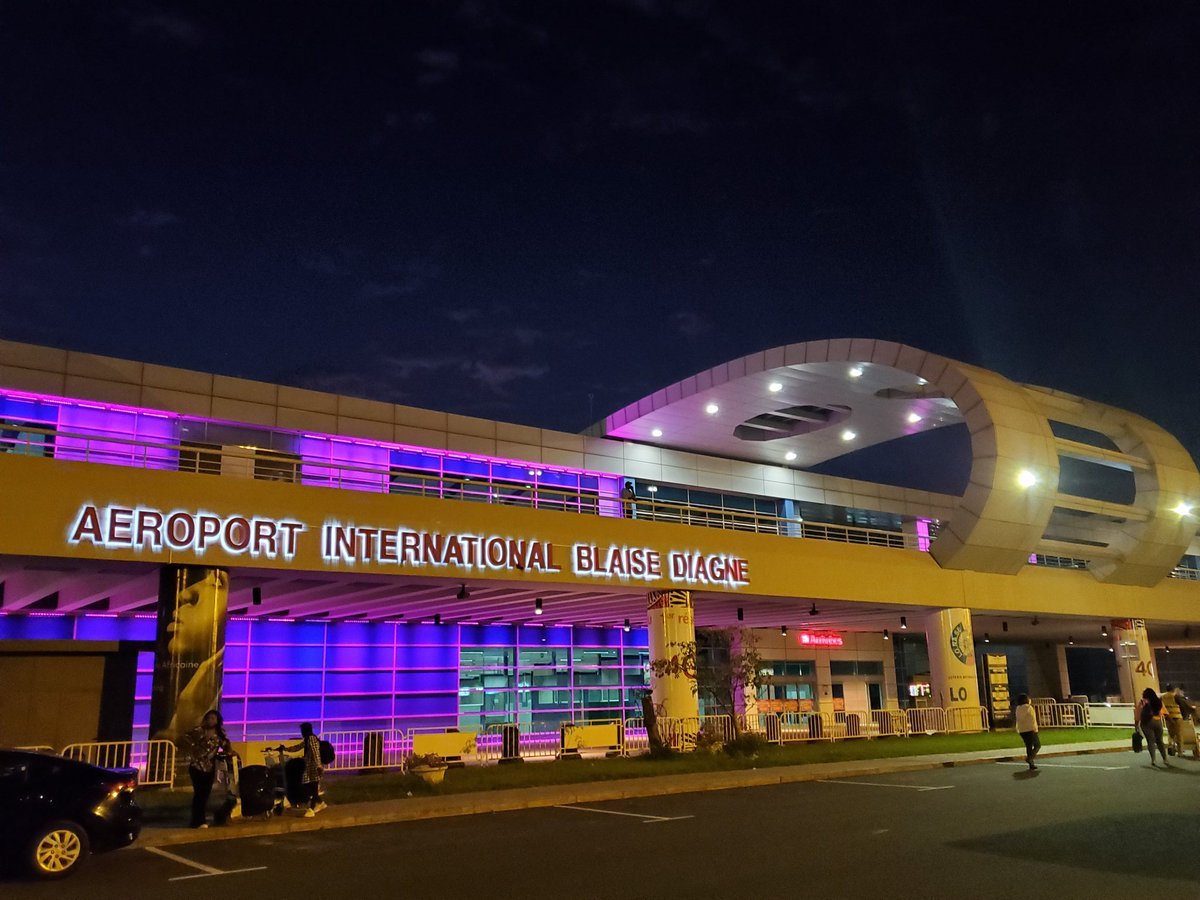
Senegal Secures €300 Million for Blaise Diagne Airport Expansion
By Tanveer Ahmed, CEO, Ahmed Construction Company (ACCO) · Updated · Reviewed by ACCO architects and engineers
Quick Answer
Senegal secures €300 million for Blaise Diagne airport expansion, a cargo terminal and regional airport upgrades. What it includes and lessons for Pakistan. Ahmed Construction Company (ACCO), based in Gulberg-III Lahore since 1998, provides ACCO design & construction services with design drawings free on award of construction.
Senegal secured around €300 million (about US$327 million) in credit to expand Blaise Diagne International Airport near Dakar and to support the renovation of the country’s regional airports, according to reports in early 2024. The financing was raised by Aéroport International Blaise Diagne (AIBD), the airport’s joint operator, and is linked to plans to increase passenger capacity, build a cargo terminal and continue a national regional airport programme. This article explains what the Senegal airport expansion includes, how it is financed, how modular construction is being used on regional airports, and what lessons the project holds for airport and public infrastructure planning in Pakistan.
Senegal Airport Expansion at a Glance
| Airport | Blaise Diagne International Airport, about 43 km from central Dakar; opened December 2017 |
|---|---|
| Operator | AIBD with Turkish partners Limak and Summa |
| Financing | About €300 million: €100 million from asset manager Ninety One and Standard Chartered Bank, €200 million from a consortium of banks |
| Main works | Terminal capacity expansion and a new cargo terminal |
| Capacity plans | Reported increase from about 3 million towards more than 5 million passengers a year |
| National goal | Make Senegal West Africa’s leading aviation hub, with 10 million passengers a year by 2035 |
| Regional programme | PRAS, a two-phase rehabilitation of regional airports |
Background: Blaise Diagne International Airport
Blaise Diagne International Airport replaced Dakar’s older Léopold Sédar Senghor airport as the country’s main international gateway when it opened in December 2017. It lies roughly 43 km from the centre of the capital, on a large site with room to grow, and is operated by AIBD together with the Turkish companies Limak and Summa.
Senegal sits at the westernmost point of mainland Africa. Supporters of the investment argue that this location, close to Europe and the Americas, makes it a natural gateway to the continent. The government’s stated ambition is to turn Senegal into West Africa’s leading aviation hub, with traffic of 10 million passengers a year by 2035.
What the €300 Million Will Fund
The credit package is intended to support three related goals:
Passenger capacity
Expansion of terminal facilities to handle more passengers each year, with reported plans to move from about 3 million towards more than 5 million.
Cargo terminal
A new cargo terminal to support trade, exports and logistics beyond passenger travel.
Regional airports
Support for the renovation of regional airports under the PRAS programme.
An investment specialist at Ninety One described intra-African aviation as fragmented, and argued that investment in critical infrastructure such as AIBD helps growth spread beyond tourism into other sectors and supports trade between African countries.
How the Deal Is Structured
The financing combines different types of lender. Around €100 million came from Ninety One, an international asset manager, together with Standard Chartered Bank, while about €200 million came from a consortium of banks. Mixing institutional investors and commercial banks spreads risk and can make large infrastructure loans easier to arrange.
For airports, lenders typically look at passenger forecasts, airline agreements, cargo potential, concession terms and the strength of the operator. A clear national aviation strategy, such as Senegal’s 2035 target, also helps investors judge long-term demand.
The Regional Airport Programme (PRAS)
Alongside the main airport, Senegal is rehabilitating regional airports through a programme known as PRAS, divided into two phases.
PRAS 1
The first phase covers the airports of Saint-Louis, Ourossogui-Matam, Ziguinchor, Tambacounda and Kédougou. According to a ministry update in early 2024, Kédougou airport had been rehabilitated and inaugurated and Saint-Louis commissioned, with Ziguinchor expected to follow, and Ourossogui-Matam and Kolda planned next.
PRAS 2
The second phase includes Kolda, Podor, Linguère, Bakel, Cap Skirring, Simenti, Sédhiou and Kaolack, spreading air access across the country’s regions.
Contractor and financing
PRAS 1 is being delivered by Transcon, appointed as general contractor in November 2017 for the renovation of five regional airports. The first phase was estimated at US$176 million and co-financed by the Czech Export Bank and Komerční Banka, with support from the Czech export guarantee agency EGAP. Transcon says it is using modular solutions to deliver the work.
Why Modular Construction Suits Regional Airports
Small regional airports often sit in remote areas where skilled labour, materials and supervision are limited. Modular construction, where building elements are made in a factory and assembled on site, can help in several ways:
- Speed. Site work and factory production can happen in parallel, shortening programmes.
- Consistent quality. Components are made under controlled conditions rather than in harsh site environments.
- Standardisation. Similar terminal modules can be repeated across several airports, simplifying design and maintenance.
- Less site disruption. Shorter site periods reduce the impact on airports that must stay operational.
The trade-offs are that designs must be fixed early, transport of large modules needs good roads, and foundations and services connections still require conventional site work.
Why Cargo Terminals Matter
Passenger terminals attract most of the attention, but cargo facilities often have a larger effect on a country’s economy. A modern cargo terminal allows exporters to send perishable goods such as fruit, vegetables, fish and flowers quickly to overseas markets, and lets manufacturers import spare parts and high-value components without long sea transit times.
Good cargo terminals share several design features:
- Cold storage. Temperature-controlled rooms keep food, medicines and other sensitive goods in good condition.
- Efficient handling. Clear separation of import, export and transit flows, with enough truck docks and apron access.
- Customs and security. Inspection areas, scanning equipment and secure storage integrated into the layout.
- Room to expand. Land and structural grids that allow additional bays as volumes grow.
- Durable floors. Heavy-duty slabs designed for forklifts and racking.
For agricultural exporters in particular, the combination of cold chain, fast clearance and reliable flights can open new markets. This is one reason the Senegal plan pairs passenger growth with cargo investment rather than treating them separately.
Main Hub Expansion vs Regional Upgrades
| Factor | Blaise Diagne expansion | PRAS regional airports |
|---|---|---|
| Purpose | International hub and cargo growth | Domestic connectivity and regional access |
| Scale | Large terminal and cargo facilities | Small terminals, runways and support buildings |
| Financing | About €300 million credit via AIBD | Export-credit backed financing (PRAS 1) |
| Construction approach | Conventional expansion of an operating airport | Modular solutions reported by the contractor |
| Main challenge | Building while the airport operates | Remote sites and logistics |
Building at an Operating Airport
Expanding a terminal that is already in use is one of the most complex types of construction. Airports must keep security, passenger flow, baggage handling and airside operations running throughout. Typical measures include phased works, temporary terminals or gates, strict airside access controls, dust and noise control, and close coordination with airlines and aviation regulators. International standards and recommended practices from the International Civil Aviation Organization (ICAO) shape much of this work, while terminal buildings themselves need robust fire and life-safety design of the kind described in NFPA standards.
Lessons for Pakistan
Pakistan has several international airports and many smaller regional airfields, and air travel and cargo demand continue to grow. The Senegal model offers some useful points for planners, investors and contractors.
Link hubs and regions
Plan the main hub and regional airports as one network, so investment in one supports the others.
Mix financing sources
Combine commercial banks, institutional investors and export credit to fund large infrastructure.
Use modular methods where they fit
Repeatable terminal modules can speed up work at remote sites, provided designs are fixed early.
Design for climate and safety
Terminals need heat-resistant envelopes, efficient cooling, seismic design to the Building Code of Pakistan and strong fire safety.
For more on airport architecture, see our review of Techo International Airport by Foster + Partners and our article on South Africa’s airport refurbishment plans. ACCO designs and builds commercial and public buildings in Lahore and across Pakistan, priced through an itemised BOQ; the construction cost per square foot guide explains typical cost drivers. See our services for the full range.
Frequently Asked Questions
How much did Senegal secure for airport development?
AIBD secured about €300 million (around US$327 million) in credit, with €100 million from Ninety One and Standard Chartered Bank and €200 million from a consortium of banks.
What will the money be used for?
It supports the expansion of Blaise Diagne International Airport’s passenger capacity, a new cargo terminal and the renovation of regional airports under the PRAS programme.
Who operates Blaise Diagne International Airport?
The airport is operated by AIBD together with the Turkish companies Limak and Summa. It opened in December 2017.
What is the PRAS programme?
PRAS is Senegal’s two-phase regional airport rehabilitation programme. The first phase covers five airports and is being delivered by Transcon, which reports using modular solutions.
What is Senegal’s long-term aviation goal?
The government aims to make Senegal West Africa’s leading aviation hub, handling 10 million passengers a year by 2035.
What can Pakistan learn from this project?
Plan hub and regional airports as one network, combine financing sources, use modular construction where it suits remote sites, and design terminals for climate, earthquakes and fire safety.
Conclusion
Senegal’s €300 million financing for Blaise Diagne International Airport is part of a wider strategy to grow passenger and cargo traffic and connect the country’s regions by air. Combining a major hub expansion with a modular regional airport programme shows how infrastructure can be planned as a network rather than as isolated projects. For Pakistan, the clearest lessons are to link investment in main and regional airports, to use mixed financing, and to choose construction methods that suit each site’s location, climate and operating needs.
Related articles
ACCO services
Contact ACCO
- +92 322 8000190
- info@acco.com.pk
- Office 2, 3rd Floor, Bigcity Plaza, Gulberg-III, Lahore
Planning a Project with ACCO?
Architecture, engineering and construction from one Lahore team since 1998. Design drawings are free when ACCO is awarded the construction.
Discuss Your ProjectWhatsApp +92 322 8000190
Commercial Plaza Design and Construction in DHA Phase 9 Prism Lahore