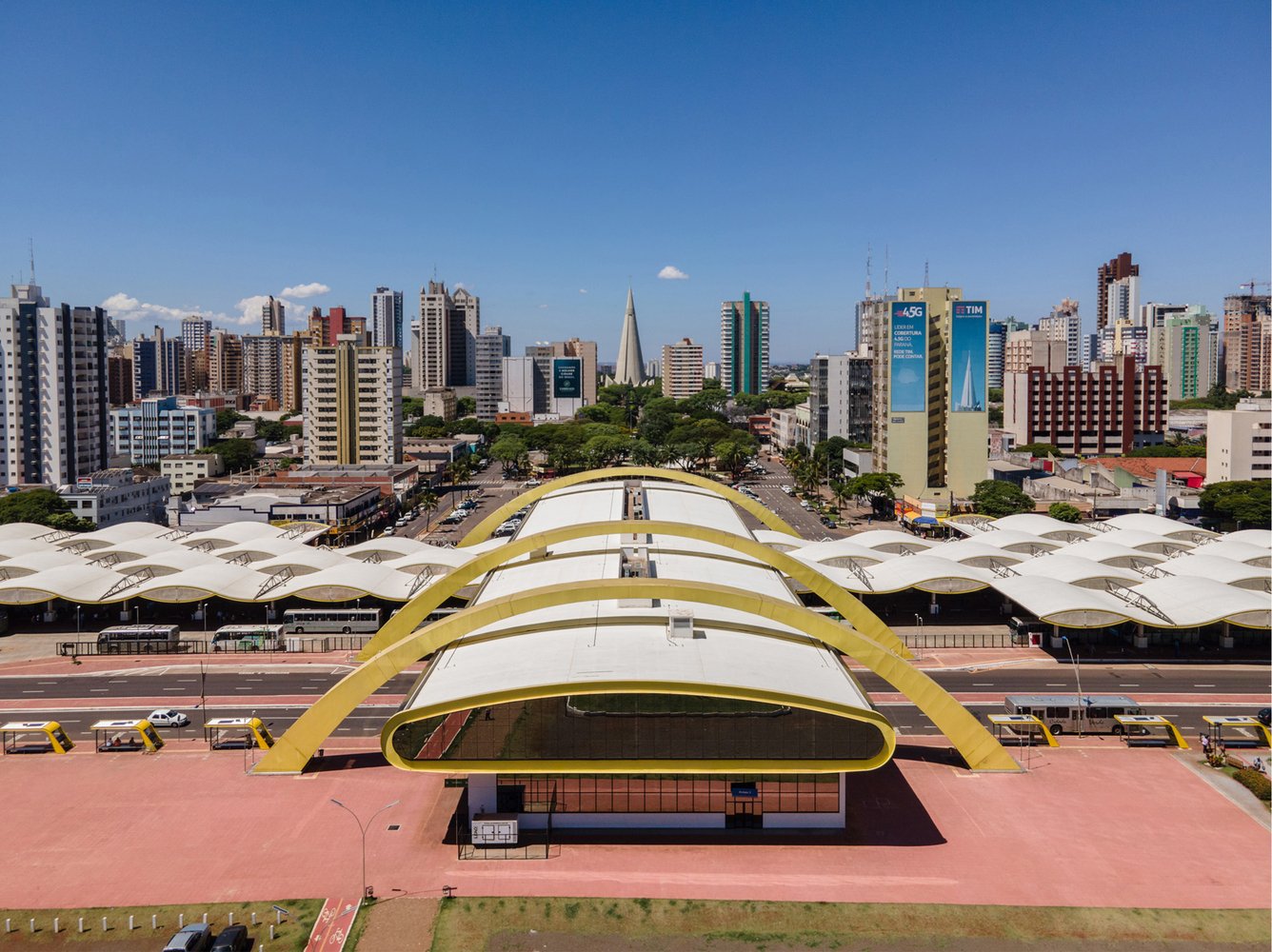
Maringá Urban Intermodal Terminal | Borelli&Merigo Arquitetura e Urbanismo
By Tanveer Ahmed, CEO, Ahmed Construction Company (ACCO) · Updated · Reviewed by ACCO architects and engineers
Quick Answer
Maringá Urban Intermodal Terminal by Borelli & Merigo: bus and rail levels, steel roof, ventilation and urban role reviewed, with lessons for Pakistan. Ahmed Construction Company (ACCO), based in Gulberg-III Lahore since 1998, provides ACCO design & construction services with design drawings free on award of construction.
The Maringá Urban Intermodal Terminal, designed by Borelli & Merigo Arquitetura e Urbanismo, brings several modes of transport together in one building in the centre of Maringá, a planned city in the state of Paraná, southern Brazil. Opened on 28 February 2020, the terminal handles dozens of urban bus routes, is planned to host a passenger rail service, and adds shops and a pedestrian route above the platforms. It also forms part of a wider effort to revive the city centre. This review explains the layout, structure and environmental design of the terminal and what Pakistani cities can learn from it as they invest in bus rapid transit, metro and rail.
Maringá Urban Intermodal Terminal at a Glance
| Location | Central Maringá, Paraná, Brazil |
|---|---|
| Architect | Borelli & Merigo Arquitetura e Urbanismo; lead architects José Borelli Neto, Hércules Merigo, Tiago Simões Borelli and Marcos Oliveira Costa |
| Area | About 22,500 m² |
| Opened | 28 February 2020 |
| Structure | Steel roof structure on prefabricated columns, with concrete elements |
| Levels | Lower level for a planned passenger rail terminal; ground level for around 70 urban bus routes; mezzanine with shops and a pedestrian walkway |
| Environmental features | Double, wave-like roof for daylight and cross-ventilation; laminated glass for solar and acoustic control |
What an Intermodal Terminal Does
An intermodal terminal is a place where passengers change easily between different forms of transport, such as buses, trains, taxis, bicycles and walking. Good terminals shorten transfer distances, keep passengers sheltered and safe, and make the whole network feel like a single system.
- Integration. Several services meet under one roof, so transfers are quick.
- Capacity. Platforms and circulation must handle peak-hour crowds.
- Urban role. A terminal can anchor regeneration, bringing footfall and investment to a district.
- Comfort. Shade, ventilation, seating and information make waiting tolerable.
Maringá: A Planned City
Maringá was founded in the mid-twentieth century as a planned city, with a master plan that includes green avenues, parks and a monumental axis through the centre. The terminal was designed to fit into this plan. Its mezzanine aligns with the monumental axis identified in the municipal master plan, and the project is intended as a model for reviving the central area stretching between the cathedral and the Vila Olímpica sports complex.
The design also references the city’s history. Three arches on the building pay tribute to the city’s former bus station, giving residents a familiar symbol in a new structure.
Layout: Three Levels, Three Roles
Rail level
The lowest level is reserved for a planned passenger rail terminal that would connect Maringá and Londrina using existing freight lines.
Bus level
The ground level contains platforms for around seventy urban bus routes serving neighbourhoods across the city.
Mezzanine
The upper level has commercial spaces and a wide pedestrian walkway along Avenida Horácio Racanello, giving people a safe and comfortable route.
Stacking functions vertically uses a central site efficiently. Buses and trains are kept on separate levels, while the mezzanine links them and adds shops that serve passengers and generate income.
Structure: Steel on Prefabricated Columns
The terminal uses a modern steel structure supported by prefabricated columns. This combination is well suited to transport buildings:
- Steel trusses and beams span long distances, keeping platforms free of obstructions.
- Prefabricated columns are made off-site to consistent quality and installed quickly.
- Fast erection reduces disruption in a busy city centre.
- A lightweight roof reduces loads on foundations.
The project credits SOLUTEC Engenharia de Estruturas for the steel structure and DPLAN Engenharia for the concrete structure, showing how different specialists collaborate on hybrid structures.
The Double Roof: Light and Air
The terminal’s second roof layer emphasises its horizontal form and has been compared to a wave or a sharp eye. It is more than a visual feature. The gap and profile of the double roof let in generous daylight and encourage cross-ventilation, which reduces the need for artificial lighting and mechanical cooling.
Why ventilation matters in bus terminals
Bus terminals collect exhaust fumes and heat from engines. Good natural ventilation, helped by roof openings and the stack effect, keeps air quality acceptable for waiting passengers and staff. Shade from a wide roof is equally important in hot, sunny climates.
Glass, Colour and Comfort
On the mezzanine, laminated glass with a grey PVB interlayer between clear glass sheets was used. This glass type reflects part of the solar energy, reduces noise from buses and traffic, and improves thermal comfort. Laminated glass also holds together if broken, which makes it safer in public buildings.
The red colour of the design refers to the ipê trees that cover Maringá in colour when they flower. Using a local reference like this gives the building a strong identity and connects it to the city’s landscape.
Designing Bus Platforms for Passengers
With around seventy routes using the ground level, platform design is central to how well the terminal works. Several principles apply to any large bus interchange.
Clear platform allocation
Routes should be grouped logically, for example by destination area, with each group on a clearly signed platform. Passengers should be able to find their bus quickly without crossing bus lanes.
Real-time information
Departure screens and announcements reduce uncertainty and crowding at the wrong stops. They also let passengers wait in shops or seating areas rather than standing at the kerb.
Boarding comfort
Platforms at the right height for low-floor buses make boarding faster and easier for older people, wheelchair users and parents with pushchairs. Wide platforms leave room for queues without blocking through movement.
Shelter and seating
A continuous roof over platforms keeps passengers out of rain and sun. Seating, drinking water and clean toilets make long waits bearable.
Bus movement
Buses need enough space to enter, dock and leave without reversing, and layover areas for drivers. Separating bus routes from pedestrian areas avoids conflict and improves safety.
Terminal Design Options Compared
| Option | Typical form | Strengths | Weaknesses |
|---|---|---|---|
| Open bus stand | Shelters on a paved yard | Cheap, quick | Poor comfort, fumes, weak safety |
| Single-level covered terminal | Large roof over platforms | Simple, good shelter | Uses a lot of land |
| Multi-level intermodal terminal (Maringá) | Rail, bus and retail on separate levels | Compact, integrated, commercial income | Higher cost and complexity |
| Terminal with property development | Offices or homes above the station | Funds infrastructure, adds density | Complex structure and approvals |
Planning a Transport Terminal
Demand and routes
Model passenger numbers, bus routes and future rail links.
Site and access
Plan bus movements, pedestrian routes, drop-off and links to surrounding streets.
Design
Coordinate structure, platforms, ventilation, fire safety and commercial space.
Phased construction
Build with minimal disruption to existing services.
Operation
Plan maintenance, cleaning, security and management of shops.
Safety and Accessibility
Transport terminals must be safe for large crowds, including people with disabilities, older passengers and families with children. Key requirements include:
- Step-free access between all levels, with lifts and ramps
- Tactile paving and clear signage for visually impaired passengers
- Separation of bus lanes and pedestrian areas
- Well-lit platforms and good passive surveillance
- Fire detection, smoke control and escape routes designed to principles such as those of NFPA
Lessons for Pakistan
Pakistani cities have made major investments in mass transit, including metro bus and rail systems in Lahore, Islamabad-Rawalpindi, Multan and Peshawar. Integration between these systems and city bus networks is still developing. The Maringá terminal offers practical lessons:
- Integrate modes in one building. Put bus, metro and rail transfers under one roof.
- Design for heat and fumes. Wide roofs, natural ventilation and shade are vital in Pakistan’s summers.
- Add commercial space. Shops above or beside platforms help pay for maintenance.
- Use steel and precast. These speed construction in busy areas, but must be designed for seismic loads under the Building Code of Pakistan.
- Link to city plans. Terminals should support regeneration plans prepared by authorities such as the LDA.
For more infrastructure reviews, see our articles on Techo International Airport and New Gwadar International Airport. ACCO’s structural design services and construction services cover large-span public and commercial buildings, priced through an itemised BOQ.
Frequently Asked Questions
Who designed the Maringá Urban Intermodal Terminal?
It was designed by Borelli & Merigo Arquitetura e Urbanismo, led by José Borelli Neto, Hércules Merigo, Tiago Simões Borelli and Marcos Oliveira Costa.
When did the terminal open?
It was officially opened on 28 February 2020.
What transport modes does it serve?
The ground level serves around seventy urban bus routes, and the lower level is reserved for a planned passenger rail link between Maringá and Londrina.
How is the terminal ventilated?
A double, wave-like roof admits daylight and supports cross-ventilation, reducing the need for artificial light and mechanical cooling.
Why is the building red?
The red colour refers to the flowering ipê trees for which Maringá is known.
What can Pakistani cities learn from the terminal?
Integrate transport modes in one building, design for heat and fumes with shade and ventilation, add commercial space, and link the terminal to city regeneration plans.
Conclusion
The Maringá Urban Intermodal Terminal shows how a transport building can do more than move buses. By stacking rail, bus and commercial levels, using a ventilated double roof and drawing on local history and landscape, Borelli & Merigo created a terminal that serves passengers and helps revive the centre of a planned city. For cities in Pakistan planning new interchanges, it is a useful reference for combining capacity, comfort and civic presence in one building.
Related articles
ACCO services
Contact ACCO
- +92 322 8000190
- info@acco.com.pk
- Office 2, 3rd Floor, Bigcity Plaza, Gulberg-III, Lahore
Planning a Project with ACCO?
Architecture, engineering and construction from one Lahore team since 1998. Design drawings are free when ACCO is awarded the construction.
Discuss Your ProjectWhatsApp +92 322 8000190
Grey Structure Construction Cost in Pakistan 2027: What You’ll Actually Pay