Charm Premier Grand Gotenyama Nursing Home, Tokyo: Architecture Review
By Tanveer Ahmed, CEO, Ahmed Construction Company (ACCO) · Updated · Reviewed by ACCO architects and engineers
Quick Answer
Charm Premier Grand Gotenyama Nursing Home in Tokyo by Nikken Housing System: review of its street-facing design, daylight, units and lessons for Pakistan. Ahmed Construction Company (ACCO), based in Gulberg-III Lahore since 1998, provides house construction in Lahore with design drawings free on award of construction.
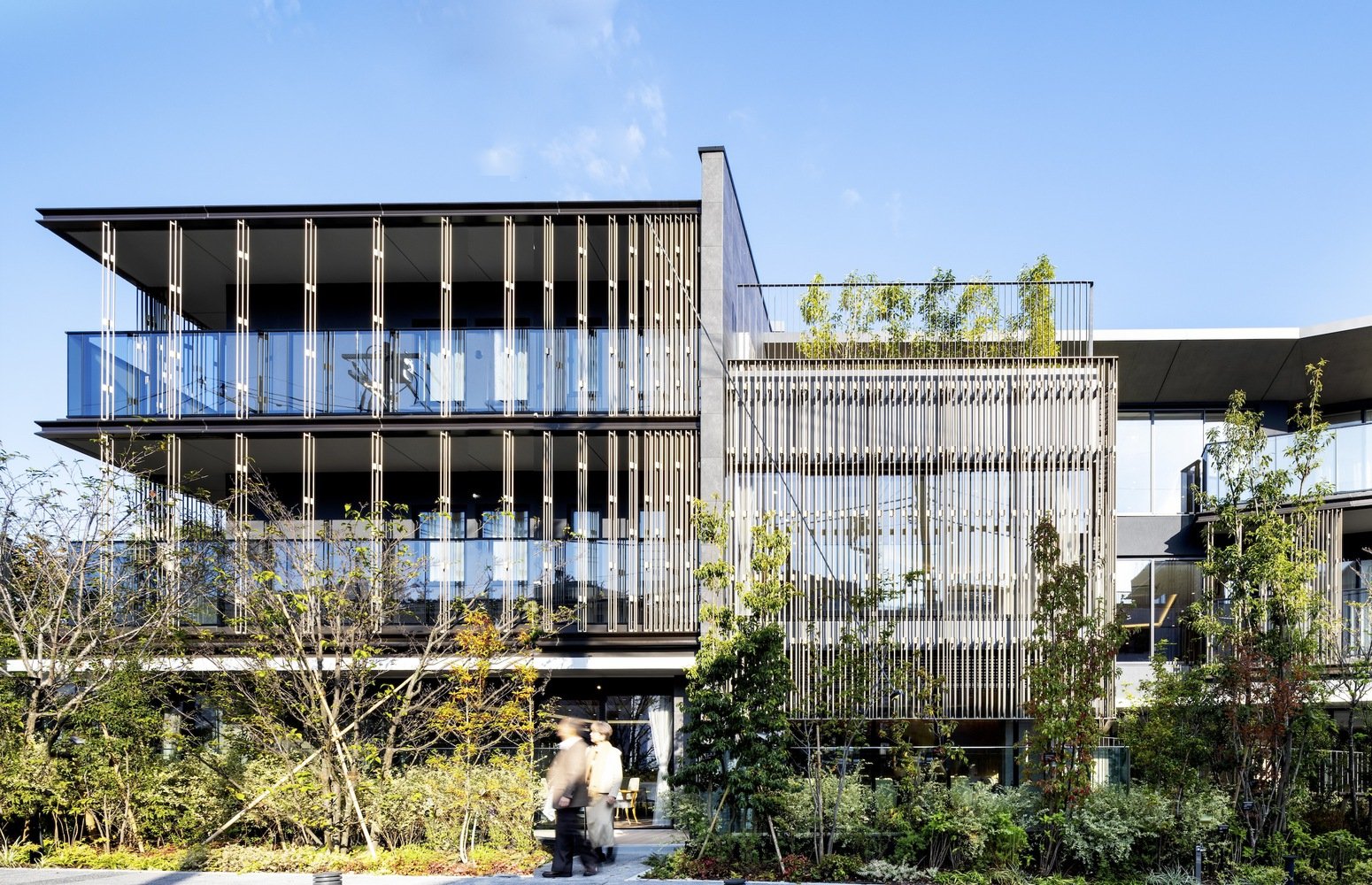
Charm Premier Grand Gotenyama Nursing Home is a residential care building in Shinagawa, central Tokyo, designed by Nikken Housing System Ltd and completed in 2022. Known as the Nibankan, or second building, of the Gotenyama care community, it takes a different approach from many nursing homes: instead of separating older residents from city life, it opens shared spaces towards the street and invites the neighbourhood in. This review looks at how the design works, what makes it notable, and what lessons it offers for elderly care and assisted living projects in Pakistan.
Charm Premier Grand Gotenyama Nursing Home at a Glance
| Location | Shinagawa-ku, Tokyo, Japan |
|---|---|
| Architect | Nikken Housing System Ltd |
| Completed | 2022 |
| Floor area | About 4,397 m² |
| Building type | Nursing home and assisted living residence |
| Resident units | 23 different unit plans, from about 35 to 80 m² |
| Design team | Mitsuharu Tsuruoka (principal), Masahiro Suzaki, Naoki Takamoto and Tomomi Miyashita |
| Credited suppliers | FIGLA, Kikukawa Kogyo, SK Kaken and Sankyo Tateyama |
| Photography | Harunori Noda, Gankohsha |
The Design Problem: Ageing and Isolation
Japan has one of the oldest populations in the world, and isolation among older people is a recognised social concern. Many care homes are designed mainly around safety and efficient nursing, which can leave residents cut off from everyday life. The World Health Organization highlights social participation as an important part of healthy ageing, and this project translates that idea into architecture.
The design brief, as described by the architects, was to let residents enjoy city living while keeping dignity, comfort and a sense of control over how much they engage with the community around them.
Site Planning on a Sloping Street
The site sits on a quiet, green street with a noticeable slope. The architects used the level change to separate routes for people and vehicles and to organise the building in parts. At the lower end of the slope, a two-storey glass-walled volume connects to a three-storey building above it. This arrangement keeps the scale of the building friendly to the street while providing the floor area needed for a care facility.
Why the slope matters
- Vehicle drop-off and service access are kept apart from pedestrian entrances.
- Different levels give the building a stepped, less institutional appearance.
- Accessible routes must be carefully designed so wheelchair users are not disadvantaged by the gradient.
Opening Shared Spaces to the Neighbourhood
The most distinctive feature is how the communal rooms face the street. Dining and lounge spaces open outward, so residents can see and be seen by passers-by, creating informal everyday contact with neighbours. A shared kitchen is designed as a venue for community events, bringing local people and different generations into the building.
Street-facing dining
Meals become a visible, social part of street life rather than something hidden at the back of the building.
Community kitchen
A shared kitchen supports cooking classes and public events that bring neighbours inside.
Choice and control
Private spaces sit back from the street, so residents decide how much to engage with the community.
This balance is important. Openness without retreat can feel exposed; privacy without openness can feel lonely. The plan offers both, letting each resident choose.
Daylight, Ventilation and Façade
A double-height glazed entrance leads to a grand stair rising through a three-storey void. Skylights bring soft daylight deep into the common areas, giving the interior an outdoor-like quality that encourages residents to spend time outside their rooms.
The building also uses natural ventilation driven by pressure differences between windows and high-level openings across the balcony levels. On the outside, aluminium louvres arranged in modules provide privacy, reduce direct sun and screen external air-conditioning units, which keeps the façade calm and orderly.
Design takeaways
- Daylight in shared spaces supports wellbeing and helps orientation for people with memory problems.
- Natural ventilation can reduce energy use in mild seasons.
- Louvres solve privacy, sun control and equipment screening with one element.
Resident Units and Accessibility
Instead of identical rooms, the building offers 23 different unit plans ranging from roughly 35 to 80 square metres. This variety helps residents move from a family home into a unit that suits their furniture, habits and care needs, making the transition easier. The building and individual rooms are planned around wheelchair access and efficient nursing, with circulation that supports both independence and care staff.
Strengths and Limitations of the Approach
Every design involves trade-offs, and an honest review should consider both sides. The strengths of this project are clear: it treats older people as members of the neighbourhood rather than patients to be hidden away, it gives residents choice, and it uses light and space to make shared areas pleasant. The varied unit plans also respect the fact that residents arrive with different needs, budgets and belongings.
Points other designers should weigh
- Privacy and security: street-facing communal rooms need careful control of entry, especially for residents with dementia who may wander.
- Heat and glare: large glazed areas and skylights work in Tokyo’s climate with good shading, but in hotter regions they must be sized and shaded with great care.
- Operating model: community events need staff time and management; the building only enables them, it does not run them.
- Cost: many unit types and a three-storey void add design and construction complexity compared with repeated standard rooms.
None of these points weakens the central idea. They simply show that the architecture works best when matched by a care provider committed to the same open, community-based model.
How It Compares with a Conventional Care Home
| Aspect | Conventional care home | Charm Premier Grand Gotenyama |
|---|---|---|
| Relationship to street | Closed, inward-looking | Communal rooms open to the street |
| Community use | Rare | Shared kitchen hosts public events |
| Room types | Standard repeated rooms | 23 unit plans from about 35 to 80 m² |
| Interior light | Corridors with limited daylight | Skylights and a three-storey void |
| Façade | Visible AC units and plain walls | Modular louvres for privacy, shade and screening |
Lessons for Pakistan
Pakistan’s population is younger than Japan’s, but demand for elderly care, assisted living and long-stay rehabilitation is growing, especially in large cities where families are smaller and children often work away or abroad. Most care in Pakistan still happens at home, and purpose-built facilities are few. Projects that do get built can learn a great deal from this example.
Design for dignity
Plan homely, varied rooms and family visiting areas rather than hospital-style wards.
Connect to community
Use verandas, courtyards, prayer areas and gardens that families and neighbours can share.
Plan for climate
Shade, insulation and cross ventilation matter even more for older people in Pakistan’s heat.
Build in safety
Step-free access, grab rails, nurse call, fire compartments and backup power from day one.
Key spaces for an elderly care facility in Pakistan
- Ground-floor resident rooms or lift access to every floor, with wide doors and step-free bathrooms
- A family visiting lounge and outdoor seating, since family visits are central to Pakistani culture
- A prayer area and wudu space designed for people with limited mobility
- A nurses’ station with sight lines to corridors and common rooms
- Physiotherapy and activity rooms, a clean kitchen and a dining room large enough for group meals
- Generator and UPS backup for lifts, medical equipment and cooling during power cuts
Fire safety deserves particular attention, because many residents cannot evacuate quickly. Horizontal evacuation to protected compartments, as described in NFPA life-safety guidance, is a sensible principle. Where a facility provides medical or nursing care, owners should also check licensing requirements with the Punjab Healthcare Commission or the relevant provincial regulator.
ACCO’s healthcare building design consultants and architectural design services can help owners plan care facilities, and its hospital construction services cover projects with clinical areas.
For Pakistani owners, the main lesson is not to copy the Tokyo building but to adopt its priorities: treat residents as members of a community, give them choice and privacy, bring in daylight without overheating, and plan care routes so staff can work efficiently. A clear brief that covers resident numbers, care levels, staffing and family visiting patterns should come before any drawings, because these decide room sizes, the nurses’ station position and the amount of shared space needed.
Frequently Asked Questions
Who designed Charm Premier Grand Gotenyama Nursing Home?
The building was designed by Nikken Housing System Ltd and completed in 2022 in Shinagawa, Tokyo.
How big is the building?
It has a floor area of about 4,397 square metres, with 23 different resident unit plans from roughly 35 to 80 square metres.
What makes this nursing home different?
Its dining and lounge spaces open to the street and a shared kitchen hosts community events, so residents stay connected with neighbourhood life while keeping private areas.
How does the design handle daylight and ventilation?
A double-height glazed entrance, a three-storey void and skylights bring in daylight, while openings at different levels support natural ventilation.
Can similar ideas work in Pakistan?
Yes. Community-facing shared spaces, varied room types, shading and step-free design can all be adapted to Pakistani elderly care and assisted living projects.
Does a care home in Pakistan need a licence?
If it provides medical or nursing care, it may fall under the provincial healthcare regulator, such as the Punjab Healthcare Commission. Owners should confirm requirements before design.
Conclusion
Charm Premier Grand Gotenyama Nursing Home shows that a care building can be safe and efficient while also being open, sunlit and part of its neighbourhood. Its street-facing shared spaces, varied units and careful façade offer useful ideas for anyone planning elderly care in Pakistan, where climate, family culture and safety standards should shape a local version of the same principles.
Related articles
Contact ACCO
- +92 322 8000190
- info@acco.com.pk
- Office 2, 3rd Floor, Bigcity Plaza, Gulberg-III, Lahore
Planning a Project with ACCO?
Architecture, engineering and construction from one Lahore team since 1998. Design drawings are free when ACCO is awarded the construction.
Discuss Your ProjectWhatsApp +92 322 8000190

Grey Structure Construction Cost in Pakistan 2027: What You’ll Actually Pay