Overwater Bamboo Restaurant by Atelier Nomadic, Maldives: Design Review
By Tanveer Ahmed, CEO, Ahmed Construction Company (ACCO) · Updated · Reviewed by ACCO architects and engineers
Quick Answer
Overwater Bamboo Restaurant by Atelier Nomadic in the Maldives: a whipray-inspired bamboo structure on a jetty. Design review, bamboo lessons for Pakistan. Ahmed Construction Company (ACCO), based in Gulberg-III Lahore since 1998, provides ACCO design & construction services with design drawings free on award of construction.
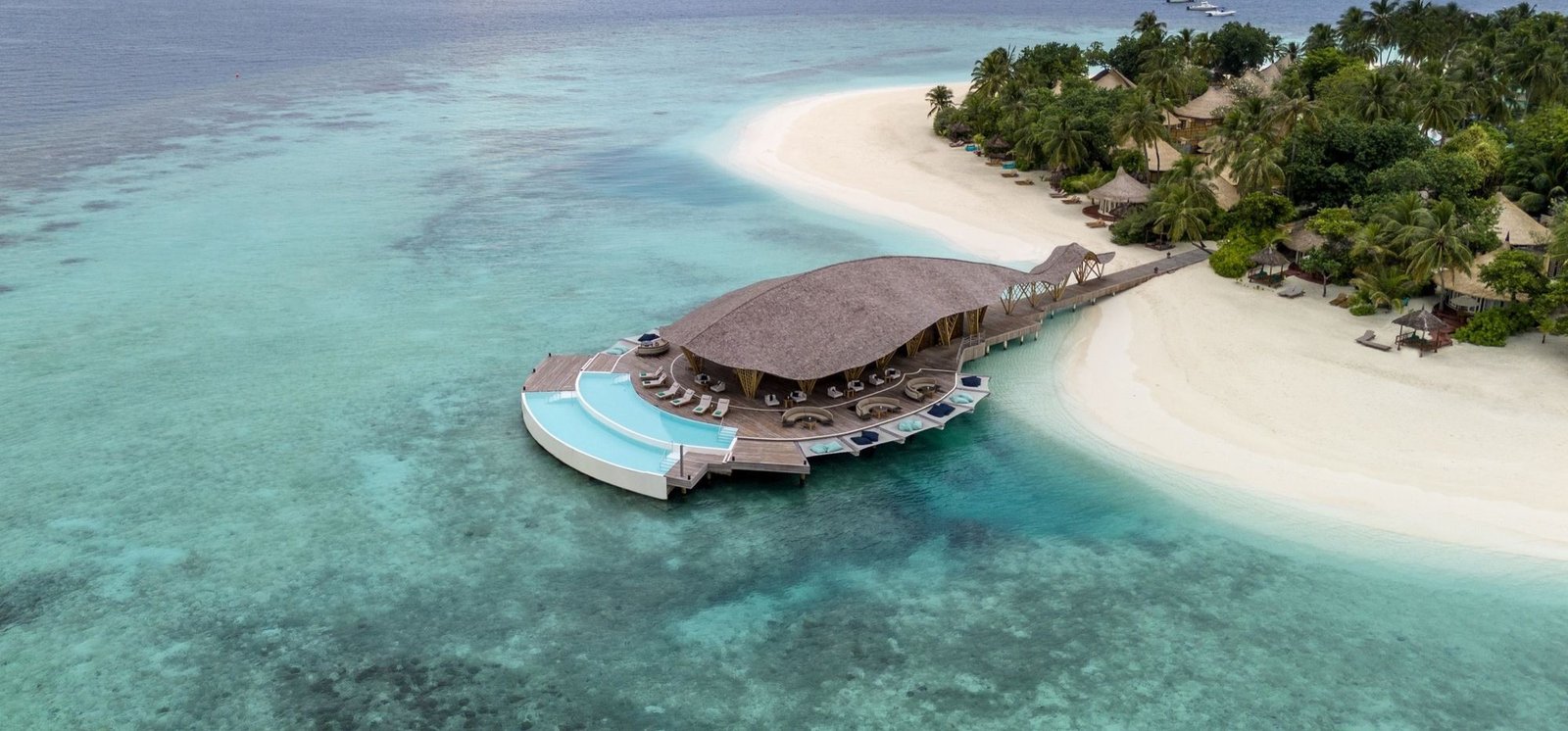
The Overwater Bamboo Restaurant, designed by Atelier Nomadic, is a dining pavilion built on an existing jetty at the Banyan Tree Vabbinfaru resort in the Maldives. Its curved bamboo frame takes its shape from the pink whipray, a ray that glides through the surrounding lagoon, and its long shingled tail loops back along the jetty to the island. Inside, guests eat Japanese yakitori under a bamboo “ribcage”, with a saltwater infinity pool and catamaran nets suspended over the sea. This review explains how the Overwater Bamboo Restaurant is designed, why bamboo and natural ventilation were chosen, the technical issues of building over water, and what Pakistani designers of resorts and restaurants can learn from it.
Overwater Bamboo Restaurant at a Glance
| Architect | Atelier Nomadic |
|---|---|
| Location | Banyan Tree Vabbinfaru resort, North Malé Atoll, Maldives |
| Use | Overwater yakitori restaurant and bar |
| Site | Redesign of an existing jetty structure over the lagoon |
| Main material | Bamboo structure with shingled roof covering |
| Inspiration | The pink whipray (Pateobatis fai) found in the nearby lagoon |
| Features | Natural ventilation, saltwater infinity pool, overwater catamaran nets, sunset views |
Design Concept: A Creature in the Lagoon
The architects drew on old maritime stories of sea creatures and on the marine life around the island. The resulting building is a work of biomimicry, design that borrows forms or strategies from nature. Its outline follows the flat, wide body of a whipray, while the long tail becomes a covered walkway that descends along the jetty and guides guests from the island to the restaurant.
Seen from the water, the curved roof reflects in the calm lagoon and seems to float. Inside, the exposed bamboo arches read like the ribs of an animal, giving diners the sense of sitting within the creature.
Reusing an Existing Jetty
Rather than building a new structure in the lagoon, the project redesigned an existing jetty. This is an important sustainability decision:
- Less disturbance to the seabed and coral than new foundations would cause.
- Lower material use, since the existing substructure is retained.
- Simpler approvals in sensitive marine environments.
Any reuse of this kind needs an engineering survey of the existing piles and deck to confirm they can carry the new loads, including people, furniture, a pool full of water and wind on the roof.
Why Bamboo?
Bamboo is one of the fastest-growing plants and has a high strength-to-weight ratio. Organisations such as the International Bamboo and Rattan Organisation (INBAR) promote it as a renewable building material, especially in tropical regions.
Light and strong
Bamboo poles can form long curved arches with little weight, suiting a structure on an existing jetty.
Renewable
It can be harvested within a few years of planting, unlike timber that takes decades.
Flexible
Bamboo can be bent into curves, allowing organic forms such as the whipray roof.
Natural character
Exposed bamboo creates a warm, tactile interior suited to resort dining.
Bamboo compared with other structural materials
| Factor | Bamboo | Timber | Steel |
|---|---|---|---|
| Growth or production | Fast-growing, renewable | Slower-growing | Energy-intensive |
| Weight | Very light | Light | Heavier per member |
| Durability | Needs treatment against insects, fungi and UV | Needs treatment and protection | Needs corrosion protection, especially near the sea |
| Fire | Combustible; needs fire strategy | Combustible; can be sized for charring | Non-combustible but loses strength in fire |
| Standardisation | Natural variation between poles | Graded products available | Fully standardised sections |
| Skills needed | Specialised craft and joints | Widely available | Widely available |
Natural Ventilation and Climate
The restaurant is described as a naturally ventilated, bioclimatic building. Open sides let sea breezes pass through, the deep roof shades diners from tropical sun, and the water below cools the air. This avoids the energy use of air-conditioning in a semi-outdoor space and keeps guests connected to the sounds and smells of the sea.
Natural ventilation works best when the building is narrow, open on opposite sides and oriented to prevailing winds. Heavy rain needs to be kept out by generous overhangs.
Leisure Over the Water
Beyond dining, the design includes a saltwater infinity pool and catamaran-style nets stretched over the water. Guests can lie on the nets and watch the lagoon below or the sunset across the atoll. These features turn the restaurant into a destination for the whole evening rather than just a meal.
Building Over Seawater: Technical Points
- Corrosion. Salt air attacks steel fixings, so stainless steel or protected connections are needed.
- Moisture and decay. Bamboo must be treated, kept off wet surfaces and protected by overhangs.
- Wind and storms. Light roofs need secure connections to resist uplift.
- Loads. A pool adds significant weight that the jetty structure must carry.
- Fire safety. Kitchens in combustible buildings need careful separation, extinguishing systems and escape routes. NFPA guidance is widely used for restaurant kitchens.
- Maintenance. Shingles and bamboo need regular inspection and periodic replacement.
Biomimicry: Learning From Nature
Biomimicry means taking lessons from living things to solve design problems. In architecture it works at two levels, and the Overwater Bamboo Restaurant uses mainly the first.
Form
Borrowing the shape of a plant or animal gives a building an identity and often an efficient structure. Curves found in nature, such as the wide, thin body of a ray, can translate into shell-like roofs that span with little material. Here, the whipray form also helps the roof shed rain and wind smoothly.
Process and performance
Deeper biomimicry copies how organisms manage heat, water or air. Examples include termite mounds that inspired passive cooling systems, and leaves that inspired self-cleaning surfaces. The restaurant’s natural ventilation and deep shade follow the same spirit: it stays comfortable by working with the climate rather than against it.
Using the idea responsibly
- A natural form should also make practical sense for structure, drainage and use, not just look striking.
- Local context matters: the whipray is meaningful because it lives in that lagoon. A copied symbol from elsewhere would lose that link.
- Performance claims, such as reduced energy use, should be tested through analysis rather than assumed.
For hospitality projects, a story drawn from the site, its wildlife, history or crafts, can give guests a reason to remember the place and talk about it long after they leave.
How a Bamboo Pavilion Is Built
Select and treat
Choose mature poles of suitable species and treat them against insects and decay.
Design joints
Engineer connections, often bolted or lashed, to carry loads safely.
Prefabricate arches
Bend and assemble arches on templates before lifting them into place.
Cover and finish
Add roof covering, shingles and protection from rain and sun.
Strengths and Questions
Strengths
- A memorable form rooted in the local marine environment.
- Reuse of an existing jetty limits impact on the lagoon.
- Renewable material and natural ventilation reduce energy use.
- Leisure features create a full guest experience.
Questions
- Bamboo in a marine climate needs ongoing maintenance.
- Fire risk must be carefully managed in a combustible building with a kitchen.
- Natural variation in bamboo makes engineering and quality control more demanding.
Lessons for Pakistan
Pakistan has a growing hospitality sector, from northern lakes to coastal Balochistan and urban food streets. Bamboo is not a mainstream structural material here, and local building approvals are more familiar with RCC and steel, but the Overwater Bamboo Restaurant still offers useful lessons.
Use natural materials where they suit
Bamboo, timber and cane can be used for pavilions, canopies, screens and interiors in resorts and restaurants, adding warmth and identity. They should be treated, protected and designed by engineers. Our review of the Keeng Seafood Restaurant bamboo design explores another example.
Design for breeze and shade
Semi-open dining areas with deep roofs and cross-ventilation can be comfortable for much of the year in Pakistan, especially in the evening, and reduce air-conditioning costs.
Engineer for safety
Structures must follow the Building Code of Pakistan for wind and seismic loads, and restaurant kitchens need proper fire protection and escape routes.
Create a complete experience
Guests remember places, not just menus. ACCO’s restaurant interior design services and hotel interior design services help owners design spaces that support the brand and the menu. See all ACCO services; every project is priced through an itemised BOQ.
Frequently Asked Questions
Who designed the Overwater Bamboo Restaurant?
It was designed by Atelier Nomadic for the Banyan Tree Vabbinfaru resort in the Maldives.
What inspired the restaurant’s shape?
The pink whipray, a ray found in the lagoon around the island. The roof follows its body and the walkway forms its tail.
What is the restaurant made of?
It has a bamboo structure with a shingled roof, built on a redesigned existing jetty.
Is the restaurant air-conditioned?
It is designed as a naturally ventilated, bioclimatic space that uses sea breezes and shade for comfort.
What other features does it have?
A saltwater infinity pool and overwater catamaran nets where guests can relax and watch the sunset.
Can bamboo be used for buildings in Pakistan?
Yes, mainly for pavilions, canopies, interiors and screens. It needs proper species selection, treatment, engineered joints and a fire strategy, and approvals may require additional engineering justification.
Conclusion
The Overwater Bamboo Restaurant shows how a light, renewable material and a strong idea can create a memorable building with limited impact on a fragile site. Its whipray form, reused jetty and natural ventilation work together to make dining over the lagoon a complete experience. For Pakistan, the lessons are to draw on local context, design for breeze and shade, use natural materials thoughtfully and never compromise on engineering and fire safety.
Related articles
ACCO services
Contact ACCO
- +92 322 8000190
- info@acco.com.pk
- Office 2, 3rd Floor, Bigcity Plaza, Gulberg-III, Lahore
Planning a Project with ACCO?
Architecture, engineering and construction from one Lahore team since 1998. Design drawings are free when ACCO is awarded the construction.
Discuss Your ProjectWhatsApp +92 322 8000190

Grey Structure Construction Cost in Pakistan 2027: What You’ll Actually Pay