Henning Larsen Wins Kontrapunkt Arts Center in Bergen, Norway: Design Review
By Tanveer Ahmed, CEO, Ahmed Construction Company (ACCO) · Updated · Reviewed by ACCO architects and engineers
Quick Answer
Henning Larsen won the Kontrapunkt Arts Center in Bergen, extending Grieg Hall with a music hall, galleries and a green square. Lessons for Pakistan. Ahmed Construction Company (ACCO), based in Gulberg-III Lahore since 1998, provides ACCO design & construction services with design drawings free on award of construction.
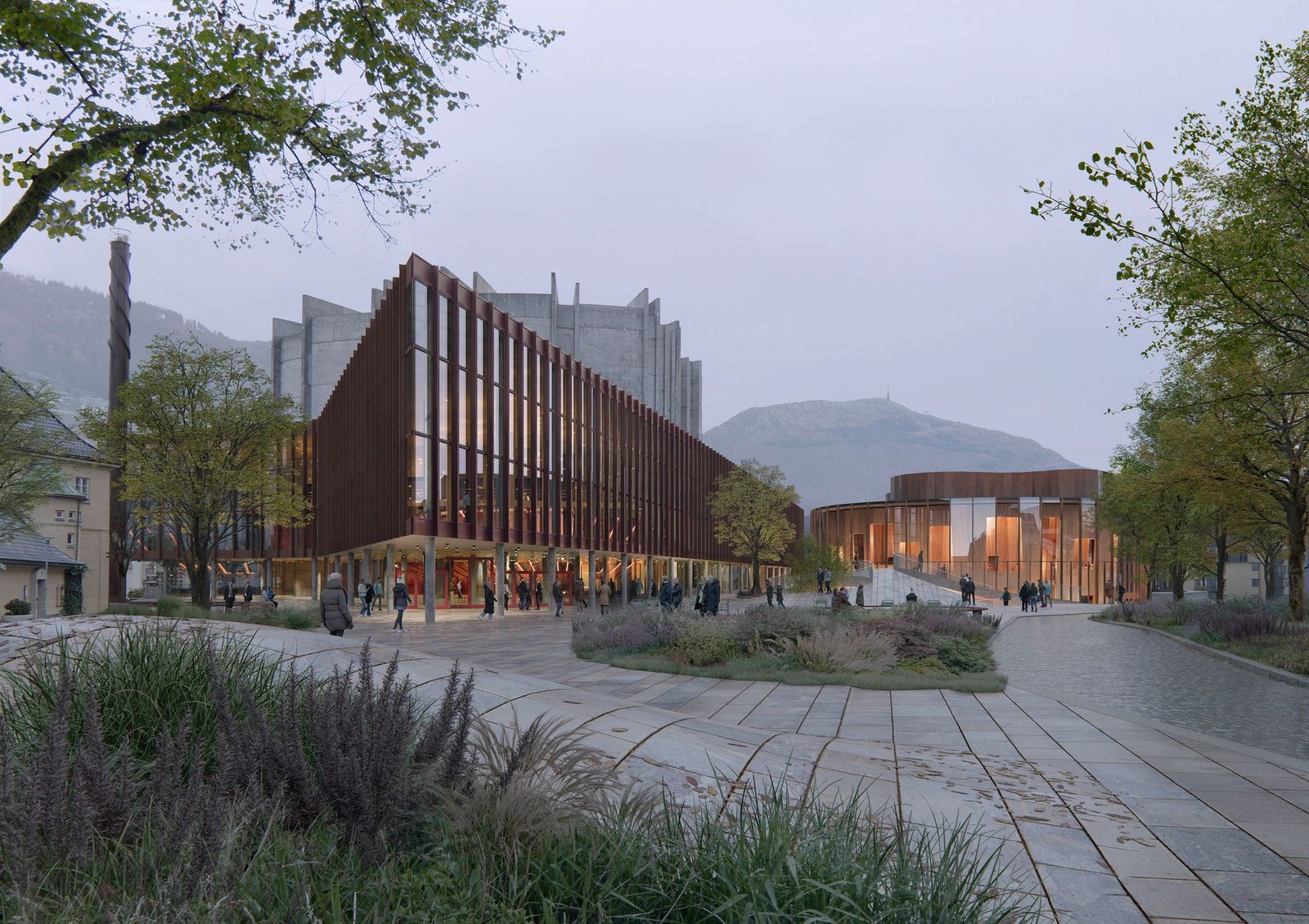
Henning Larsen has won the international competition for Kontrapunkt, a new arts center for Bergen, Norway, with a design that extends the city’s landmark Grieg Hall rather than replacing it. The Kontrapunkt Arts Center proposal adds a music and conference hall, large exhibition galleries, rehearsal space, a café and a new green square to the Grieg Quarter near the city centre, with completion expected around 2030-31. This review explains the brief, the main design moves, the team behind the project, and what Pakistani cities can learn about extending existing cultural buildings instead of starting from scratch.
Kontrapunkt Arts Center at a Glance
| Architect | Henning Larsen |
|---|---|
| Location | Grieg Quarter, Bergen, Norway |
| Client | Musikkselskapet Harmonien |
| Status | Competition-winning design; expected completion around 2030-31 |
| Main spaces | Music and conference hall, exhibition halls of about 3,570 m² below the square, rehearsal room, café, sheltered outdoor area and green plaza |
| Existing building | Grieg Hall, designed by Danish architect Knud Munk |
| Team | Thornström Brookfield Arkitekter (local architect), Rambøll (engineering), Charcoal Blue and AIX (stage technology), Schjelderup & Gram (heritage) |
Background: Bergen and the Grieg Quarter
Bergen is Norway’s second-largest city and has a strong musical identity linked to the composer Edvard Grieg. Grieg Hall, the city’s main concert venue, is home to the Bergen Philharmonic Orchestra, which is managed by Musikkselskapet Harmonien, the client for the new project. The area around the hall, known as the Grieg Quarter, combines cultural institutions, city streets and green space close to the historic centre.
Like many concert halls of its era, Grieg Hall was designed for a narrower range of uses than today’s cultural venues need. Modern arts centres are expected to host exhibitions, conferences, festivals, community events and education programmes, and to stay busy during the day as well as in the evening. The competition asked how the Grieg Quarter could grow to meet those needs while respecting the existing building.
The Design Concept: A Counterpoint to Grieg Hall
The project’s name, Kontrapunkt, means counterpoint, a musical term for independent melodies that work together. The name sums up the architectural approach: the new building is a distinct addition with its own character, but it is designed to work in harmony with the existing hall.
Extending, not replacing
Instead of demolishing or overshadowing Grieg Hall, the proposal incorporates the existing structure and builds on it. This honours the heritage of the original building, reinforces the Grieg Quarter as Bergen’s cultural centre, and avoids the waste and embodied carbon of demolition.
Indoor and outdoor together
Henning Larsen’s design makes active use of both indoor and outdoor space. A new green plaza creates a place for social gatherings, while a sheltered outdoor area next to the café gives visitors somewhere to meet in Bergen’s frequently wet weather.
Two ways in
The new hall occupies a central position on the site and can be entered from two sides: through Grieg Hall and directly from the square. This allows the building to welcome large crowds at the same time and to connect more naturally with the surrounding streets.
What the New Arts Center Contains
Music and conference hall
A flexible hall where visitors can listen to or play music, and which can also host conferences and festivals.
Exhibition halls
Around 3,570 m² of exhibition space below Edvard Grieg Square, used to present history and culture to visitors.
Rehearsal room
A space designed for rehearsals that can also be used for performances and events.
Café and shelter
A café with a covered outdoor area that gives the community an informal meeting place.
Engineering and Specialist Input
Cultural buildings are some of the most technically demanding projects in architecture. The published team shows the range of expertise needed:
- Rambøll provides structural, mechanical, electrical and plumbing engineering, along with lighting, acoustics, traffic, wind and noise studies.
- Charcoal Blue and AIX advise on stage technology, which covers rigging, stage machinery, audio-visual systems and theatre planning.
- Thornström Brookfield Arkitekter acts as local architect, bringing knowledge of Norwegian regulations and construction practice.
- Schjelderup & Gram advise on cultural heritage, which is essential when adding to a listed or historically significant building.
Placing large galleries below a public square also raises specific engineering issues: waterproofing, structural spans to carry soil and landscaping, fresh-air supply, smoke extraction and escape routes. Assembly buildings of this kind are usually designed with fire and life-safety principles similar to those set out by NFPA.
Building Next to a Working Concert Hall
One of the hardest parts of any extension project is keeping the existing building in use during construction. A concert hall cannot easily close for several years, because its orchestra, staff and audience depend on a regular programme. Projects of this kind are usually planned around a few principles:
- Phasing. Work is divided into stages so that some parts of the venue stay open while others are rebuilt.
- Noise and vibration control. Piling, excavation and demolition are scheduled around rehearsals and performances, and vibration is monitored near sensitive spaces.
- Safe public routes. Audiences must be able to reach the venue and leave it safely, with temporary escape routes and clear hoarding around the site.
- Services continuity. Electrical, cooling and fire systems serving the existing hall must stay live while new connections are made.
- Protection of heritage fabric. Original finishes, façades and fittings are protected or recorded before nearby work begins.
The same discipline applies to extending an operating hospital, school or shopping centre in Pakistan. A clear phasing plan, agreed with the building’s users before work starts, is often what separates a smooth extension from a disruptive one.
New Build vs Extension: Comparing the Options
| Factor | Demolish and rebuild | Extend the existing hall (Kontrapunkt approach) |
|---|---|---|
| Heritage | Loss of a recognised landmark | Existing building retained and reinforced |
| Embodied carbon | High, due to demolition and new structure | Lower, as much of the existing structure is reused |
| Design freedom | Greater | Constrained by the existing building |
| Technical complexity | Simpler interfaces | Complex junctions between old and new |
| Public perception | Can face resistance | Usually better accepted by the community |
Strengths and Open Questions
Strengths
- Respect for an existing cultural landmark and its architect.
- A broader mix of uses that can keep the quarter active throughout the day.
- A new public square that gives the community a reason to visit even without a ticket.
Open questions
- Below-ground galleries need very reliable waterproofing and ventilation in a wet climate.
- Construction next to an operating concert hall must be phased to limit noise and disruption.
- As a competition-stage design, details may change during development and approvals.
Lessons for Pakistan
Pakistan has a number of important modernist cultural buildings, such as arts councils, auditoriums and museums built in the second half of the twentieth century. Many now need more space, better acoustics, modern services and improved accessibility. The Kontrapunkt project offers a useful model.
Survey the existing building
Start with a structural, services and heritage assessment to understand what can be kept.
Add, don’t erase
Design extensions that complement the original architecture, and use the old building as the anchor of the new complex.
Create public space
Use courtyards, plazas and shaded outdoor areas to make the venue part of everyday city life.
Engineer for safety
Assembly spaces need structural, seismic and fire design in line with the Building Code of Pakistan and approval from authorities such as the Lahore Development Authority.
In Pakistan’s climate, the shelter that Bergen needs for rain becomes shade for heat: covered verandahs, trees and water features make outdoor cultural spaces usable for more of the year. Below-ground halls also help, because the earth moderates temperature, but they need reliable drainage and ventilation.
ACCO provides design and construction for commercial and public buildings in Lahore, including renovations and extensions to existing structures. Our architects in Gulberg Lahore handle concept design, approvals drawings and coordination with engineers. ACCO prices every project through an itemised BOQ; the construction cost per square foot guide explains the main cost factors. For an overview of everything we offer, see our services.
Frequently Asked Questions
What is the Kontrapunkt Arts Center?
Kontrapunkt is a planned new arts centre in Bergen’s Grieg Quarter. It extends Grieg Hall with a music and conference hall, exhibition halls, a rehearsal room, a café and a new green square.
Who designed Kontrapunkt?
The winning competition design is by Henning Larsen, working with Thornström Brookfield Arkitekter as local architect and Rambøll as engineer.
When will the Kontrapunkt Arts Center be completed?
Completion is expected around 2030-31, subject to design development, approvals and construction.
Why extend Grieg Hall instead of building a new venue?
Extending the existing hall preserves a cultural landmark, reuses much of the existing structure and avoids the waste and carbon emissions associated with demolition.
What can Pakistani cultural buildings learn from this project?
They can be extended and modernised rather than replaced, with new public space, better services and safety upgrades, provided a thorough survey of the existing building is done first.
Does ACCO work on extensions and renovations?
Yes. ACCO designs and builds extensions, renovations and new commercial and institutional buildings, with pricing through an itemised BOQ.
Conclusion
Henning Larsen’s Kontrapunkt Arts Center for Bergen is a thoughtful example of growing a cultural institution without discarding its history. By extending Grieg Hall, adding flexible performance and exhibition space and creating a new public square, the project aims to make the Grieg Quarter busier and more welcoming. For Pakistan, the main lesson is that ageing cultural buildings can often be upgraded and extended, giving cities better venues while keeping the landmarks people value.
Related articles
ACCO services
Contact ACCO
- +92 322 8000190
- info@acco.com.pk
- Office 2, 3rd Floor, Bigcity Plaza, Gulberg-III, Lahore
Planning a Project with ACCO?
Architecture, engineering and construction from one Lahore team since 1998. Design drawings are free when ACCO is awarded the construction.
Discuss Your ProjectWhatsApp +92 322 8000190