
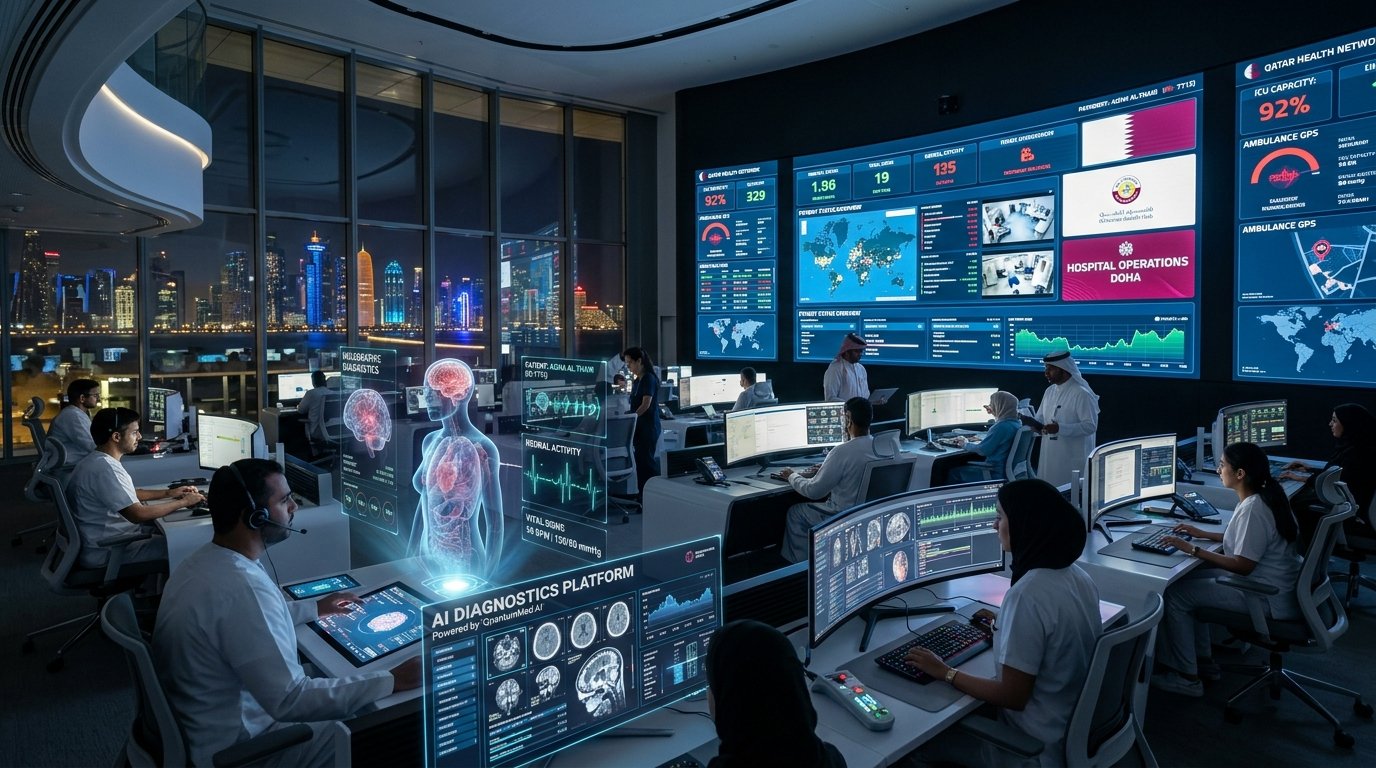
Smart & Digital Hospital Design in Qatar: AI Diagnostics, IoT & Smart Wards
Healthcare facilities are undergoing a paradigm shift from reactive treatment centers to hyper-connected, intelligent environments. In the State of Qatar, where national digital transformation agendas converge with high patient expectations, smart hospital design in Qatar is no longer an optional luxury—it is an essential operational requirement. Smart infrastructure directly impacts clinical outcomes, slashes nursing burnout, and drives facility-wide energy efficiency.
n
At ACCO, our healthcare engineering practice integrates cutting-edge digital infrastructure seamlessly into physical architectural and MEP plans. Below is an in-depth review of the core technological pillars that define a future-ready, smart hospital in 2026.
n
1. The Intelligent Building Management System (BMS) and IoT Sensing
n
A smart hospital operates on a synchronized digital nervous system. Traditional standalone HVAC and electrical controls are replaced by enterprise-grade IoT-integrated Building Management Systems:
n
- n
- Predictive Cleanroom Environmental Control: Differential pressure sensors in operating theaters and isolation rooms continuously modulate Variable Air Volume (VAV) dampers to maintain precise pressure gradients (+35 Pa or -15 Pa) and relative humidity, logging real-time data directly to hospital compliance dashboards.
- Occupancy-Driven Energy Optimization: In outpatient clinics and consultation rooms, automated smart occupancy sensors modulate LED illumination and fresh-air intake rates, cutting idle HVAC energy consumption by up to 32%.
- Real-Time Asset Tracking (RTLS): Integrating Ultra-Wideband (UWB) and Bluetooth Low Energy (BLE) sensor grids into ceiling structures enables real-time tracking of mobile medical equipment (infusion pumps, crash carts, portable ultrasound units) and prevents equipment bottlenecks.
n
n
n
n
2. The Patient-Centric ‘Smart Ward’ of 2026
n
Inpatient room architecture has transformed into an intuitive, touch-free healing sanctuary that empowers patients while freeing up clinical nursing hours:
n
- n
- Integrated Bedside Terminals: Bedside interactive touchscreens integrated into hospital EMR systems allow patients to adjust circadian lighting, room temperature, and window blinds, view educational recovery videos, and consult virtually with dietary specialists.
- Continuous Contactless Vitals Monitoring: Under-mattress radar sensors and optical sensor arrays continuously track heart rate, respiratory rates, and sleep micro-movements, alerting the central nursing station to early clinical deterioration without disturbing sleeping patients.
- Acoustic and Circadian Lighting Tuning: Dynamically shifting lighting temperatures (from energizing 5500K blue-enriched daylight in the morning to relaxing 2700K warm tones in the evening) resets circadian rhythms, demonstrably shortening post-operative hospital stays.
n
n
n
n
3. Automated Logistics & Pneumatic Tube Networks
n
Modern hospital traffic congestion is dramatically reduced by delegating routine internal transport to robotic and automated networks:
n
- n
- Autonomous Mobile Robots (AMRs): Dedicated service corridors and automated service elevators programmed for AMRs that deliver meals, clean linens, and heavy medical consumables directly to nursing wards without human intervention.
- High-Speed Pneumatic Tube Systems (PTS): Computer-controlled pneumatic carrier networks connecting outpatient phlebotomy, emergency rooms, and inpatient units directly to the central pathology laboratory, delivering blood and specimen samples in under 90 seconds.
n
n
n
Discover how ACCO incorporates specialized logistics infrastructure into modern architectural blueprints.
n
4. Telehealth & AI Diagnostic Hub Architecture
n
Smart hospitals must accommodate hybrid healthcare workflows where decentralized telemedicine and centralized AI diagnostics operate at scale:
n
- n
- Acoustically Isolated Tele-Consultation Pods: Compact, high-definition tele-health suites built with STC 52 acoustic insulation and studio-grade directional microphones, enabling physicians to provide remote regional consultations seamlessly.
- AI-Assisted Radiology Reading Rooms: High-bandwidth fiber-optic backbones connecting radiology suites directly to on-premises GPU clusters that run real-time deep-learning algorithms for rapid triage of chest CT scans and brain MRIs.
- Fiber-to-the-Bed (FTTB) Cabling: Redundant Category 6A and single-mode optical fiber conduits embedded throughout structural risers to handle massive petabyte-scale medical imaging data flows without latency.
n
n
n
n
5. Resilient MEP Infrastructure for Digital Healthcare
n
A smart hospital is only as dependable as its underlying electrical and mechanical backbone. Smart features increase facility sensitivity to micro-outages and voltage fluctuations:
n
- n
- Tier-III Data Center Standards: On-premises hospital server rooms engineered with dual power paths, precision N+1 cooling, and FM-200 clean agent fire suppression systems.
- Uninterruptible Power Supply (UPS) Protection: Flywheel and lithium-ion UPS arrays guaranteeing zero millisecond transfer times for life-critical patient monitoring, surgical robots, and diagnostic PACS networks.
n
n
n
Read more about our life-safety and electrical engineering expertise on our MEP solutions page.
n
Build Tomorrow’s Smart Hospital with ACCO
n
Smart hospitals require design teams that understand both civil engineering and cutting-edge digital healthcare architectures. ACCO bridges this gap, delivering state-of-the-art medical facilities that maximize clinical efficiency and patient satisfaction. Connect with our smart hospital engineering consultants to future-proof your healthcare facility design.