Best Healthcare Architecture & Medical Engineering Firms in Kuwait
Designing a hospital is one of the most complex challenges in the architecture and construction industry. Unlike commercial towers or residential developments, a hospital is a living, high-tech machine operating 24 hours a day, 365 days a year. In Kuwait, selecting the right partner from among the leading healthcare architecture firms in Kuwait determines whether a medical facility achieves fast-track Ministry of Health (MoH) licensing and operational profitability or suffers from endless redesigns, delayed commissioning, and costly spatial bottlenecks.
n
In this guide, ACCO examines the critical qualifications, engineering capabilities, and design philosophies that healthcare investors must demand when selecting a hospital design and construction consultant in 2026.
n
Core Competencies of a Top Healthcare Architecture Firm
n
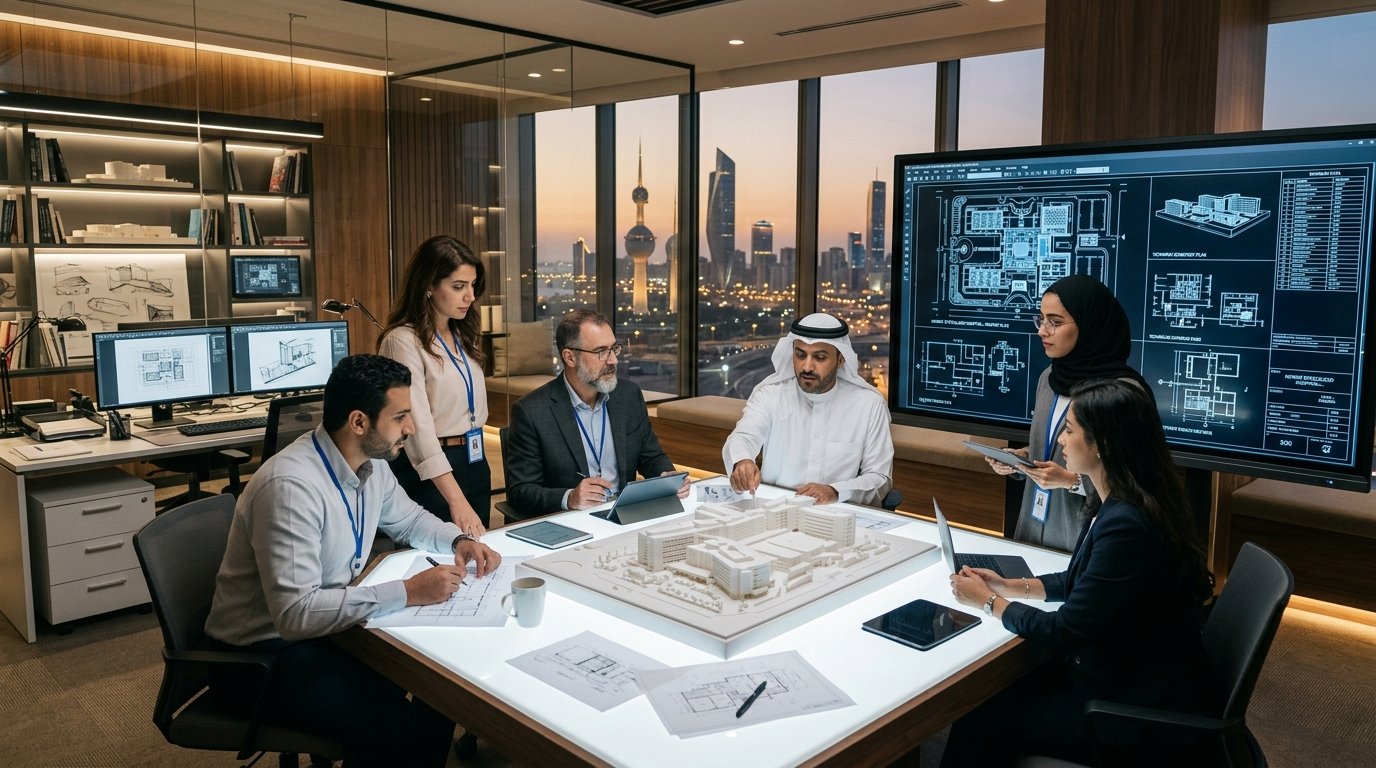
When evaluating healthcare design consultants in Kuwait, generalist architectural firms often fail to understand clinical operations. Look for the following specialized competencies:
n
- n
- Clinical Flow Mastery: Deep knowledge of spatial relationships between surgical suites, intensive care, central sterile supply departments (CSSD), and emergency reception to prevent cross-contamination and minimize travel distances for clinical staff.
- Regulatory Track Record: Thorough understanding of the Department of Private Health Services under the Kuwait Ministry of Health, Kuwait Fire Force (KFF), and Kuwait Municipality building codes.
- Integrated In-House MEP Engineering: Healthcare facilities require specialized mechanical systems (HVAC cleanroom cascades, medical gas pipelines, HEPA filtration). When architecture and MEP are handled by separate firms, coordination errors in ceiling plenums frequently cause massive construction delays.
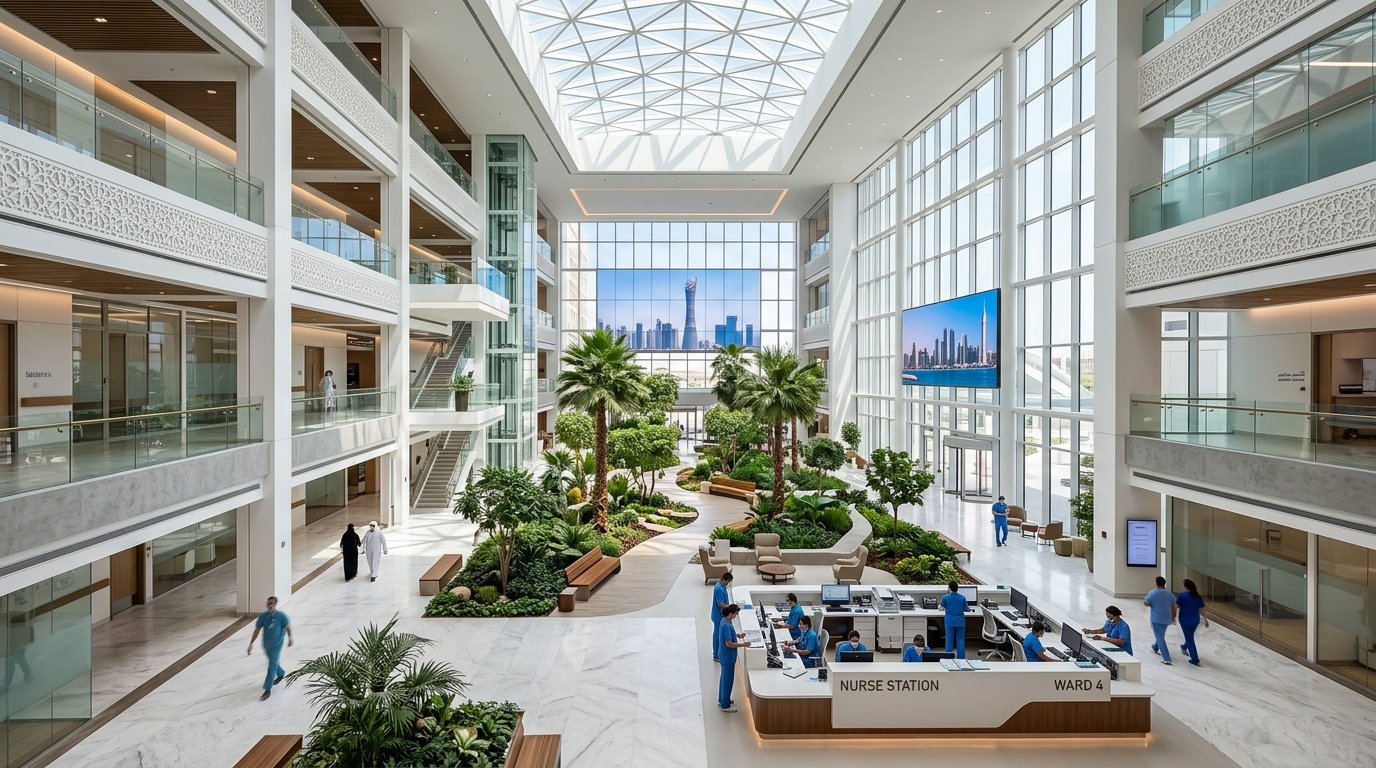
- Evidence-Based Design (EBD): Applying scientific research to architectural choices—optimizing natural daylight, integrating sound-dampening materials, and designing restorative outdoor green spaces that clinically reduce patient stress and recovery times.
n
n
n
n
n
Why Integrated Design-Build is Essential in the GCC
n
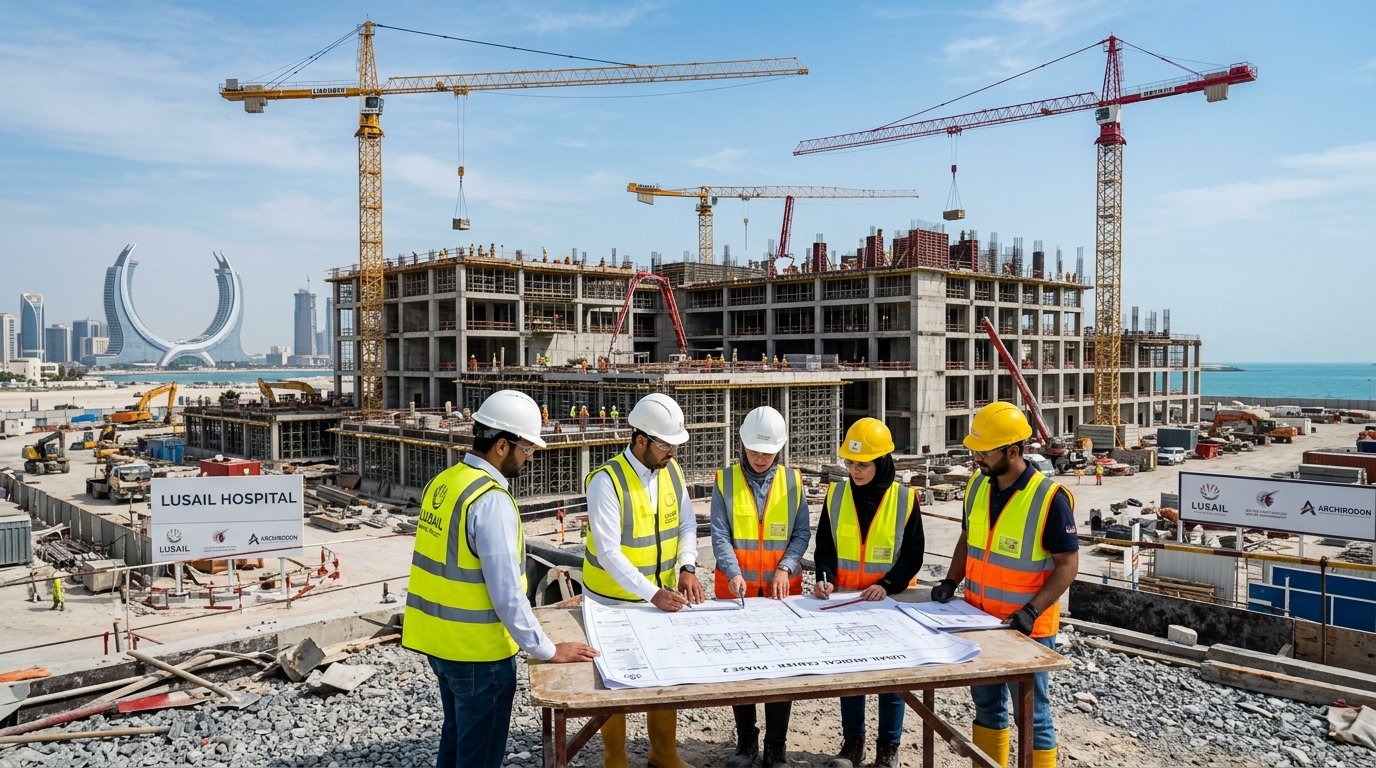
The traditional fragmented method—hiring a design architect, a separate structural engineer, and an independent general contractor—routinely leads to finger-pointing, budget overruns, and schedule slippage. Leading developers in Kuwait and the Gulf are shifting toward the Integrated Design-Build (EPC) model:
n
- n
- Single Point of Accountability: The design-build firm carries full legal and operational responsibility from initial concept sketches to final facility hand-over and testing.
- Accelerated Delivery: Civil works and foundation dewatering can commence while detailed architectural interior fit-out drawings are finalized, cutting total project duration by 20% to 30%.
- Cost Certainty: Construction engineering feedback during the schematic design phase eliminates unbuildable architectural concepts and protects the developer’s bottom line.
n
n
n
n
Explore ACCO’s integrated architectural design services and comprehensive construction execution solutions.
n
ACCO’s Strategic Edge in Middle Eastern Healthcare
n
With decades of specialized experience across hospital design, structural engineering, and electro-mechanical systems, ACCO combines deep technical expertise with commercial acumen. Our healthcare design team specializes in:
n
- n
- Turnkey 20–150 bed multi-specialty community hospitals.
- State-of-the-art modular Operating Theatre (OT) suites and surgical recovery centers.
- Diagnostic radiology centers featuring structural vibration isolation and lead radiation shielding.
- Energy-efficient cleanroom HVAC engineering designed specifically for severe Middle Eastern climates.
n
n
n
n
n
Planning to build or upgrade a medical facility in Kuwait? Contact ACCO’s healthcare architecture division today to discuss your master plan and project feasibility.