Nanhai Art Center by MAD Architects: Lakefront Design Review
By Tanveer Ahmed, CEO, Ahmed Construction Company (ACCO) · Updated · Reviewed by ACCO architects and engineers
Quick Answer
Nanhai Art Center by MAD Architects in Foshan: a lakefront theatre, museum and sports complex under an ETFE roof. Design review and lessons for Pakistan. Ahmed Construction Company (ACCO), based in Gulberg-III Lahore since 1998, provides ACCO design & construction services with design drawings free on award of construction.
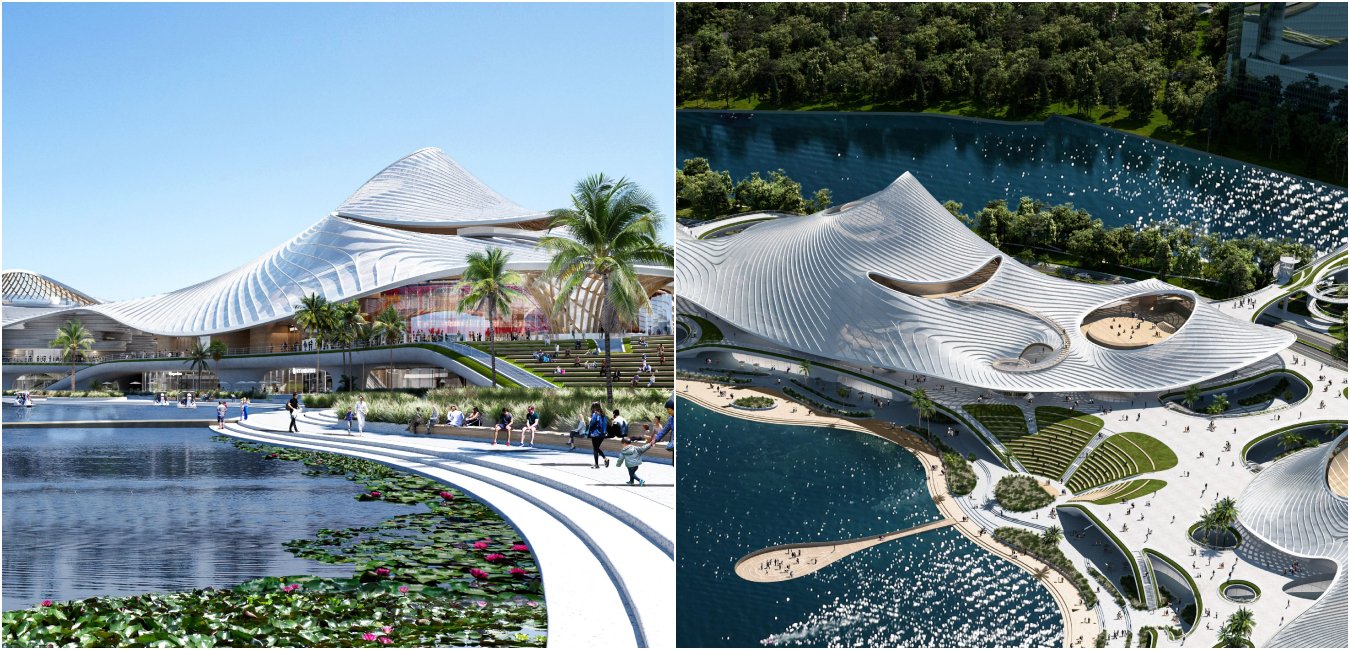
The Nanhai Art Center, designed by MAD Architects for Foshan in China’s Guangdong province, is a large cultural complex on a lakefront in the Nanhai Cultural District. It brings a grand theatre, a museum and a sports centre together under one flowing, translucent roof, and links them to the lake, a riverside park and the city with raised landscaped platforms. This review looks at how the project is organised, what its materials and sustainability features are meant to achieve, and what architects and developers in Pakistan can learn from it when planning cultural, civic and mixed-use buildings.
Nanhai Art Center at a Glance
| Architect | MAD Architects, led by Ma Yansong, Dang Qun and Yosuke Hayano |
|---|---|
| Location | Nanhai Cultural District, Foshan, Guangdong, in the Pearl River Delta between Guangzhou and Foshan |
| Size | Close to 60,000 square metres of built area |
| Main functions | Grand theatre, museum, sports centre, with retail and public terraces |
| Key features | Wave-shaped translucent ETFE roof, porous facades, elevated landscape platform, photovoltaics, rainwater collection, vertical greening |
| Executive architect | Tongji Architectural Design (Group) Co., Ltd |
Site and Urban Context
The Pearl River Delta is one of the most densely built regions in the world, and Guangzhou and Foshan have grown towards each other over recent decades. The Nanhai Cultural District sits in this zone of growth. Rather than placing a set of separate monuments on the site, MAD treated the art centre as a piece of landscape that joins the lake, a riverfront park and the surrounding urban blocks.
This matters because large cultural buildings often turn their backs on the city. They sit behind car parks and fences and are busy only on performance nights. At Nanhai, the raised platforms and terraces are designed to be used every day, by people walking, sitting, shopping or simply looking at the water.
Design Concept: Water and Local Culture
Ma Yansong has said that the project aims to bring traditional Nanhai culture back into modern life. The form of the building responds to two ideas.
Water
The roof rises and falls in a wave-like line that opens towards the lake. Seen from a distance it reads as one continuous shape, even though it covers several buildings with very different uses.
Local activities
The architects refer to local traditions such as lion dance and dragon boat racing. The open terraces and waterfront edge give space for festivals, performances and gatherings, so the building can host culture outside as well as inside.
How the Complex Is Organised
The plan places the grand theatre and the museum on one side, with a visual connection to the lake. The sports centre sits on the other side. Commercial buildings around the edges add everyday activity and frame the cultural core.
Grand theatre
The main performance venue, oriented towards the lake so that foyers and terraces enjoy water views before and after shows.
Museum
Designed alongside the theatre, sharing public space and creating a combined cultural destination.
Sports centre
Provides a range of sports facilities, bringing a different and more frequent group of users to the site.
Retail and terraces
Shops are linked to the cultural buildings by viewing platforms and outdoor patios, keeping the site active during the day.
A raised pedestrian platform gives direct access to the entrances of the cultural spaces. This separates people on foot from vehicles below and creates a continuous public route through the site.
Materials and Sustainability
The most visible material decision is the roof. It is covered with a translucent white ETFE membrane, a lightweight fluoropolymer film used in stadiums, atriums and exhibition buildings around the world. ETFE lets diffused daylight into the spaces below, which reduces the need for artificial lighting during the day. It is also much lighter than glass, so the supporting structure can be more slender.
MAD’s description of the project also lists:
- Photovoltaic panels for on-site electricity generation
- Rainwater collection for reuse
- Vertical greening systems on parts of the facade
- Porous facades that allow air movement and views through the buildings
In a hot, humid climate like southern China’s, shading, daylight control and natural ventilation in public spaces are as important as the energy systems themselves.
Structure and construction challenges
A single roof spanning several buildings of different heights is demanding to engineer. The supporting structure has to follow a complex curved geometry, accommodate movement between buildings, and carry wind loads, which are significant in a coastal region exposed to typhoons. Membrane roofs also need careful detailing at gutters and edges so that heavy tropical rain is collected and drained without leaks. Projects of this type rely on digital modelling to set out the geometry, coordinate the steelwork with services, and produce fabrication data for each panel.
Theatre and museum spaces add their own requirements. A theatre needs acoustic isolation from the sports centre and from outside noise, while a museum needs stable temperature and humidity to protect its collection. Placing these very different uses under one roof means each building still has to work as a separate, well-sealed enclosure inside the larger shell.
ETFE Roof vs Conventional Roofing
| Factor | ETFE membrane roof | Glass roof | RCC or metal deck roof |
|---|---|---|---|
| Weight | Very light | Heavy | Heavy (RCC) to moderate (metal) |
| Daylight | High, diffused | High, needs shading | None without skylights |
| Heat gain | Can be controlled with printed or multi-layer cushions | High without coatings | Low with insulation |
| Specialist skills | Specialist supplier and installer needed | Curtain-wall contractor | Widely available |
| Typical use | Stadiums, atriums, exhibition halls | Atriums, malls | Most buildings |
What Works Well in the Design
- One identity for many uses. The single roof gives a theatre, museum and sports hall a shared image, which helps the district become a recognisable destination.
- Public space first. Raised platforms and terraces are planned as places to stay, not just routes to doors.
- Mixed users. Combining culture, sport and retail means the site is busy at different times of the day and week.
- Climate-aware choices. Diffused daylight, shading and greenery suit a hot, humid location.
Points to watch
Large, iconic roofs carry long-term maintenance responsibilities. Membrane panels need periodic inspection and cleaning, and replacement parts must come from specialist suppliers. Operators also have to manage the energy use of large covered public spaces, which can become hot if shading and ventilation are not tuned. These are not criticisms of the design so much as reminders that the running costs of a landmark should be budgeted from the start.
For a comparable approach to cultural buildings, see our review of MVRDV’s Chengdu Cultural Center and the Joslyn Art Museum expansion by Snøhetta.
Lessons for Pakistan
Pakistan’s cities are building new cultural, sports and commercial facilities, from expo centres to stadium upgrades and private mixed-use schemes. Several ideas from Nanhai transfer well.
Plan the public realm
Shaded plazas, terraces and walkways should be designed with the building, not added at the end.
Mix uses
Pair cultural venues with sport, food and retail so the site stays active beyond event nights.
Design for heat
Large roofs that shade outdoor space, controlled daylight and good cross-ventilation suit Lahore, Karachi and Multan summers.
Check approvals early
Large public buildings need early engagement with the development authority, such as the LDA in Lahore, and design to the Building Code of Pakistan.
Specialist materials such as ETFE are available in Pakistan only through a small number of international suppliers, so they need careful cost and maintenance planning. In many local projects, similar effects can be achieved with tensile fabric canopies, perforated metal screens or deep concrete overhangs. ACCO’s architectural design services in Lahore help clients test such options against budget, and our commercial building cost guide explains how projects are priced through an itemised BOQ.
Frequently Asked Questions
Who designed the Nanhai Art Center?
MAD Architects, the Beijing-based practice founded by Ma Yansong, with partners Dang Qun and Yosuke Hayano. Tongji Architectural Design (Group) acted as executive architect.
Where is the Nanhai Art Center?
In the Nanhai Cultural District of Foshan, Guangdong province, in the Pearl River Delta between Guangzhou and Foshan.
What buildings does the Nanhai Art Center include?
A grand theatre, a museum and a sports centre, with retail spaces, viewing platforms and outdoor terraces connecting them.
What is ETFE and why is it used on the roof?
ETFE is a lightweight, translucent polymer film. It admits diffused daylight, weighs far less than glass and allows large curved roofs with lighter structure.
Can ETFE roofs be built in Pakistan?
It is possible through specialist international suppliers, but cost, local installation skills and maintenance must be checked carefully. Tensile fabric or metal canopies are often more practical alternatives.
Does ACCO design cultural and mixed-use buildings?
Yes. ACCO provides architectural design, structural and MEP coordination and construction for commercial, institutional and mixed-use projects in Pakistan. See our full list of services.
Conclusion
The Nanhai Art Center shows how a large cultural complex can act as public landscape as well as a set of venues. Its single roof, mixed uses and climate-aware materials offer useful ideas for Pakistani cities planning their own civic and cultural buildings, provided the ideas are adapted to local budgets, skills and climate.
Related articles
ACCO services
Contact ACCO
- +92 322 8000190
- info@acco.com.pk
- Office 2, 3rd Floor, Bigcity Plaza, Gulberg-III, Lahore
Planning a Project with ACCO?
Architecture, engineering and construction from one Lahore team since 1998. Design drawings are free when ACCO is awarded the construction.
Discuss Your ProjectWhatsApp +92 322 8000190
Grey Structure Construction Cost in Pakistan 2027: What You’ll Actually Pay