
Healthcare Turnkey Projects: Hospital Design & Build in Pakistan
By Tanveer Ahmed, CEO, Ahmed Construction Company (ACCO) · Updated · Reviewed by ACCO architects and engineers
Quick Answer
Healthcare turnkey projects in Pakistan: what hospital design and build includes, turnkey vs traditional contracts, key systems, risks and contract tips. Ahmed Construction Company (ACCO), based in Gulberg-III Lahore since 1998, provides hospital design & construction services with design drawings free on award of construction.
Healthcare turnkey projects place the design, construction, building services and fit-out of a hospital or clinic under one contract and one accountable team. Instead of the owner hiring an architect, several engineers, a civil contractor, an MEP contractor and interior firms separately, and then managing the gaps between them, a turnkey contractor delivers a facility that is ready to equip, license and open. This guide explains how turnkey hospital design and build works in Pakistan, what is and is not included, the advantages and risks, and how to set up a turnkey contract that protects the owner.
Healthcare Turnkey Projects at a Glance
| What it means | One contractor responsible for design, approvals support, construction, MEP, finishes, testing and handover |
|---|---|
| Suitable for | New hospitals, medical centres, specialist clinics, hospital wings, OT and ICU blocks, major refurbishments |
| Key systems | RCC structure, HVAC with clean-room zones, medical gases, electrical with backup power, plumbing, fire safety, IT and security |
| Standards | Building Code of Pakistan (PEC), ASHRAE 170 healthcare ventilation, NFPA life safety, provincial healthcare commission licensing standards |
| Pricing | Itemised BOQ against agreed drawings and specifications; see the hospital construction cost guide |
What Is a Turnkey Hospital Project?
The term turnkey means the owner receives a finished building and, in effect, only has to turn the key. In healthcare, this usually covers everything from the functional brief and design through to a tested, commissioned building with every system working. Depending on the contract, it can also include procurement and installation of medical equipment and furniture, or these can be kept with the owner.
Turnkey is a form of design and build. The difference is mainly scope: a turnkey contract goes further into fit-out, services and commissioning so that the facility is ready for licensing and operation.
Why Turnkey Delivery Suits Hospitals in Pakistan
- Complex coordination: hospitals combine structure, HVAC, medical gases, electrical, plumbing, fire safety and IT in tight spaces. Separate contractors often clash; one team resolves conflicts before they reach site.
- Single responsibility: when something goes wrong, there is one party to fix it, rather than designers and contractors blaming each other.
- Owners with limited project teams: many doctors and investors do not have in-house engineers or project managers to coordinate multiple contracts.
- Overseas investors: owners living abroad benefit from one point of contact and clear reporting.
- Faster programme: design and construction can overlap, and procurement starts earlier.
What a Turnkey Hospital Contract Includes
1. Brief and feasibility
Services, bed numbers, departments, site assessment, budget and phasing.
2. Design
Master plan, architecture, structural design, MEP design, interiors and equipment layouts.
3. Approvals support
Drawings for building approval and a review of the layout against licensing standards.
4. Construction
Foundations, grey structure, masonry, waterproofing and external works.
5. MEP installation
HVAC, medical gases, electrical, generators and UPS, plumbing, fire systems, IT and security.
6. Fit-out
Clinical finishes, OT and ICU panels, doors, ceilings, joinery and signage.
7. Testing and handover
Commissioning of every system, documentation, training and defects period.
Turnkey vs Traditional Contracting
| Factor | Traditional (separate contracts) | Turnkey design and build |
|---|---|---|
| Responsibility | Split between designers and several contractors | One contractor accountable for the whole result |
| Coordination | Owner manages interfaces | Contractor coordinates all disciplines |
| Programme | Sequential: design, tender, then build | Overlapping design and construction |
| Cost certainty | Variations common at interfaces | Clearer once the BOQ and specification are fixed |
| Owner control over design | High, through an independent architect | Exercised through brief, reviews and approvals |
| Owner workload | High | Lower |
The Building Systems That Define a Hospital
HVAC and clean rooms
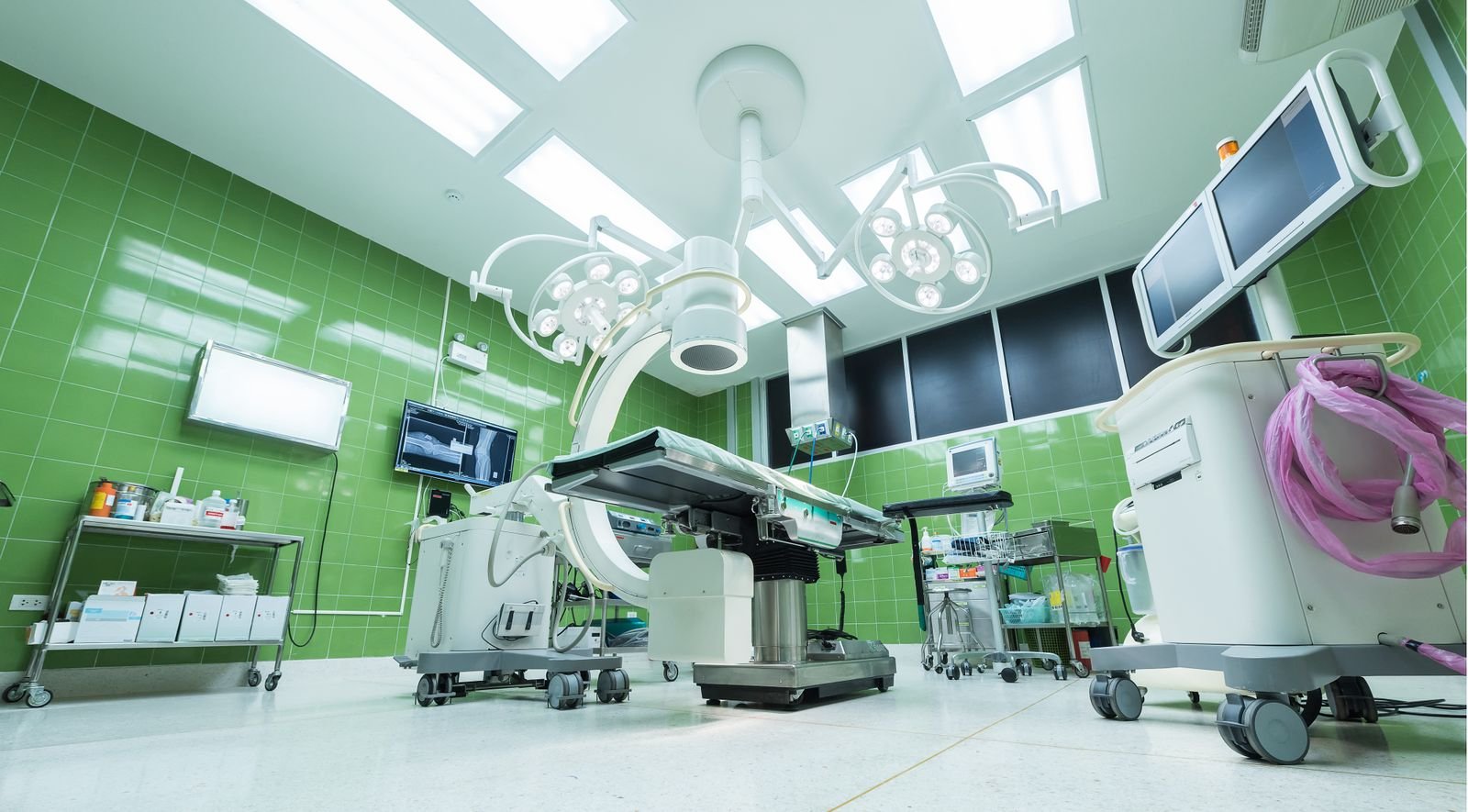
Pressure-controlled theatres, ICUs and isolation rooms with HEPA filtration, plus efficient cooling for general areas.
Medical gases
Oxygen, medical air and vacuum pipelines with manifolds, zone valves, alarms and bedhead outlets.
Electrical
Transformer, generators, UPS, isolated power in critical areas, and segregated essential circuits.
Fire and life safety
Compartmentation, detection, alarms, sprinklers where required, protected stairs and emergency lighting.
Plumbing
Water storage and treatment, hot water, drainage, and special services for dialysis and laboratories.
IT and security
Structured cabling, nurse call, CCTV, access control and public address.
These systems take a large share of a hospital budget and are where most failures occur, which is why a turnkey contractor’s MEP capability matters more than its civil works record.
How to Set Up a Turnkey Contract That Protects the Owner
- Write a clear brief. List services, bed numbers, theatres, ICU beds, imaging and any equipment the contractor must accommodate.
- Fix the specification. Agree brands, grades and standards for key items such as HVAC units, panels, flooring and medical gas components.
- Insist on an itemised BOQ. A lump sum without quantities makes variations hard to judge. Our guide to hospital BOQ and cost estimation explains what a good BOQ contains.
- Define what is excluded. Medical equipment, furniture, land, approval fees and licensing are often excluded; make this explicit.
- Agree milestones and payments. Link payments to measurable progress rather than dates.
- Require testing and documentation. Commissioning records, as-built drawings and operation manuals should be handover conditions.
- Set a defects period. The contractor should return to fix defects for an agreed period after handover.
- Keep independent oversight if needed. Some owners appoint a separate project manager to review design and progress. See hospital project management consultants.
Risks of Turnkey Projects and How to Manage Them
- Design quality: the contractor may favour cheaper solutions. Manage this with a detailed brief, specification and design reviews by the clinical team.
- Scope gaps: unclear exclusions lead to disputes. List every system and item in the BOQ.
- Choosing on price alone: the lowest bid often hides lower specifications. Compare like for like.
- Inexperienced contractors: general builders may underestimate hospital MEP. Ask for completed healthcare projects and references.
Turnkey for Extensions and Refurbishments
Turnkey delivery also suits work inside running hospitals, such as new theatre suites, ICU upgrades or added wards. Here the contractor must also plan phasing, temporary services, dust and noise control, and infection-control measures with the hospital’s own team, so that patient care continues safely during works.
Choosing a Turnkey Hospital Contractor
Because one firm carries the whole project, choosing the right turnkey contractor is the most important decision in this delivery model. Before signing, owners should check:
- Healthcare track record: completed and operating hospitals or clinics, ideally ones the owner can visit and whose management can be contacted.
- Design capability: whether architecture, structure and MEP design are handled by qualified, registered professionals, and how they coordinate.
- MEP delivery: experience installing and commissioning clean-room HVAC, medical gas pipelines and essential power systems, not only civil works.
- Financial stability: the ability to carry the project through price changes without stopping work.
- Reporting: regular progress reports with photographs, quantities and updated programmes.
- After-sales support: response during the defects period and availability for maintenance afterwards.
Our guide to choosing the best hospital construction company in Pakistan gives a fuller checklist.
Turnkey for Smaller Facilities
Turnkey delivery is not only for large hospitals. Specialist clinics, dental and eye centres, dialysis units, diagnostic centres and day-surgery facilities often benefit even more, because their owners are busy practising doctors with little time to manage several contractors. For these projects, the turnkey scope typically focuses on interior design, clinical fit-out, HVAC, electrical upgrades and plumbing inside an existing shell, with a shorter programme and a clear opening date.
Budgeting a Turnkey Hospital
The cost of a turnkey hospital depends on bed count, departments, the specification of theatres, ICU and HVAC, power backup, basements and whether equipment is included. ACCO prices each turnkey project through an itemised BOQ prepared against the agreed drawings and specification. Read our hospital construction cost guide for Pakistan for the main cost drivers, and see an example of a city-specific approach in turnkey hospital design and construction in Faisalabad.
Frequently Asked Questions
What are healthcare turnkey projects?
They are hospital or clinic projects where one contractor handles design, construction, building services, fit-out and commissioning, delivering a facility that is ready to equip, license and operate.
Does a turnkey hospital contract include medical equipment?
It can, but often equipment is procured separately by the owner. The contract should state clearly whether equipment, furniture and IT hardware are included.
Is turnkey construction more expensive?
Not necessarily. The contractor’s margin covers coordination that the owner would otherwise manage, and fewer interface disputes usually mean fewer variations. Each project is priced through an itemised BOQ.
Can the owner still control the design in a turnkey project?
Yes, through a detailed brief, an agreed specification, design reviews with the clinical team and formal approval of drawings before construction.
How long does a turnkey hospital project take?
It depends on size, departments, approvals and site conditions. Overlapping design and construction can shorten the programme, and ACCO provides a project-specific schedule after feasibility.
Does ACCO deliver turnkey hospital projects?
Yes. ACCO provides feasibility, design, approvals support, construction, MEP and fit-out as a single turnkey hospital construction service, with design drawings free on award of construction.
Conclusion
Healthcare turnkey projects give hospital owners in Pakistan one accountable team for a building that is complex by nature. With a clear brief, fixed specification, itemised BOQ and proper commissioning, turnkey delivery reduces coordination risk, shortens programmes and produces a facility ready for licensing and patients.
Related articles
Contact ACCO
- +92 322 8000190
- info@acco.com.pk
- Office 2, 3rd Floor, Bigcity Plaza, Gulberg-III, Lahore
Planning a Project with ACCO?
Architecture, engineering and construction from one Lahore team since 1998. Design drawings are free when ACCO is awarded the construction.
Discuss Your ProjectWhatsApp +92 322 8000190