PEGS Music Centre by McBride Charles Ryan, Melbourne: School Design Review
By Tanveer Ahmed, CEO, Ahmed Construction Company (ACCO) · Updated · Reviewed by ACCO architects and engineers
Quick Answer
Penleigh and Essendon Grammar School Music Centre by McBride Charles Ryan: soundwave façade, practice rooms and a heritage link. Lessons for Pakistan. Ahmed Construction Company (ACCO), based in Gulberg-III Lahore since 1998, provides ACCO design & construction services with design drawings free on award of construction.
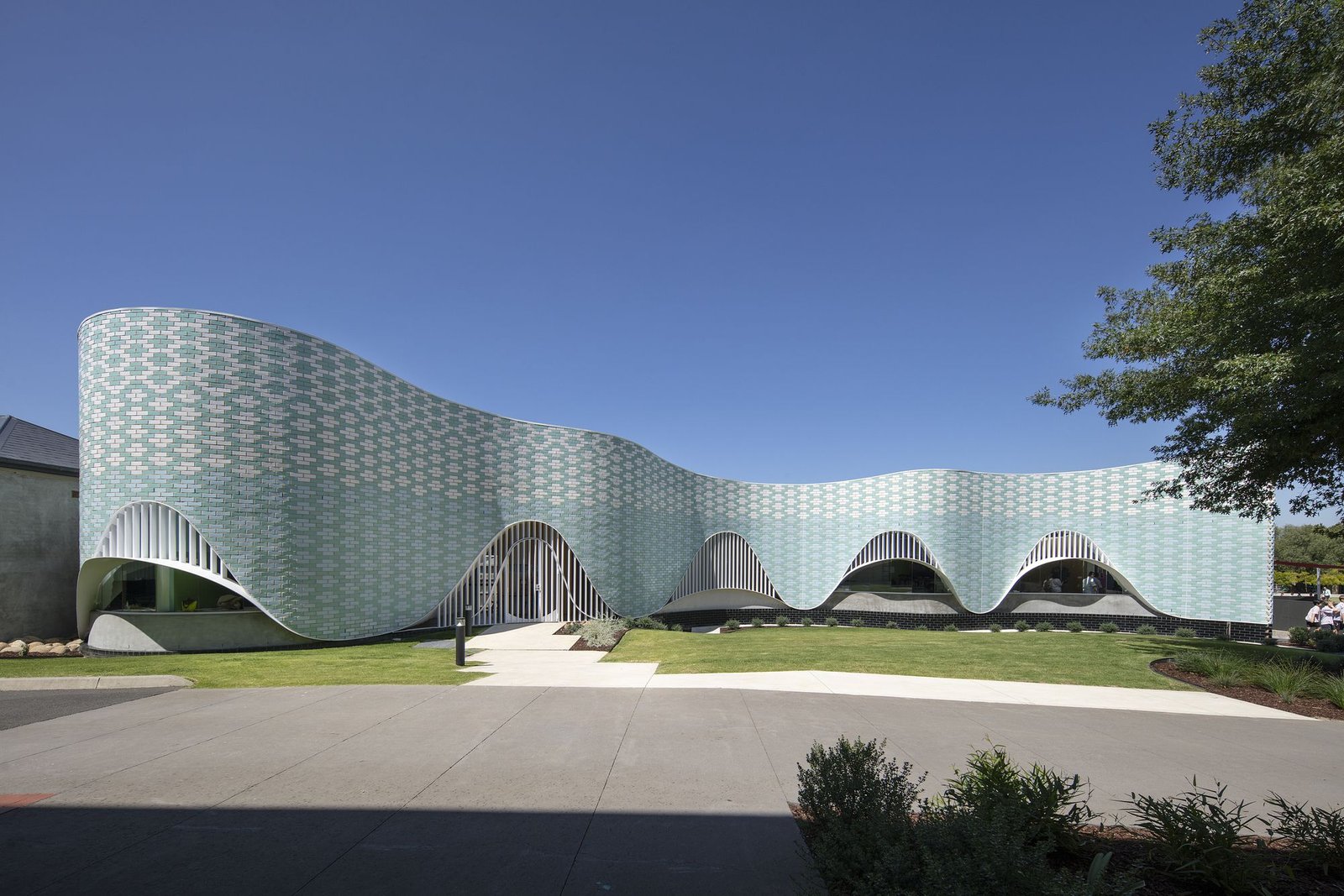
The Penleigh and Essendon Grammar School (PEGS) Music Centre in Melbourne, Australia, designed by McBride Charles Ryan (MCR), extends and renews a historic Victorian house that the school had long used for music lessons. A new wing with practice rooms and a performance classroom links the old house with a 2009 junior school building by the same architects, and a wave-like façade, often described as a frozen soundwave, ties the group together around a shared courtyard. This review explains how the Penleigh and Essendon Grammar School Music Centre is planned, how it combines heritage and new construction, the acoustic needs of music spaces, and what school owners in Pakistan can learn when adding arts facilities to existing campuses.
Penleigh and Essendon Grammar School Music Centre at a Glance
| Architect | McBride Charles Ryan (MCR) |
|---|---|
| Client | Penleigh and Essendon Grammar School (PEGS) |
| Location | Melbourne, Victoria, Australia |
| Project type | Renovation and extension of a historic Victorian house used for music |
| Neighbour | MCR’s Junior Boys’ Year 5 and 6 Building, completed in 2009 |
| Spaces | Practice rooms of various sizes, a large classroom for teaching and performances, courtyard and outdoor performance areas |
| Signature feature | A wave-shaped motif resembling a frozen soundwave along the northern façade |
Context: A Series of Projects on One Campus
The Music Centre is one of a series of projects MCR has designed across the PEGS campuses. Before the new work, music was taught in an original single-storey Victorian house on the site. Next to it stood the Junior Boys’ Year 5 and 6 Building, a distinctive MCR design completed in 2009.
The brief was to renovate the historic Music House, enlarge it and improve spaces for both teaching and performance. The challenge was to do this in a way that respected the old house, related to the 2009 building and gave music its own identity.
Design Concept: A Mini-Precinct With a Courtyard
Rather than treating the new wing as a stand-alone building, the architects composed the three buildings, the Victorian house, the 2009 building and the new Music Centre, as a small precinct. A fourth element, a courtyard, binds them together.
- The Victorian house keeps its historic character and continues in use for music.
- The new Music Centre acts as a link between the formal 2009 building and the older house.
- The courtyard becomes an outdoor room for gathering and informal performance.
This approach turns three separate structures into a place with a sense of identity, where children move between old and new.
The Frozen Soundwave Façade
The building’s most memorable feature is a wave-like motif that runs along the undulating plan and shapes the northern elevation. It reads like a frozen soundwave, an obvious but playful reference to music. The same element frames new outdoor and performance areas, so it is both decorative and functional.
MCR describes the addition as drawing on the basic characteristics of classic modernist school architecture, with framed entrances on the south and west façades that refer to institutional school buildings, while the wave adds a lyrical, imaginative quality suited to young students.
Inside: Practice Rooms and a Performance Classroom
Practice rooms
Rooms of different sizes for individual lessons and small ensembles.
Large classroom
Used for music teaching, individual instruction and student performances for parents and guests.
Outdoor areas
The courtyard and spaces framed by the wave façade allow outdoor performance.
Acoustics: The Hidden Design Challenge
Music buildings must manage sound in two directions: keeping it in and making it sound good inside. Key considerations for any school music facility include:
- Sound insulation. Heavy or double walls, sealed doors and separated structures stop one practice room disturbing the next or nearby classrooms.
- Room acoustics. Absorbent and diffusing surfaces control echo so music sounds clear rather than harsh.
- Room shape. Avoiding parallel hard walls reduces flutter echoes; irregular or angled surfaces help.
- Quiet services. Air-conditioning and ventilation must be low-noise, with lined ducts and slow air speeds.
- Flexible performance space. Curtains or adjustable panels allow a room to suit both teaching and concerts.
Noise also matters for health and learning. The WHO has published guidance on environmental noise, and good school design keeps noisy activities away from quiet classrooms.
Music room types compared
| Room | Size | Main acoustic need |
|---|---|---|
| Individual practice room | Small | Strong sound insulation, controlled reverberation |
| Ensemble room | Medium | Balanced acoustics for groups, space for instruments |
| Music classroom | Medium to large | Clarity of speech and music, flexible absorption |
| Performance hall | Large | Rich but clear sound, audience sightlines, low background noise |
Why Dedicated Music Spaces Matter
Many schools teach music in an ordinary classroom or a corner of the hall. That works for a while, but it limits what students can do and disturbs other lessons. Purpose-designed spaces, even modest ones, bring clear benefits.
- Better learning. Students hear themselves and each other clearly, which is essential for developing pitch, rhythm and ensemble skills.
- Less disruption. Sound-insulated rooms let music lessons run alongside quiet subjects without complaints.
- Safe storage. Instruments are expensive and fragile; proper storage with stable temperature and humidity protects them.
- Performance culture. A room where parents can attend small concerts builds confidence and community.
- Wider use. Good acoustic rooms also suit drama, debate, recording and assemblies.
The PEGS project shows that such spaces do not have to be large. A cluster of practice rooms, one flexible performance classroom and a courtyard can transform music teaching. The key is to plan acoustic separation and services from the start, because adding them later is difficult and expensive.
For schools with limited budgets, a phased approach can work: first convert one room with proper acoustic treatment and quiet air-conditioning, then add practice rooms and a larger performance space as enrolment grows.
Extending a Heritage Building
The Music Centre also shows how to add to an older building without overwhelming it. Good practice includes:
- Keeping the historic building in active use, so it is maintained and valued.
- Making the new work clearly contemporary rather than imitating old details.
- Using the new wing as a link, so the old building keeps its own presence.
- Upgrading services and accessibility carefully, without damaging original fabric.
How a School Arts Extension Is Delivered
Survey
Assess the existing building’s condition, structure and heritage value.
Brief
List teaching, practice and performance needs with music staff.
Acoustic design
Plan walls, floors, finishes and services for sound control.
Phased build
Build in stages to keep school life running safely.
Strengths and Questions
Strengths
- A playful but meaningful identity for a music building.
- Respectful reuse of a historic house.
- Creation of a courtyard precinct rather than an isolated block.
- Spaces that serve teaching, practice and performance.
Questions
- Bespoke façade elements can be costly to build and maintain.
- Mixing heritage and new structures needs careful detailing at the junctions.
- Outdoor performance areas depend on weather and neighbours’ tolerance of noise.
Lessons for Pakistan
Many Pakistani schools are expanding arts, music and drama programmes, often on crowded urban campuses or in converted houses. The PEGS Music Centre offers practical lessons.
Plan new buildings as part of the campus
Each new block should improve the campus as a whole, creating courtyards and links rather than filling every open space. ACCO’s school and college construction service starts with a campus master plan.
Do not ignore acoustics
Music rooms, auditoriums and multi-purpose halls in Pakistani schools often suffer from echo and noise leakage. Acoustic design adds modest cost but greatly improves use.
Reuse older buildings carefully
Schools in converted bungalows can extend and upgrade them rather than demolishing. A structural assessment is essential first. ACCO’s building renovation and restoration service covers this work.
Build safely for children
Structural design should follow the Building Code of Pakistan, and performance spaces need proper exits and fire safety, using references such as NFPA for assembly occupancies.
Budget through a BOQ
ACCO prices every school project through an itemised BOQ. See the grey structure cost guide and our full list of services.
Frequently Asked Questions
Who designed the PEGS Music Centre?
The Music Centre at Penleigh and Essendon Grammar School was designed by McBride Charles Ryan, a Melbourne architecture practice.
Where is the Penleigh and Essendon Grammar School Music Centre?
It is on a PEGS campus in Melbourne, Victoria, Australia.
What was the purpose of the project?
To renovate and extend the historic Victorian Music House and improve spaces for music teaching, practice and performance.
What is the frozen soundwave?
A wave-shaped motif that runs along the building’s northern façade and frames outdoor performance areas, referring playfully to music.
How does the new building relate to its neighbours?
It links the Victorian house and the 2009 Junior Boys’ Year 5 and 6 Building, forming a mini-precinct around a shared courtyard.
What do Pakistani schools need for a good music room?
Sound insulation between rooms, controlled echo inside, quiet air-conditioning, enough space for instruments and a flexible area for performances.
Conclusion
The Penleigh and Essendon Grammar School Music Centre shows how a modest extension can give a school a new identity, respect its history and create a small precinct for the arts. Its soundwave façade and courtyard make music visible on campus. For Pakistani schools, the lessons are to plan additions as part of the whole campus, invest in acoustics, reuse older buildings where sound, and keep safety at the centre of design.
Related articles
ACCO services
Contact ACCO
- +92 322 8000190
- info@acco.com.pk
- Office 2, 3rd Floor, Bigcity Plaza, Gulberg-III, Lahore
Planning a Project with ACCO?
Architecture, engineering and construction from one Lahore team since 1998. Design drawings are free when ACCO is awarded the construction.
Discuss Your ProjectWhatsApp +92 322 8000190

Grey Structure Construction Cost in Pakistan 2027: What You’ll Actually Pay