
Precision in Every Detail: Utility Modeling Services
Utility Modeling
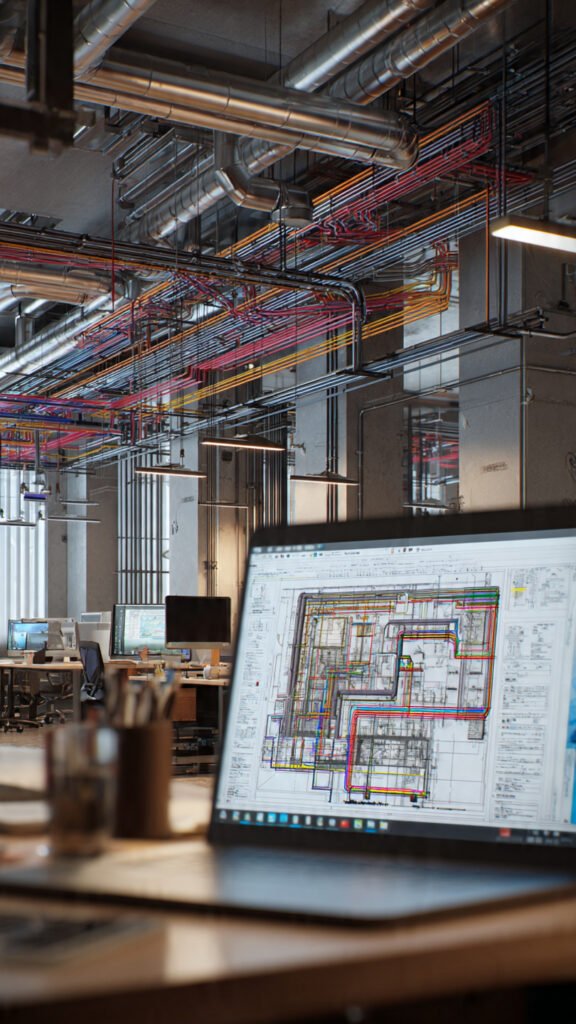
At Ahmed Construction Company (ACCO), we understand that accurate utility modeling is the backbone of every successful construction project. Our team specializes in creating detailed 3D models of all essential utilities, including electrical, plumbing, HVAC, and fire protection systems.With our BIM-based Utility Modeling, we help clients:Identify potential clashes before construction beginsOptimize space utilization for maximum efficiencyReduce rework and costly errors on siteEnsure smooth coordination between all engineering disciplinesBy leveraging cutting-edge technology and years of hands-on experience, Ahmed Construction Company (ACCO) delivers utility models that are not just precise but also practical, making sure your project is completed on time and within budget.Call to Action (Optional): “Discover how our Utility Modeling can improve your next project – Contact us today!”
Professional Utility Modeling Services in Pakistan – 3D Infrastructure Planning
Underground utilities are the hidden backbone of any development. Water pipes, sewer lines, storm drains, electrical conduits, gas mains, and telecom cables all compete for limited space beneath our feet. Excavate in the wrong place, and you hit a gas line. Overlap water and sewer pipes, and contamination risks rise. Forget to coordinate with future expansion, and you dig up the same street twice.
Traditional 2D utility drawings have severe limitations. They show each utility on separate plans. You cannot easily see how a storm drain relates to a gas main. Conflicts remain hidden until construction – when a backhoe strikes an unmarked line. The results are dangerous: service interruptions, repair costs, safety incidents, and angry residents.
Ahmed Construction Company (ACCO) provides professional utility modeling services across Pakistan. For over 25 years, we have created intelligent 3D models of underground and above-ground utility networks. Our integrated team includes utility engineers, BIM specialists, and civil infrastructure experts who work in advanced modeling platforms.
Our utility modeling services support housing schemes, town developments, industrial zones, and building projects. We model water distribution, sanitary sewer, storm drainage, electrical distribution, gas networks, and telecommunications. Architectural engineering and building design integrate seamlessly with site utilities.
With offices in Lahore (Gulberg-III) and Karachi, we serve developers, contractors, and government agencies nationwide. Let us show you how 3D utility modeling prevents conflicts and saves money.
What Is Utility Modeling? A Complete Overview
Utility modeling is the creation of intelligent 3D digital representations of utility infrastructure. Unlike traditional 2D CAD drawings, utility modeling creates a coordinated, clash-detected model where every pipe, conduit, and cable carries data about size, material, slope, depth, and connections.
Traditional utility design produces separate 2D drawings for each utility – water on one sheet, sewer on another, electrical on a third. A reviewer must mentally overlay these drawings to spot conflicts. This is difficult, error-prone, and time-consuming. Conflicts inevitably slip through.
3D utility modeling places all utilities in a single coordinated model. Water pipes, sewer lines, storm drains, electrical conduits, gas mains, and telecom cables exist together in 3D space. The model shows exactly how they relate. Automated clash detection identifies conflicts instantly – a sewer line crossing a water main, an electrical conduit too close to a gas line.
In Pakistan, utility conflicts plague infrastructure projects. Housing schemes in DHA, Bahria Town, and other developments often face utility clashes during construction. Contractors dig blindly, hoping not to hit something important. The result is damaged utilities, project delays, and budget overruns.
ACCO’s approach to utility modeling integrates with our modular BIM modeling and architectural drafting services. We model site utilities alongside building utilities, ensuring seamless connections. Our 3D architectural walkthrough can include underground infrastructure visualization.
ACCO: Your Trusted Partner for Utility Modeling Across Pakistan
Ahmed Construction Company (ACCO) has been a leader in Pakistan’s infrastructure and construction sector for over 25 years. Our headquarters in Gulberg-III, Lahore, and our Karachi office serve developers, contractors, and government agencies nationwide. We bring specialized utility engineering expertise to every project.
Our client list includes prestigious names like Meezan Bank, Bata, and BUITMS. While these are building projects, each required site utility coordination. We understand how building utilities connect to site networks.
What makes ACCO different for utility modeling is our integrated infrastructure expertise. We are not just modelers. We are a full-service firm offering utility engineering, civil infrastructure design, BIM modeling, and construction – all in-house.
This integration matters enormously for utility modeling. Our utility engineers understand pipe sizing, slope requirements, and material specifications. Our BIM modelers translate that engineering into intelligent 3D models. No disconnect between design and modeling. Just accurate, constructible utility models.
We also coordinate with our architectural engineering team for building utility connections and with our home floor plan specialists for residential plot hookups. This ensures utilities reach every building correctly.
Our Complete Utility Modeling Services
ACCO delivers comprehensive utility modeling for all infrastructure types. Below is our detailed service breakdown for utility modeling.
Water Supply Network Modeling
Our team creates intelligent 3D models of water distribution systems. We model transmission mains, distribution pipes, valves, hydrants, and service connections. The model includes pipe sizes, materials, depths, slopes, and pressure zones. Clash detection ensures water pipes avoid other utilities.
Sanitary Sewer Network Modeling
Sewer systems require precise slopes for gravity flow. Our models include gravity mains, manholes, service connections, and lift stations. We model pipe inverts, slopes, and manhole depths. The model verifies minimum cover, proper slopes, and adequate clearance from water lines.
Storm Drainage Network Modeling
Stormwater management prevents flooding. Our team models storm drains, culverts, catch basins, detention ponds, and outfalls. The 3D model shows drainage patterns and identifies potential ponding areas. We coordinate storm drainage with other utilities to prevent conflicts.
Electrical Utility Modeling
Electrical distribution requires coordination with all other utilities. Our models include primary and secondary feeders, transformers, switchgear, pad-mounted equipment, and service connections. We model conduit banks, direct burial cables, and overhead lines. Clearance from other utilities is verified.
Gas Network Modeling
Gas mains have strict clearance requirements. Our team models gas transmission and distribution lines, valves, regulators, and service connections. The model ensures proper depth, clearance from other utilities, and access for maintenance. Safety setbacks from buildings are verified.
Telecom & Fiber Optic Modeling
Communications networks need protection. Our models include duct banks, handholes, fiber optic cables, and copper lines. We coordinate with other utilities to ensure adequate separation and access. The model supports future expansion planning.
Why Choose ACCO? A Direct Comparison
Not every firm delivers effective utility modeling. Here is how ACCO compares to typical alternatives.
| Feature | ACCO | Traditional 2D CAD |
|---|---|---|
| Model Type | Intelligent 3D BIM with data-rich elements | Separate 2D drawings – no coordination |
| Clash Detection | Automated – finds conflicts before construction | Manual overlay – many conflicts missed |
| Multi-Utility Coordination | All utilities in one federated model | Separate drawings – coordination gaps |
| Depth & Slope Verification | 3D model verifies minimum cover, proper slopes | 2D calculation – errors common |
| Quantity Extraction | Automatic pipe lengths, fitting counts from model | Manual takeoffs – time-consuming, error-prone |
| Conflict Resolution Support | Model shows solutions – reroute suggestions | Trial and error – expensive field changes |
| As-Built Model Generation | Update model with field changes – accurate record | Red-line drawings – often incomplete |
| Integration with Building Models | Seamless connection to site utilities | Separate – building connections may not align |
| Construction Sequencing (4D) | Model linked to schedule – visualize utility installation | Not available – schedule disconnected | In-house Engineering Expertise | Utility engineers and BIM modelers under one roof | Outsourced – coordination gaps with designers |
Our 6-Step Utility Modeling Process
Utility modeling requires systematic workflow and engineering rigor. Here is our proven approach for utility modeling.
Step 1: Data Collection & Existing Utility Mapping
We gather all available utility information – record drawings, GIS data, survey information, and as-built plans. For existing sites, we recommend utility locating services to verify underground conditions. This baseline informs all modeling.
Step 2: Preliminary Utility Layout & Sizing
Our utility engineers develop preliminary layouts – water pipe sizing (based on demand), sewer pipe sizing (based on flow), storm drainage (based on rainfall intensity), and electrical/gas loads. We establish proposed alignments, depths, and slopes.
Step 3: 3D Model Creation
Our BIM modelers create the intelligent 3D utility model. Water, sewer, storm, electrical, gas, and telecom networks modeled in coordinated space. Each pipe and conduit carries data – size, material, slope, depth, connections. We use industry-standard software (Civil 3D, Revit, Navisworks).
Step 4: Clash Detection & Conflict Resolution
We run automated clash detection across all utility systems. Conflicts are categorized by severity – hard clashes (physical interference), clearance clashes (insufficient separation), and workflow clashes (construction sequence issues). Our engineers propose resolutions – rerouting, depth adjustments, or utility relocation.
Step 5: Model Refinement & Documentation
After clash resolution, we refine the model to construction-ready status. We extract 2D plan and profile drawings from the model – coordinated because they come from a single source. We generate quantity schedules for estimating – pipe lengths, fitting counts, valve quantities.
Step 6: Model Handover & As-Built Updates
We deliver the complete utility model in IFC or native format. During construction, we update the model with field changes to create an accurate as-built record. This as-built model becomes the permanent record for future maintenance and expansion.
Why Pakistani Developers Nationwide Choose ACCO for Utility Modeling
Pakistan’s infrastructure development is accelerating. Housing schemes in DHA, Bahria Town, and other areas need coordinated utilities. Industrial zones require reliable water, sewer, power, and gas. Municipal infrastructure needs modernization. Utility conflicts cost time and money – and can be deadly when gas lines are hit.
ACCO has delivered utility modeling across Pakistan’s major developments. Our portfolio includes infrastructure for housing schemes, industrial zones, and commercial projects. Each model prevents conflicts and ensures constructible designs.
Our international experience in the UAE, UK, Saudi Arabia, Canada, and the USA brings global utility modeling standards to Pakistani projects. Yet we know local conditions – material availability, construction practices, regulatory requirements – intimately.
ACCO by the Numbers: Utility Modeling Excellence
Numbers demonstrate our utility modeling capability clearly.
- 25+ years of infrastructure engineering experience in Pakistan
- 10+ years of dedicated utility modeling practice
- 500+ kilometers of utility networks modeled in 3D
- 10,000+ clashes detected and resolved before construction
- 50+ housing schemes with coordinated utility models
- 2 offices in Lahore and Karachi serving nationwide clients
- 100% conflict-free utility installation on modeled projects
These numbers represent real infrastructure projects saved from costly conflicts. When you need utility modeling services delivered professionally, choose ACCO.
Frequently Asked Questions About Utility Modeling
1. What is the difference between utility modeling and traditional CAD?
Traditional CAD produces separate 2D drawings for each utility – water on one sheet, sewer on another. A reviewer must mentally overlay drawings to spot conflicts. Utility modeling creates one intelligent 3D model with all utilities together. Automated clash detection finds conflicts instantly. Traditional CAD misses conflicts that utility modeling catches.
2. What utilities can you model?
All major utilities: water distribution (potable, irrigation, fire flow), sanitary sewer (gravity and force mains), storm drainage (drains, culverts, detention), electrical (primary/secondary feeders, transformers, substations), gas (mains, service lines, regulators), telecom (duct banks, fiber, copper), and district cooling/heating where applicable.
3. How does clash detection work for utilities?
Our software compares all utility models and identifies where elements conflict. Hard clashes: a water pipe occupying the same space as a sewer line. Clearance clashes: utilities too close per code requirements (e.g., water and sewer separation). The software generates reports with clash locations, types, and severity. Our engineers propose resolutions.
4. Can you model existing utilities from survey data?
Yes. We can create as-built models from utility survey data – GPS coordinates, depths, pipe materials, and diameters. For existing sites without records, we recommend GPR (ground penetrating radar) or utility locating services. We then model the located utilities to create an accurate existing conditions model.
5. Do you coordinate site utilities with building utilities?
Yes. This is critical. Site utilities must connect correctly to building utilities. Our architectural engineering team models building MEP systems. Our utility modeling team models site networks. We federate both models to ensure connections align – water service enters at correct location, sewer connects at proper invert, electrical matches building entrance.
6. What is the cost of utility modeling?
Costs vary with project size, utility types, and model detail required. Utility modeling typically costs 0.5-2% of utility construction value but saves 5-15% by preventing clashes, reducing rework, and avoiding utility strikes. Contact us for a detailed proposal based on your specific project.
7. Can you provide 4D sequencing for utility construction?
Yes. Our 4D BIM links the utility model to construction schedules. You visualize utility installation over time – which trenches are dug when, where utilities are installed, how phases coordinate. This sequencing helps avoid conflicts between different construction crews and phases.
Ready to Eliminate Utility Conflicts? Contact ACCO Today
Utility strikes are dangerous, expensive, and preventable. Hitting a gas line during excavation risks explosions. Damaging a water main floods sites and disrupts service. Hitting electrical conduits causes outages and shock hazards. Traditional 2D design cannot catch these conflicts reliably. 3D utility modeling can.
ACCO brings professional utility modeling services to projects across Pakistan. From water networks to sewer systems to electrical distribution, we create coordinated, clash-detected models that prevent conflicts. Our integrated team includes utility engineers and BIM specialists who work together to deliver constructible designs.
With 25+ years of experience, in-house infrastructure expertise, and a proven track record across development projects, ACCO is your trusted partner for utility modeling. Do not let hidden utility conflicts destroy your project budget and schedule. Choose intelligent 3D utility modeling.
Call us today: +92 322 800 0190 or +923 111 749 849
Email: info@acco.com.pk
Visit our Lahore office: Office 2, 3rd Floor, Bigcity Plaza, Gulberg-III
Request your utility modeling consultation online: https://acco.com.pk/contact-us/
We are available Monday to Saturday, 9:00 AM to 6:30 PM. Let us build a coordinated, clash-free utility network for your project.
Internal links (embedded naturally throughout the content above):
– Learn how our architectural engineering team coordinates building utilities.
– Explore our home floor plan design service for residential utility connections.
– See how architectural 3D modeling integrates with utility models.
– Our dedicated BIM modeling page has more technical details.
– View projects with utility modeling on our projects page.
– Ready to start utility coordination? Contact us for a free consultation.
External authoritative resources (embedded naturally):
– Our utility modeling follows Pakistan Engineering Council (PEC) infrastructure standards.
– Utility coordination aligns with Pakistan Council of Architects and Town Planners (PCATP) guidelines.
– For utility infrastructure standards, refer to Wikipedia’s underground utility overview.