Hospital Fire Safety Design Pakistan | ACCO
Designing fire protection systems in healthcare buildings is unique because patients are often non-ambulatory and cannot evacuate on their own. Hospital layouts must focus on **defending in place**, compartmentation, and rapid smoke suppression. In Pakistan, ACCO integrates NFPA 101 (Life Safety Code) standards into comprehensive **Hospital Fire Safety Designs**.
The Principle of “Defend in Place”
Instead of evacuating patients directly outside immediately, hospital layouts are divided into fire-resistant zones. Patients are moved horizontally across fire-resistant doors to an adjacent safe zone on the same floor, buying crucial time for fire suppression systems and emergency crews to extinguish the flame.
Key Pillars of Fire Safety Engineering
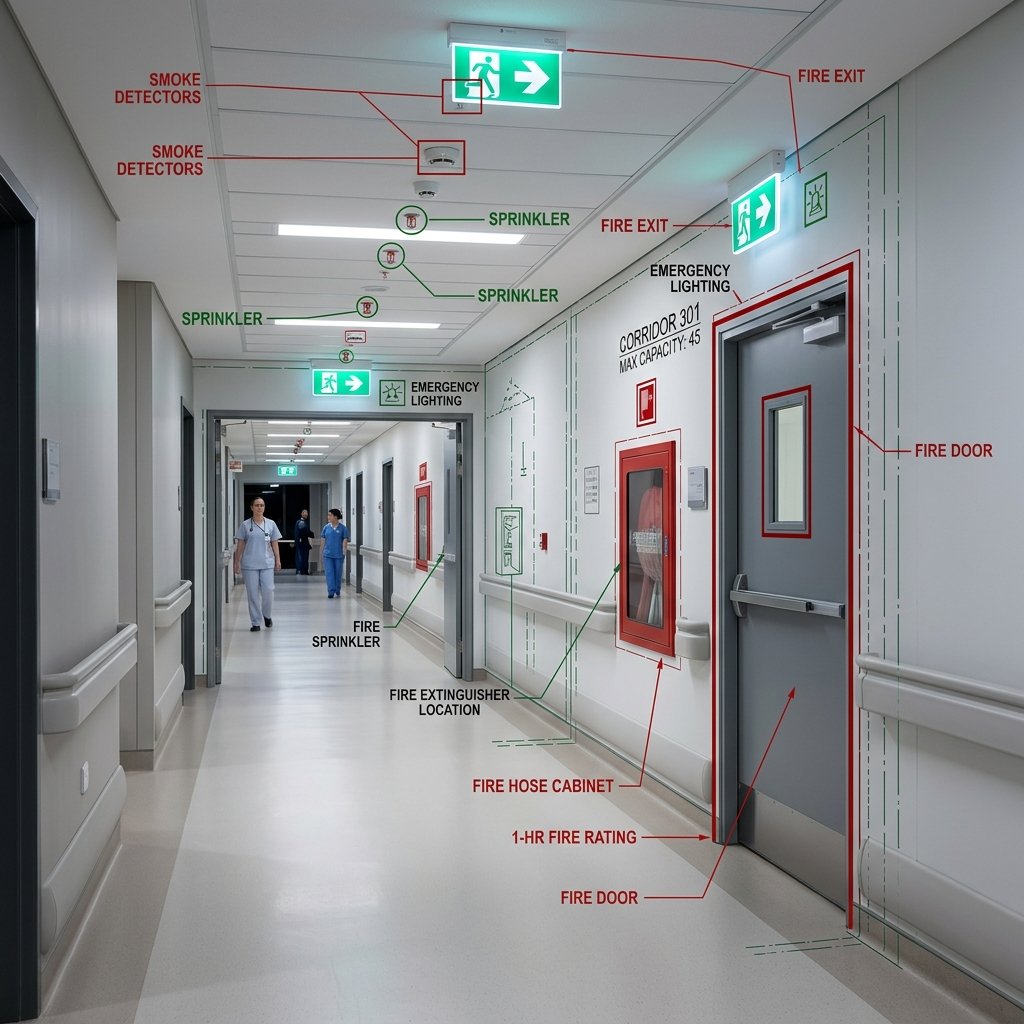
- Fire Barriers & Doors: Wall partitions and doors rated for 1-2 hours to restrict smoke and flame spread.
- Smoke Management (HVAC Integration): Automatically shuts off standard supply air and turns on smoke exhaust systems to keep pathways clear.
- Active Suppression: Automatic wet pipe sprinkler networks, fire hose cabinets, and clean-agent suppression in diagnostic rooms.
Healthcare Fire Safety Requirements
| Facility Zone | Active Protection | Passive Protection | Standard Compliance |
|---|---|---|---|
| Corridors & Exits | Automatic Sprinklers, Smoke Detectors | 1-Hour Fire Rated Walls | NFPA 101 |
| OTs / ICU Wards | Smoke dampers, Fire alarms | 2-Hour Rated Fire Doors | NFPA 99 / NFPA 101 |
| Server & MRI Rooms | FM-200 Clean Agent Gas Suppression | Acoustic & Fire Seals | NFPA 2001 |
Evacuation Path Design and Corridor Widths
Hospital Emergency Layout Parameters
Essential Suggestions for Hospital Fire Protection
- Integrate Fire Dampers: Install motorized fire/smoke dampers in all HVAC ducts intersecting firewalls. These dampers shut automatically when smoke is detected, stopping toxic fumes from spreading.
- Avoid Clean Agents in Patient Wards: Only use gas-based suppression (FM-200) in unoccupied areas like electrical panels or server rooms. Use standard sprinklers and dry chemicals in general corridors.
- Keep Exits Clear: Design double-swing push doors on escape routes to prevent bottlenecks during crisis movement.
Frequently Asked Questions (FAQs)
Q1: What is NFPA 101?
A: NFPA 101 is the international Life Safety Code specifying corridor widths, fire exit placements, travel distances, and zoning for hospital occupants.
Q2: Why are standard water sprinklers unsafe for server rooms?
A: Water ruins electronics and server data. Gas-based suppression like FM-200 smothers fire without leaving residue or damaging equipment.
Design Compliant Fire Protection with ACCO
Ensure patient safety and pass government inspections with specialized fire protection layouts. Contact ACCO Engineering to speak with our NFPA-certified designers today.
Request a Fire Safety Design Plan
Protect lives and secure regulatory building approval with ACCO’s expert team.