
Hospital Equipment Planning in Pakistan | ACCO
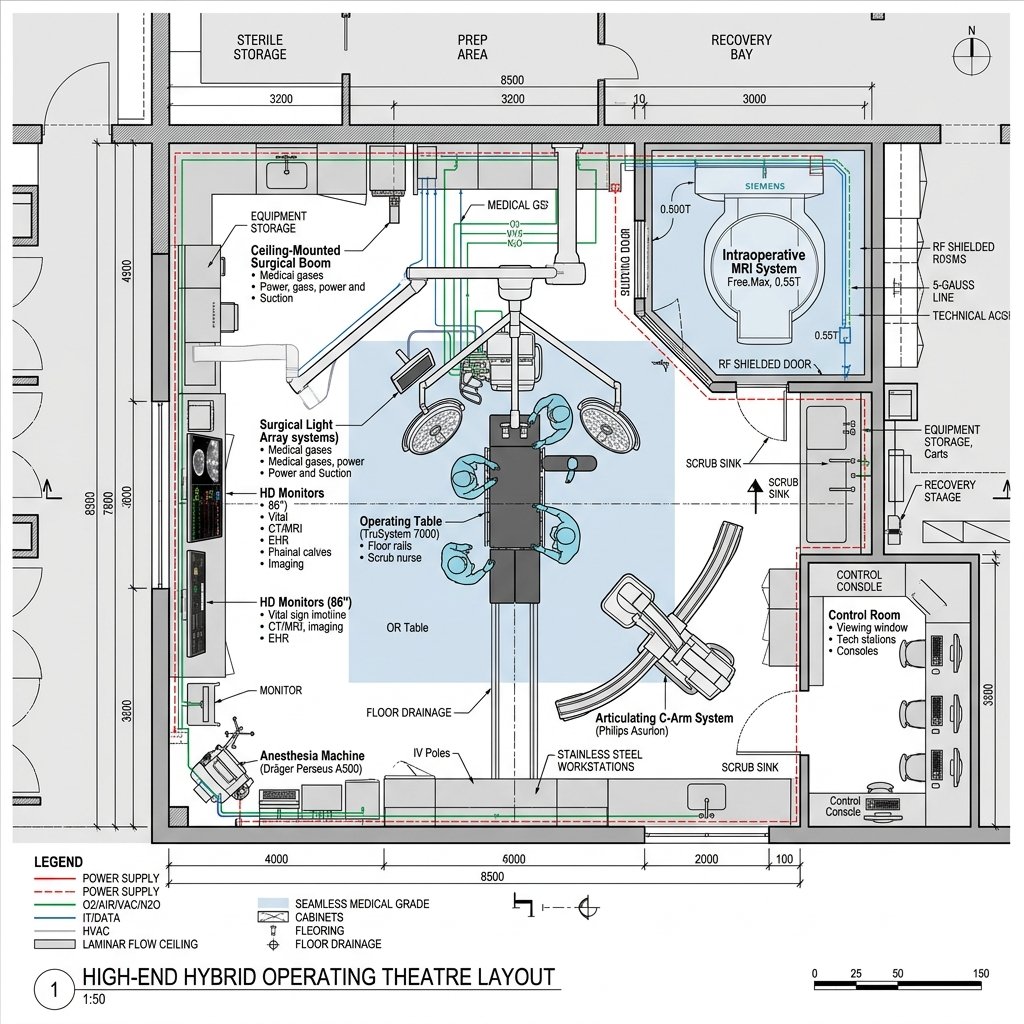
Procuring and deploying modern medical equipment is one of the highest cost drivers in setting up a healthcare facility. However, without early architectural and engineering planning, importing expensive machinery can lead to installation failures. High-end devices like MRIs, CT scans, catheterization laboratories (cath labs), and linear accelerators require specific spatial arrangements, structural supports, and complex utility connections. ACCO provides complete **Hospital Equipment Planning in Pakistan**, bridging the gap between medical technology and civil construction.
Critical Areas in Hospital Equipment Integration
Integrating medical machinery into building plans covers three essential layers of engineering:
- Structural Engineering: MRI machines (weighing 5-7 tons) and CT scanners require reinforced concrete floor slabs and vibration-damping foundation pads to prevent structural deflection and imaging artifacts.
- MEP Engineering: Dedicated chilled water cooling lines for MRI magnets, high-voltage clean power supplies, specialized UPS backups, and custom drainage systems.
- Safety & Shielding: RF shielding cages for MRIs to isolate radio waves, and thick concrete walls lined with lead sheets for X-ray, CT scan, and Cath Lab rooms to contain ionizing radiation.
Structural and Shielding Requirements by Machine Type
| Medical Machine | Special Power / Utility | Radiation / Signal Shielding | Structural Loading Target |
|---|---|---|---|
| MRI (Magnetic Resonance Imaging) | Chilled water piping, helium exhaust vent line | Radio Frequency (RF) copper cage | 300 – 350 lb/sqft |
| CT Scanner / X-Ray | Three-phase dedicated electricity line | Lead-lined walls and doors (2.0mm minimum) | 150 – 200 lb/sqft |
| Linear Accelerator (Cancer therapy) | High-capacity electrical panel | High-density concrete bunker (up to 6ft thick) | 500+ lb/sqft (on grade slab) |
Typical Equipment Budget and Planning Flow
Equipment Infrastructure Cost Split (%)
Key Engineering Suggestions for Equipment Layouts
- Design Wide Access Routes: Ensure delivery pathways (doorways, corridors, elevators) are wide enough to move large machines from the unloading bay to the final installation room.
- Provide Helium Quench Pipes: For MRI systems, design a dedicated quench pipe pathway directly venting outside, allowing helium gas to escape safely if the magnet shuts down in emergencies.
- Separate Clean Power: Connect sensitive diagnostic computers to dedicated isolation transformers to prevent voltage fluctuations from heavy elevators or central HVAC systems.
Frequently Asked Questions (FAQs)
Q1: Why is lead lining necessary for CT and X-Ray rooms?
A: Lead has extremely high density, blocking dangerous ionizing radiation from escaping into surrounding patient waiting rooms and corridors.
Q2: When should equipment planning start during hospital construction?
A: Equipment planning must start during the initial design phase. Adjusting foundations or shielding after concrete is poured is extremely expensive.
Ensure Flawless Integration with ACCO
Protect your capital investment and pass licensing inspections with compliant spatial layouts. Contact ACCO Engineering to speak with our healthcare planning consultants today.
Request an Equipment Integration Review
Our experienced team will evaluate your layouts and MEP details to prevent on-site installation failures.