Concrete House by PL.Architekci: Architecture Review
By Tanveer Ahmed, CEO, Ahmed Construction Company (ACCO) · Updated · Reviewed by ACCO architects and engineers
Quick Answer
Concrete House by PL.Architekci in Poland: a review of its zoned plan, glass link, board-marked concrete and forest setting, plus lessons for Pakistan. Ahmed Construction Company (ACCO), based in Gulberg-III Lahore since 1998, provides house construction in Lahore with design drawings free on award of construction.
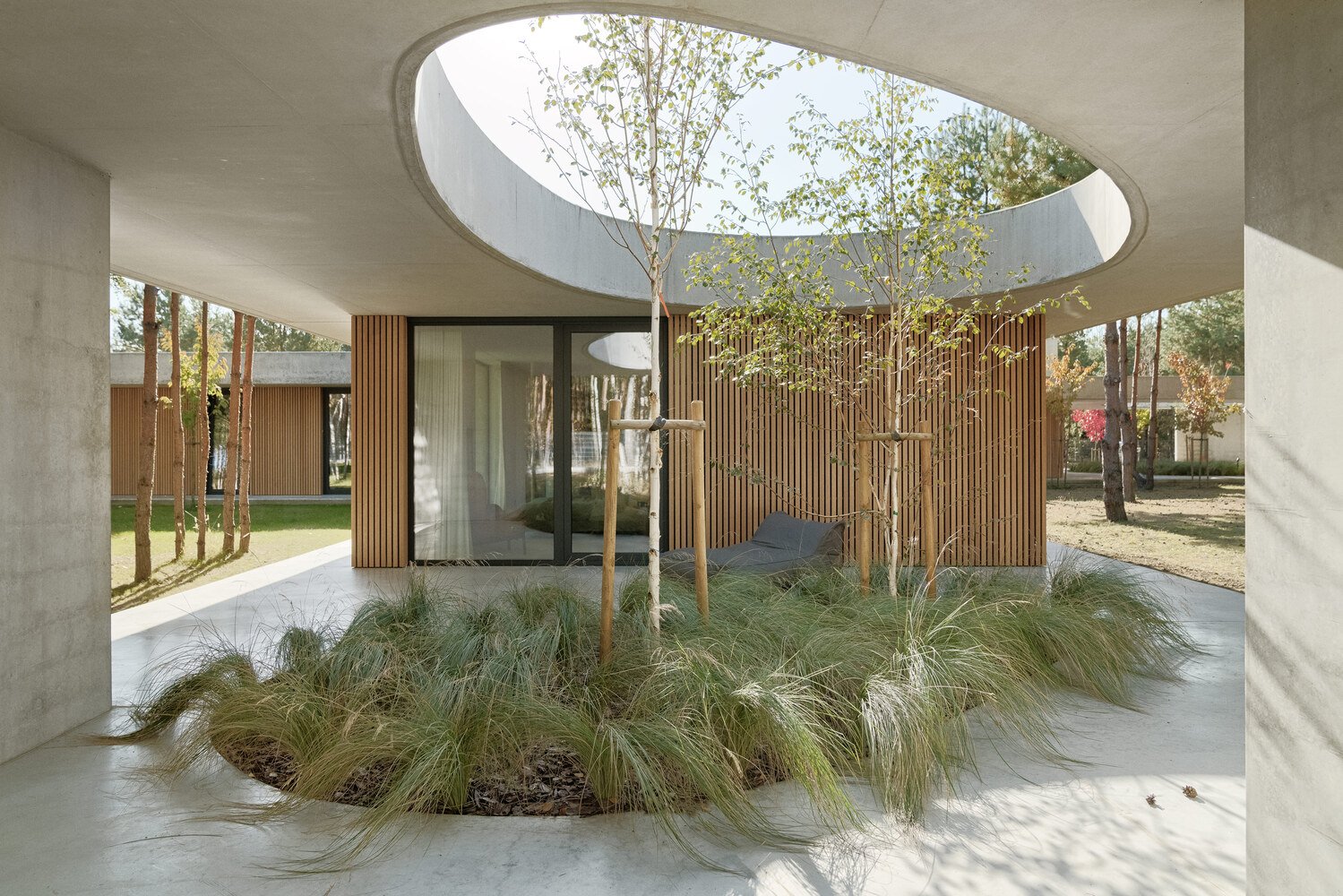
The Concrete House by PL.Architekci is a single-storey family home set among trees near Poznań in western Poland. Completed in 2022 for a family of four, it uses concrete for almost everything, from walls and roof slabs to floors and driveways, yet manages to feel calm and connected to the forest around it. This review looks at how the house is planned, how its materials work, what makes it successful, and which of its ideas can be applied to house design and construction in Pakistan.
Concrete House at a Glance
| Architects | PL.Architekci (head architects Bartek Bajon and Katarzyna Cynka-Bajon) |
|---|---|
| Location | Poznań area, Poland |
| Year | 2022 |
| Area | About 499 m² |
| Use | Single-family house for a family of four |
| Structural engineer | Mikołaj Kujath |
| Main material | Exposed concrete, including wood-textured (board-marked) concrete on the façades |
| Photography | Tom Kurek |
The Site and the Brief
The house sits on a wooded plot. The clients wanted a one-storey home that would sit quietly among the trees and need little maintenance. Those two requirements shaped every major decision: a low, spread-out plan instead of a compact block, and durable materials that would weather well without frequent painting or repair.
A single storey keeps the building below the tree canopy, so from many viewpoints the forest remains the dominant element. It also means every room is at ground level, with direct access to terraces and garden.
Planning: Three Zones and a Glass Link
The plan is divided into three distinct parts: a day zone for living, cooking and dining; a night zone for bedrooms; and a parking area. These are connected by a glazed corridor.
Why the zoning works
- Privacy: bedrooms are separated from the social spaces, so family life and guests do not disturb rest.
- Views: the glass corridor turns circulation into a walk through the forest rather than a dark passage.
- Light: splitting the house into wings gives more external wall, so more rooms receive daylight from more than one side.
- Clarity: each zone has a clear purpose, which makes the house easy to understand and use.
The trade-off is a larger building footprint and more external wall per square metre of floor, which increases construction and heating or cooling costs compared with a compact plan.
Materials: Concrete That Looks Like Timber
Concrete is used throughout the building: walls, ceilings, floors and even the driveway. On the façades, the concrete was cast to carry a wood-grain texture, so from a distance it reads almost like timber cladding. Up close, it is clearly concrete, with the solidity and durability that implies.
This approach combines two qualities that rarely come together. Timber gives warmth and a link to the forest; concrete gives low maintenance and long life. Board-marked concrete achieves some of both, provided the formwork is carefully made and the concrete is well compacted and cured, because surface defects cannot be hidden.
Durability
Exposed concrete needs no paint and resists weather and impact, meeting the low-maintenance brief.
Texture
Wood-grain formwork softens the appearance and ties the building visually to the surrounding trees.
Thermal mass
Heavy concrete stores heat and releases it slowly, which can help stabilise indoor temperatures when combined with insulation.
The Roof and Terrace
Each part of the house is covered by solid concrete slabs that act as both the functional roof and a strong visual element. The roof edges define the building’s horizontal lines against the vertical tree trunks. The roof design also incorporates organic materials that help the building blend with its setting.
An extended terrace reaches out into the forest, giving the living spaces an outdoor room. Trees planted in the open spaces around the house strengthen the sense that the building has been placed among nature rather than cleared space for itself.
Inside and Outside
By using the same material inside and out, and by opening the living areas and corridor with large glazing, the house blurs the line between interior and garden. Circular forms in the concrete add softness to an otherwise rectilinear building. The result is a home where daily life is constantly framed by views of the forest.
This continuity also simplifies the architecture. There are few changes of material at thresholds, so junctions are cleaner and there are fewer places for water or dust to collect. For a family home intended to need little upkeep, that simplicity is a practical benefit as well as an aesthetic one, and it is a useful reminder that good detailing often means fewer details, not more.
The Design Principles Behind the House
Looking at the project as a whole, four principles stand out. First, restraint: one main material, a limited palette and simple forms. Second, response to site: the low height, spread plan and terrace are all reactions to the trees. Third, separation of uses: day, night and parking each have their own volume. Fourth, durability: the client’s wish for low maintenance is answered by materials that age without constant attention.
None of these principles depends on the Polish climate or on a large budget. They are design habits that any architect can apply, whether the site is a forest, a suburban plot or a corner plot in a Pakistani housing society.
Strengths and Limitations
| Aspect | Strength | Limitation |
|---|---|---|
| Planning | Clear separation of day, night and parking zones | Larger footprint and longer circulation |
| Materials | Durable, low-maintenance exposed concrete | High-quality formwork and workmanship are essential |
| Landscape | Single storey stays below the trees; terrace extends into forest | Needs a generous plot |
| Energy | Thermal mass can moderate temperature swings | Large glazed areas require careful shading and insulation |
| Character | Strong, calm and coherent identity | Exposed concrete can feel cold without warm interior finishes |
Lessons for Pakistan
Few Pakistani clients build in forests, but several ideas from the Concrete House translate well to homes in Lahore, Islamabad and other cities.
1. Zone the house clearly
Separating public spaces (drawing and dining), family spaces and bedrooms is already common in Pakistani homes. The Concrete House shows how a glazed link or courtyard between zones can bring in light and greenery, even on a modest plot. On a house built in Lahore, a small internal courtyard can do the same job as the forest corridor.
2. Choose finishes for low maintenance
Many houses in Pakistan need repainting every few years because of heat, dust and monsoon rain. Fair-faced or textured concrete, natural stone and good-quality brick can reduce that maintenance. They do require skilled formwork and supervision, which must be priced in the BOQ from the start.
3. Shade glass carefully
Poland’s climate allows large glazed walls. In Pakistan’s hot summers, glass must be protected by deep overhangs, verandahs, screens or high-performance glazing, especially on west-facing walls. Guidance from ASHRAE on thermal comfort and building envelopes is widely used by designers.
4. Use thermal mass with insulation
Concrete and brick store heat. Without roof insulation, a concrete slab can make top floors very hot in summer. Combining thermal mass with roof insulation and shading gives cooler, more stable interiors.
5. Design structure and architecture together
Exposed concrete leaves no room for hiding services or poor detailing. Conduits, pipes and fixings must be planned before casting, and the structure must comply with the Building Code of Pakistan, including seismic requirements.
How These Ideas Fit a Pakistani Project
Brief
Agree zones, room list, outdoor spaces and maintenance expectations.
Design
Plan zoning, shading and materials together with the structure and services.
Mock-ups
Test exposed concrete or special finishes on a sample panel before full construction.
BOQ and build
Price the specification through an itemised BOQ and supervise quality closely on site.
ACCO offers architectural design services and construction for homes that use these principles. For budgeting, see our house construction cost guide for Lahore.
Common Mistakes When Copying This Style
- Using large unshaded glass walls in a hot climate, which leads to overheating and high cooling bills
- Leaving concrete roofs uninsulated, making upper rooms uncomfortable in summer
- Attempting exposed concrete without skilled formwork carpenters and a trial panel
- Forgetting to plan electrical and plumbing routes before casting walls and slabs
- Ignoring local by-laws on setbacks and coverage when spreading a single-storey plan
Frequently Asked Questions
Who designed the Concrete House?
The house was designed by the Polish practice PL.Architekci, with Bartek Bajon and Katarzyna Cynka-Bajon as head architects.
Where is the Concrete House located?
It is located in a wooded area in the Poznań region of Poland.
Why is the house made almost entirely of concrete?
The clients wanted a durable, low-maintenance home. Exposed concrete needs little upkeep, and the wood-textured finish helps it blend with the forest.
What is board-marked concrete?
It is concrete cast against timber formwork so that the wood grain is imprinted on the surface. It gives concrete a warmer, more natural appearance.
Can exposed concrete houses be built in Pakistan?
Yes, but they need skilled formwork, good concrete mix design, careful curing and planned services. Roof insulation and shading are also important in Pakistan’s hot climate.
Does ACCO design modern houses inspired by international projects?
ACCO designs and builds houses in Lahore and across Pakistan, adapting international ideas to local climate, by-laws, budgets and construction practice.
Conclusion
The Concrete House by PL.Architekci shows how a single, honest material can produce a home that is durable, calm and closely tied to its landscape. Its clear zoning, glazed link and textured concrete are its strongest ideas. In Pakistan, the same principles work best when adapted to a hotter climate, with careful shading, insulation and close quality control on site.
Related articles
Contact ACCO
- +92 322 8000190
- info@acco.com.pk
- Office 2, 3rd Floor, Bigcity Plaza, Gulberg-III, Lahore
Planning a Project with ACCO?
Architecture, engineering and construction from one Lahore team since 1998. Design drawings are free when ACCO is awarded the construction.
Discuss Your ProjectWhatsApp +92 322 8000190
Grey Structure Construction Cost in Pakistan 2027: What You’ll Actually Pay