
Reliable MEP & Firefighting Engineering Solutions
MEP Engineering
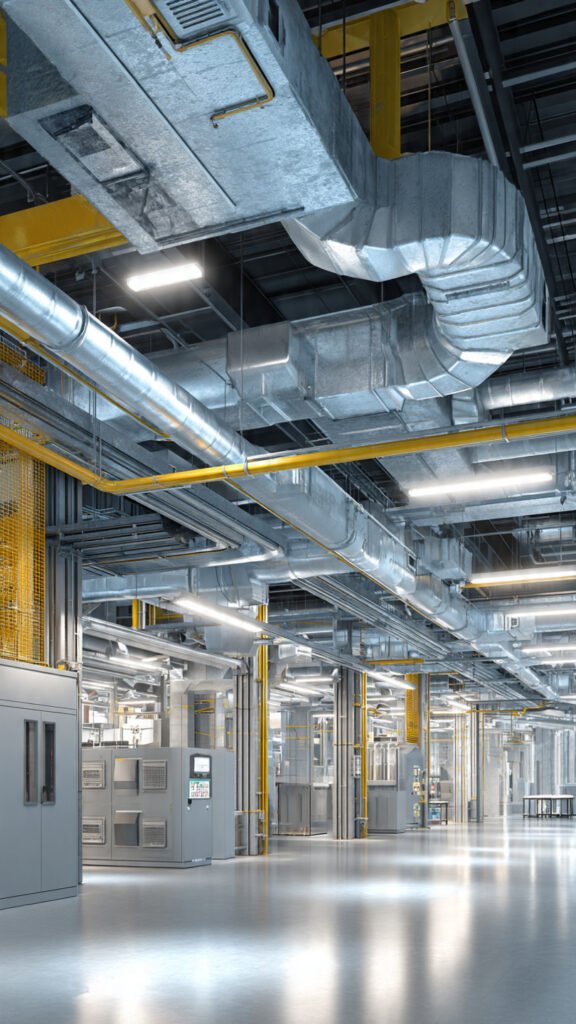
MEP engineering plays a vital role in the performance, safety, and efficiency of any building. At Ahmed Construction Company (ACCO), we provide professional Mechanical, Electrical, Plumbing, and Firefighting engineering services designed to support modern residential, commercial, and industrial construction projects. Our team ensures that all systems are carefully planned, engineered, and integrated to deliver long-term reliability and operational efficiency.From HVAC systems and electrical distribution to water supply, drainage, and fire protection solutions, our experts focus on creating safe and functional building environments. We follow modern engineering practices and international safety standards to ensure that every system works smoothly and supports the overall structure of the building.Our MEP and Firefighting services are designed to enhance energy efficiency, improve building safety, and ensure proper system coordination during construction. Whether it is a new building project or system upgrading, Ahmed Construction Company (ACCO) delivers dependable engineering solutions that meet the highest construction standards.
#1 MEP Engineering Services in Pakistan | ACCO
Your home’s architecture is stunning. The finishes are impeccable. Then you turn on the tap. The water trickles. You flip the light switch. Nothing. You turn on the AC. It blows warm air. You realize too late that the architect designed the look, but no one engineered the systems. No one calculated the electrical load for your appliances. No one sized the pipes for pressure at the second floor. No one designed the ductwork for balanced airflow. The result is a beautiful building that is miserable to live in. MEP engineering – mechanical, electrical, and plumbing – is invisible when done right and unbearable when done wrong.
Ahmed Construction Company (ACCO) delivers invisible excellence with professional MEP Engineering Services in Pakistan. For over 25 years, we have designed and installed MEP systems for residential, commercial, and industrial clients. Our notable clients – Meezan Bank, Bata, BUITMS – require reliable, efficient, code-compliant MEP systems. We bring that same engineering rigour to every project.
MEP engineering encompasses: electrical systems (power distribution, lighting design, backup power (generators, UPS), low voltage (data, security, AV), fire alarm), plumbing systems (water supply, drainage, gas piping, water heating, storage and boosting, sanitary drainage, storm water), HVAC (heating, ventilation, air conditioning – load calculations, equipment selection, ductwork design, controls), fire safety (sprinklers, standpipes, fire pumps, fire alarm, smoke management), and MEP coordination (integrating these systems with architecture and structure – no clashes, accessible for maintenance). ACCO’s MEP engineers are PEC-registered and use advanced tools (load calculation software, BIM for clash detection, energy modelling). Whether you need full MEP design for a new building, system upgrade for an existing building, or peer review of existing designs, ACCO delivers MEP engineering that works – reliably, efficiently, and invisibly.
What Are MEP Engineering Services in Pakistan?
MEP Engineering Services encompass the design, specification, and coordination of mechanical (HVAC), electrical, and plumbing (including fire protection) systems in buildings. MEP is the central nervous system of a building – without it, the building is uninhabitable. MEP engineering is a specialized discipline requiring licensed engineers (PEC-registered) and adherence to codes (NEC, IMC, IPC, NFPA, local building codes).
MEP engineering includes: electrical engineering (power distribution: service entrance from utility (WAPDA/KESC), main panel, subpanels, feeders, branch circuits (lighting, appliances, receptacles, equipment), sizing wire, conduit, breakers, panel schedules, voltage drop calculations, coordination with utility. Lighting design: interior and exterior lighting (layered: ambient, task, accent), fixture selection (LED, fluorescent, HID), lighting control (switching, dimming, occupancy sensors, daylight harvesting, lighting control system (Lutron, etc.), energy compliance (energy code requirements). Backup power: generators (sizing, fuel type (diesel, gas), automatic transfer switch, load shedding, coordination with critical loads (refrigeration, sump pump, security, internet, medical), UPS (uninterruptible power supply) for computers, network, security, life safety equipment (in hospitals). Low voltage: structured cabling (data, voice, AV), security (CCTV, access control, intrusion detection, intercom), home automation / building management system (BMS) (integration of lighting, HVAC, blinds, AV, security). Fire alarm: smoke and heat detectors, pull stations, alarm notification (horns, strobes, voice evacuation), fire alarm control panel (FACP), monitoring (local or central station).
Plumbing engineering (water supply: from municipal or well, storage (overhead tanks, underground tanks), boosting (pressure pumps), treatment (filtration, softening, RO), distribution (pipe sizing, material (copper, PPR, PEX, GI), shut-off valves, water hammer arrestors. Hot water: water heaters (tank or tankless), recirculation (return line for instant hot water, especially for large homes/commercial). Sanitary drainage: waste from fixtures (toilets, sinks, showers, floor drains), venting (to prevent trap seal loss, allow flow), drainage pipe sizing, slope, cleanouts, connection to sewer or septic. Storm drainage: roof drains, gutters, downspouts, site drainage, storm sewer or soakaway. Gas piping: natural gas or LPG for water heaters, stoves, dryers, fireplaces, generators (if gas-fueled).
HVAC engineering (load calculations (cooling and heating loads using Manual J or equivalent software, accounting for building orientation, insulation, windows, occupancy, equipment, lighting, climate (Lahore hot, Karachi hot/humid), fresh air requirements (ventilation for occupants, code minimum). Equipment selection: AC (split, ducted split, package unit, VRF (Variable Refrigerant Flow), chiller, boiler), furnace for heating (if needed in colder regions (Islamabad, Murree, Northern Areas)), air handling units (AHU), fan coil units (FCU), air distribution (ductwork (supply, return, fresh air), diffusers, grilles, registers, fans (exhaust fans for bathrooms, kitchens). Controls: thermostats (programmable, smart, zoning), building management system (BMS) for larger buildings (central control of HVAC). Energy efficiency: high SEER equipment, economizers, energy recovery ventilators (ERV), heat recovery ventilators (HRV), variable speed drives (VSD) on fans and pumps.
ACCO’s MEP engineering services integrate across disciplines (electrical, plumbing, HVAC, fire safety coordinate) and with architecture & structure (MEP must fit within ceiling spaces, walls, shafts, and not conflict with beams, columns, openings; access panels required for maintenance). For clients across Pakistan, MEP Engineering Services in Pakistan from ACCO deliver systems that are reliable, efficient, code-compliant, and coordinated with the rest of the building.
ACCO: 25+ Years of MEP Engineering Excellence
Ahmed Construction Company (ACCO) has been providing MEP engineering for over 25 years. From our Lahore headquarters at Office 2, 3rd Floor, Bigcity Plaza, Gulberg-III, and our Karachi office, we have designed and installed MEP systems for hundreds of projects. Our notable clients – Meezan Bank (80+ branches – consistent MEP design across locations), Bata (retail showrooms – reliable lighting and HVAC for merchandise), and BUITMS (campus buildings – complex MEP coordination) – trust us for MEP reliability.
What makes ACCO different is our integrated approach. We are not just MEP consultants – we are part of a full-service architecture, engineering, and construction firm. Our MEP engineers work alongside in-house architects and structural engineers, ensuring MEP elements are coordinated from the start (not afterthought, no clashes). We also use advanced BIM modeling (explore our BIM Modeling services) for clash detection and coordination. We provide complete MEP documentation: load calculations, equipment schedules, single-line diagrams, panel schedules, plumbing riser diagrams, ductwork plans, all stamped by PEC-registered engineers. And we can install the systems we design (single-point accountability).
Our MEP coverage includes all major building types across Pakistan: residential (homes, apartments, villas), commercial (offices, banks, retail, showrooms, restaurants), industrial (warehouses, factories), healthcare (hospitals, clinics), and institutional (schools, colleges, hotels). We also serve international clients in the UAE, UK, Saudi Arabia, Canada, and USA. When you choose ACCO for MEP Engineering Services in Pakistan, you get systems that work – designed by engineers, installed by professionals, and backed by a 25-year reputation.
Our MEP Engineering Service Categories
ACCO offers comprehensive MEP engineering services for all building types. We can provide individual components or a complete integrated design.
1. Electrical Engineering
Complete electrical system design including: power distribution (service sizing (utility coordination, transformer, main switchgear), panel schedules (main panel, subpanels, lighting panels, power panels, distribution panel), feeder sizing (wire and conduit sizing, voltage drop (especially for long runs), short circuit calculations (to ensure breakers interrupt faults)). Branch circuits (lighting, receptacle, appliance, equipment, dedicated circuits for heavy loads (AC, water heater, oven, kitchen, washer/dryer, sump pump, generator, UPS)). Lighting (load calculation – number of fixtures per room based on lux requirements, fixture selection (LED). Lighting control (switching (locations, 3-way, 4-way), dimming (for living/dining), occupancy sensors (for energy savings in bathrooms, corridors, offices), daylight harvesting (photocell for exterior lights, integration with automated blinds), smart control (scene setting, integration with home automation / BMS). Backup power (generator sizing (for critical loads: refrigerator, freezer, sump pump, security, internet, essential lighting, one AC (for bedroom), medical equipment), fuel type (diesel, gas), automatic transfer switch (utility -> generator -> utility, with load shedding), UPS sizing (for computers, network, security, life safety (hospital), with runtime (minutes to hours depending on battery). Low voltage (structured cabling (CAT6 or fibre backbone, data outlets in each room), network equipment (router, switch, patch panel, rack, UPS), security system (CCTV (cameras at entries, vulnerable points, NVR, remote viewing), access control (main gate, main door, office door, safe / locked room), intrusion detection (motion sensors, door/window contacts, glass-break sensors, alarm, central monitoring). Home automation (lighting control, HVAC control, blind control, AV integration, security integration, irrigation control, remote access via app). Fire alarm (smoke detectors (in bedrooms, corridors, living areas), heat detectors (in kitchen, garage), pull stations (at exits), horns and strobes, voice evacuation (for larger buildings), fire alarm control panel (location, monitoring). ACCO’s electrical designs are coordinated with architecture (outlet locations not behind furniture) and structure (conduit in slab vs. wall).
2. Plumbing Engineering
Complete plumbing system design including: water supply (source (municipal, well, tanker fill), storage (overhead tanks (capacity for 1-2 days of usage), underground tanks (if municipal supply intermittent), treatment (filtration (sediment, carbon), softening (if hard water), reverse osmosis (RO) for drinking, UV sterilization). Boosting (pressure pumps (constant pressure or variable speed), pressure tank, for adequate pressure on upper floors, especially in multistorey buildings). Distribution (pipe sizing (velocity < 5-8 fps), material (copper (risers), PPR (hot/cold), PEX (flexible), GI for large commercial), shut-off valves (main shut-off, fixture shut-offs, zone shut-offs). Hot water (water heaters (tank (40-200+ gallons), tankless (instant), heat pump, solar), distribution (supply (hot pipe), return (recirculation loop for instant hot water at distant fixtures), recirculation pump (timer or thermostat), point-of-use (small tank under sink). Sanitary drainage (fixture drainage (toilets, sinks, showers, floor drains), horizontal branches (slope 2% or 1/4" per foot), vertical stacks (soil, waste, vent), venting (open vent through roof, circuit vent for multiple fixtures, air admittance valves (AAV) for islands), cleanouts (for rodding). Storm drainage (roof drains (roof), gutters and downspouts (rainwater), site drainage (catch basins, area drains, slope away from building), storm sewer or soakaway / recharge pit. Gas piping (natural gas or LPG (propane) for water heaters, stoves, dryers, fireplaces, generators, pipe sizing (capacity), material (black iron, CSST), pressure testing, shut-off valves. ACCO’s plumbing designs ensure adequate water pressure, no pipe noise, no trap seal loss, and compliance with building codes.
3. HVAC Engineering
Complete HVAC system design including: load calculations (cooling load (BTU/hr or tons of refrigeration) using Manual J or equivalent, considering building orientation, window area and glazing type, wall/roof insulation (R-value), occupancy, lighting, equipment, infiltration, climate (Lahore dry heat, Karachi high humidity), design conditions (indoor 24°C, outdoor 45°C etc.). Heating load (if required for colder regions (Islamabad, Murree, Northern Areas)): heat loss through envelope, infiltration. Fresh air (ventilation (CFM per person or per floor area, IAQ requirements, energy recovery (ERV/HRV) to pre-cool/pre-heat incoming air). Equipment selection: AC type: split (cheapest, for single room, condenser outside, evaporator inside), ducted split (concealed unit in ceiling, ducted to multiple rooms (one floor)), package unit (rooftop, for commercial, large capacity), VRF (Variable Refrigerant Flow, for multi-storey buildings, individual room control), chiller (for large commercial (water-cooled or air-cooled), boiler (for heating (radiators, underfloor)). Air distribution: ductwork material (galvanized steel, flexible duct for branches), sizing (velocity method, equal friction method), design (supply diffusers (placement for coverage), return grilles, fresh air intake, exhaust fans), balancing (dampers). Controls: thermostats (programmable, smart), zoning (separate temperature zones for different areas (master bedroom separate from guest), VRF allows individual room control, dampers in ducted systems, building management system (BMS) for commercial (central monitoring, scheduling, alarms). Energy efficiency: high SEER equipment (for electricity savings), variable speed drives (for fans, pumps), economizers (free cooling when outside air cool). ACCO’s HVAC designs provide comfort, fresh air, and energy efficiency, with equipment sizing matched to load (not oversize/undersize).
4. Fire Safety & Firefighting
Complete fire protection system design including: fire alarm (detection (smoke detectors (rooms, corridors), heat detectors (kitchen, garage), flame detectors (industrial), manual pull stations (at exits), notification (horns, strobes, voice evacuation), control panel (addressable or conventional), monitoring (local or central station, integration with building management system (BMS)). Fire suppression sprinklers (wet pipe (common), dry pipe (unheated areas (parking, attic)), pre-action (sensitive areas (server room, data centre, art storage)), deluge (high hazard), standard spray sprinklers (coverage area based on hazard classification (light, ordinary, extra)), residential sprinklers (fast response, for home). Standpipes (vertical pipe with hose connections for fire department, in stairs or corridors, required for buildings over 2-3 storeys, class I (2.5″ connection for fire dept), class II (1.5″ with hose for trained occupants), class III (both)). Fire pumps (if water pressure insufficient for sprinklers, pump type (electric, diesel), sizing, controller, jockey pump). Fire extinguishers (portable, ABC dry chemical (general), CO2 (electrical, kitchen), wet chemical (kitchen for grease fire), placement (visible, accessible, by exits, in kitchen, garage). Smoke management (high-rise buildings: stair pressurization (keep smoke out of stairs), smoke exhaust (remove smoke from corridors/atrium)). ACCO’s fire safety designs comply with local building codes (and international (NFPA)), protecting life and property.
5. MEP Coordination & BIM Integration
Integrated MEP design using BIM (Building Information Modeling) to resolve clashes and coordinate with architecture and structure. Clash detection: identify conflicts between MEP elements (e.g., duct crossing pipe, electrical tray crossing light fixture, pipe through beam, diffuser under light), resolve in model before construction, saving costly field changes. Space coordination: coordinate MEP with ceiling height (drop ceilings, bulkheads), partition locations (shafts, chases, access panels), structural elements (beams, columns, penetrations (cutouts, sleeves)). Equipment layout: locate AHUs, fans, compressors, boilers, chillers, pumps, panels, transformers, generators, water heaters, storage tanks, sump pumps, with clearance for maintenance, access, and noise/vibration isolation (spring isolators). ACCO’s BIM and coordination services are particularly valuable for complex projects with tight spaces (basements, plant rooms) or high ceilings (soffit coordination).
Why Choose ACCO for MEP Engineering?
MEP systems are complex. Poor design leads to discomfort, high bills, and failures. Here is why ACCO’s MEP Engineering Services in Pakistan deliver reliable, efficient, coordinated systems.
| Feature | ACCO MEP Engineering | Typical Contractor (No Engineer) | Load Calculations| Code Compliance | MEP Coordination | |
|---|
Our MEP Engineering Process
ACCO follows a systematic, coordinated process for every MEP Engineering Services in Pakistan. We integrate MEP from the start.
- Consultation & Needs Analysis: We discuss your project (building type, size, occupancy), requirements (which systems (full MEP or specific), performance expectations (reliability, efficiency, comfort), budget, and timeline).
- Architectural & Structural Review: Our MEP engineers review your architectural and structural drawings (or work with our in-house architects/structural engineers). We identify spaces allocated for MEP (plant rooms, shafts, chases, ceiling spaces, roof areas).
- Load Calculations & System Sizing: We perform all required calculations: electrical load (total connected load, demand factor, generator size, UPS size), lighting (lux levels, fixture count), plumbing (water demand (fixture units), pipe sizing, pump head, hot water demand, drainage fixture units), HVAC (cooling/heating load per room, fresh air, duct sizing, fan static pressure).
- System Design & Equipment Selection: We select major equipment (generator, UPS, water heaters, pumps, chillers, AHUs, VRF outdoor units, compressors, etc.), specify brands and models, and design distribution networks (electrical (panel schedules, feeder sizes), lighting (layout, fixture schedule, switching), plumbing (riser diagram, pipe routing, isometric), HVAC (duct routing, diffuser placement, zoning).
- BIM Modeling & Coordination: We build a BIM model integrating MEP with architecture and structure, run clash detection, and resolve conflicts in the model (adjusting routing, moving diffusers, adding sleeves). We provide 3D architectural walkthrough of the MEP systems (optional) for visualization.
- MEP Drawings & Documentation: We produce complete MEP drawings: electrical (lighting layout, power layout, single-line diagram, panel schedules, fire alarm layout), plumbing (water supply layout, drainage layout, gas layout, riser diagram, isometric), HVAC (ductwork plan, equipment layout, diffuser layout, control diagram), fire safety (sprinkler layout, fire alarm layout, standpipe layout), and specifications (equipment schedule, materials, installation standards). All drawings stamped by PEC-registered engineers.
- Permitting Support: We assist with MEP-related permit submissions (electrical (disco connection, generator), plumbing (water connection, sewer connection, gas connection), fire (fire department approval).
- Construction & Installation Support (If ACCO is contractor): If ACCO is also the MEP contractor, we manage installation (by our licensed electricians, plumbers, HVAC techs, fire safety subcontractors), perform inspections (reinforcement before pour for conduits, pressure tests for plumbing, duct leakage tests for HVAC, electrical tests (continuity, polarity, grounding), fire alarm testing, sprinkler hydrostatic testing), and as-built updates (mark up changes during construction).
- Testing, Commissioning, Handover & Maintenance: We test all systems (electrical: verify voltages, polarity, grounding, generator ATS transfer, UPS runtime; plumbing: hot water temperature, recirculation, pressure; HVAC: airflow at each diffuser, temperature, refrigerant pressures, control calibration; fire alarm: test each device (smoke detector, pull station, horn/strobe), sprinkler flow test). We provide as-built MEP drawings, equipment warranties, maintenance schedules, and aftercare support.
Why Pakistani Clients Choose ACCO for MEP Engineering
MEP systems are the most complained-about part of any building. Lights that flicker, switches that don’t control the right fixture, water pressure that drops when the washing machine is on, hot water that takes 5 minutes to arrive, AC that cools the living room to freezing while the bedroom stays warm, and circuit breakers that trip when you run the microwave and AC together. These problems arise from poor MEP design.
Clients across Pakistan choose ACCO for MEP engineering because we design systems that work: electrical loads calculated for your appliances, circuits dedicated for heavy loads, backup power correctly sized, lighting coordinated with architecture, plumbing sized for pressure at upper floors, hot water recirculation for instant hot water, drainage properly sloped, AC loads calculated per room, ductwork balanced for even airflow, fire safety code-compliant.
Our MEP clients include: homeowners who want reliable systems, commercial clients (offices, banks, retail) who cannot afford downtime, industrial clients needing process MEP (compressed air, dust collection, heavy power), and architects needing MEP engineering for their designs. They choose ACCO for: engineering rigour (PEC-registered engineers, load calculations, code compliance), coordination (BIM, architecture, structure), reliability (no callbacks for system failures), efficiency (lower energy bills), and single-point accountability (design + install).
Our MEP coverage includes all building types across Pakistan. View our project portfolio to see MEP systems we have designed and installed. ACCO is registered with PEC – your MEP systems are designed by licensed engineers.
ACCO by the Numbers: MEP Engineering Track Record
Here is ACCO’s measurable performance in MEP Engineering Services in Pakistan:
- 25+ years of MEP engineering experience.
- 500+ projects with complete MEP design (residential, commercial, industrial).
- 100% load calculations – no guesswork.
- 100% coordination with architecture and structure (via BIM on complex projects).
- 100% PEC-registered engineers – all designs stamped.
- Energy efficiency – typical savings of 20-30% on electricity bills compared to poorly designed systems.
- Backup power integration for all critical loads.
- Hot water recirculation – instant hot water (no waiting).
- 2 major offices in Lahore (Gulberg-III) and Karachi, with nationwide MEP services.
- 5+ countries served for international clients.
- PEC registered – your MEP systems are designed by licensed engineers.
Frequently Asked Questions About MEP Engineering in Pakistan
1. What is architectural engineering and why does MEP need it?
Architectural engineering applies engineering principles to building design. For MEP, this means: integrating electrical, plumbing, and HVAC systems with architecture (wall locations, ceiling heights, room uses) and structure (beams, columns, slab penetrations). Without architectural engineering, MEP systems conflict with architecture and structure, becoming visible, inaccessible, or impossible to install. ACCO’s MEP engineers work alongside architects and structural engineers – you get coordinated systems.
2. How do I get a floor plan designed for MEP integration?
Contact ACCO via phone (+92 322 800 0190), email (info@acco.com.pk), or our Contact Us page. We can provide complete architectural design (including home floor plan) through our in-house architects, then design MEP systems to integrate. Or you can provide your own architectural drawings, and we will design MEP to fit within your layout.
3. What is the difference between architectural design and MEP engineering?
Architectural design creates the layout, appearance, and finishes – how the building looks. MEP engineering designs the mechanical (HVAC), electrical, and plumbing systems – how the building functions. Both are essential for a comfortable, functional building. ACCO provides both, integrated.
4. Do you provide 3D walkthroughs of MEP systems?
Yes, optionally. We can provide a 3D architectural walkthrough showing the MEP systems (ducts, pipes, conduits) in relation to architecture and structure. This helps visualize coordination and identify clashes. For most projects, 2D drawings and BIM models are sufficient for construction, but 3D walkthroughs can be helpful for client understanding.
5. Can ACCO design MEP for commercial plazas and hospitals as well as homes?
Yes. ACCO’s MEP portfolio includes residential (homes, apartments, villas), commercial (offices, banks, retail, showrooms, restaurants), industrial (warehouses, factories, textile mills, food processing, pharmaceutical, paper, ceramic), healthcare (hospitals, clinics, laboratories), and institutional (schools, colleges, hotels). Each building type has specific MEP requirements (hospitals have medical gases, nurse call, backup power for life support, imaging equipment power and cooling; industrial has heavy power, compressed air, dust collection, process water/waste; commercial has lighting for merchandise, high-density power for computers). ACCO’s MEP engineers are experienced across sectors. Learn more about our engineering capabilities for different building types.
6. How long does MEP engineering take?
Timelines vary by project size and complexity. A simple residential home (MEP design only, no BIM) may take 1-2 weeks. A residential home with BIM coordination may take 2-3 weeks. A commercial office (10,000 sq ft) with full MEP and BIM may take 4-8 weeks. A hospital or industrial facility (complex MEP) may take 8-12+ weeks. ACCO provides a schedule during consultation.
7. Can you provide MEP engineering for buildings under construction (changes, additions)?
Yes, ACCO provides MEP engineering for existing buildings (renovations, additions, system upgrades). We can assess existing MEP (as-built drawings, site inspection, testing), identify deficiencies, design upgrades or additions (new AC system, generator addition, rewiring, replumbing), and coordinate with existing systems. We also provide MEP peer review (review existing designs for errors, omissions, code compliance).
8. How much do MEP engineering services cost in Pakistan?
MEP engineering fees vary by project type, size, complexity, and level of service (design only vs. design + BIM vs. design + BIM + installation). As of 2025, very approximate ranges (design only, excluding installation): Residential home (single family, full MEP): PKR 100,000-300,000 depending on size and complexity (e.g., large home with generator, UPS, recirculation, VRF, home automation). Commercial office (per square foot): PKR 50-150 per sq ft for full MEP design (depending on complexity). Industrial facility: project-based. Contact ACCO for a fixed-price quote based on your specific project.
Ready for MEP Systems That Work? Contact ACCO Today
MEP systems are the invisible backbone of your building. When done right, you never think about them. When done wrong, you think about them every day – every time the water trickles, the AC fails, the lights flicker, or the breaker trips. With ACCO’s professional MEP Engineering Services in Pakistan, you get systems designed by PEC-registered engineers, coordinated with architecture and structure, and built for reliability, efficiency, and code compliance.
From electrical load calculations to plumbing riser diagrams, from HVAC load calculations to fire sprinkler layouts, ACCO delivers complete MEP engineering. We are the same firm trusted by Meezan Bank, Bata, and BUITMS – and by homeowners across Pakistan. Our 25+ years of architectural design services in Pakistan and MEP engineering excellence ensure your building’s systems work – reliably and efficiently.
Call us today at +92 322 800 0190 or +923 111 749 849 to discuss your MEP engineering needs. You can also email info@acco.com.pk or visit our Contact Us page to request a quote. Visit our Lahore office at Office 2, 3rd Floor, Bigcity Plaza, Gulberg-III. We serve clients nationwide and internationally.
Ready for invisible excellence? ACCO is ready to engineer your MEP systems. Let us build systems that work so you never have to think about them.