
Top Architectural Errors That Ruin Commercial Plaza Functionality | ACCO Construction
Problem: Plazas with dead ends, narrow walkways, or unclear movement paths discourage visitors and create congestion during peak hours.
Why it matters: People avoid places that are hard to navigate. If customers can’t easily find anchor stores, restrooms, or exits, dwell time drops and so does spend-per-visit.
Fixes / Best practices:
- Design clear primary and secondary circulation routes — wide, accessible and direct.
- Place anchors and high-draw tenants at logical termini to pull people through the plaza.
- Use consistent, visible signage and sightlines — avoid visual clutter.
- Include resting/meeting nodes and clear access to public transit and parking.
2. Inadequate parking design (quantity & layout)
Problem: Insufficient parking, awkward entry/exit points, or poorly planned accessible parking.
Why it matters: Parking frustration is one of the quickest ways to lose customers. Bad layout also creates safety hazards and traffic backups onto public roads.
Fixes / Best practices:
- Plan parking ratios appropriate to local demand and tenant mix (retail vs. office vs. F&B).
- Design clear vehicle circulation with separate entry/exit lanes where possible.
- Include generous accessible parking and safe pedestrian crossings to plaza entrances.
- Consider shared parking, valet, or stacked parking solutions for constrained sites.
3. Poor tenant mix and inflexible unit sizing
Problem: Designing only one unit size or clustering incompatible tenants (e.g., loud nightlife next to a medical clinic).
Why it matters: A rigid layout limits leasing flexibility and reduces the plaza’s ability to adapt to market shifts. Tenant conflicts hurt long-term occupancy.
Fixes / Best practices:
- Design a variety of unit sizes (small kiosks to large anchors) with flexible partitions.
- Group compatible uses together — place restaurants near later-night activity zones and services near daytime anchors.
- Provide separate loading/service zones so deliveries don’t disrupt shoppers.
4. Neglecting service and delivery logistics
Problem: Deliveries and waste collection are routed through customer areas or use the same entrances as shoppers.
Why it matters: Poor logistics lead to operational conflicts, odors, safety risks, and visual clutter.
Fixes / Best practices:
- Design dedicated service lanes, back-of-house corridors, and concealed waste areas.
- Separate service vehicle circulation from customer parking and pedestrian zones.
- Provide adequate loading bays sized for tenant needs and local delivery vehicles.
5. Insufficient utilities and MEP planning
Problem: Undersized electrical supply, poor HVAC zoning, limited duct/gas/IT capacity and lack of redundancy.
Why it matters: Tenants — especially F&B and medical/technical users — require robust utilities. Retrofitting is costly and disruptive.
Fixes / Best practices:
- Plan MEP capacity with growth and diverse tenant loads in mind.
- Provide dedicated plant rooms and easy access for maintenance.
- Design redundancy for critical systems (backup power, chilled water loops).
- Install flexible risers and distribution zones to simplify tenant fit-outs.
6. Overlooking safety, security & accessibility
Problem: Inadequate lighting, missing CCTV sightlines, poor ADA access and lack of emergency egress routes.
Why it matters: Safety concerns reduce footfall, and failure to meet accessibility codes can create legal liabilities and exclude customers.
Fixes / Best practices:
- Follow local building codes for accessible routes, ramps and restrooms.
- Design for natural surveillance, proper night-time lighting and CCTV coverage.
- Ensure multiple, well-marked emergency exits and fire-fighting access.
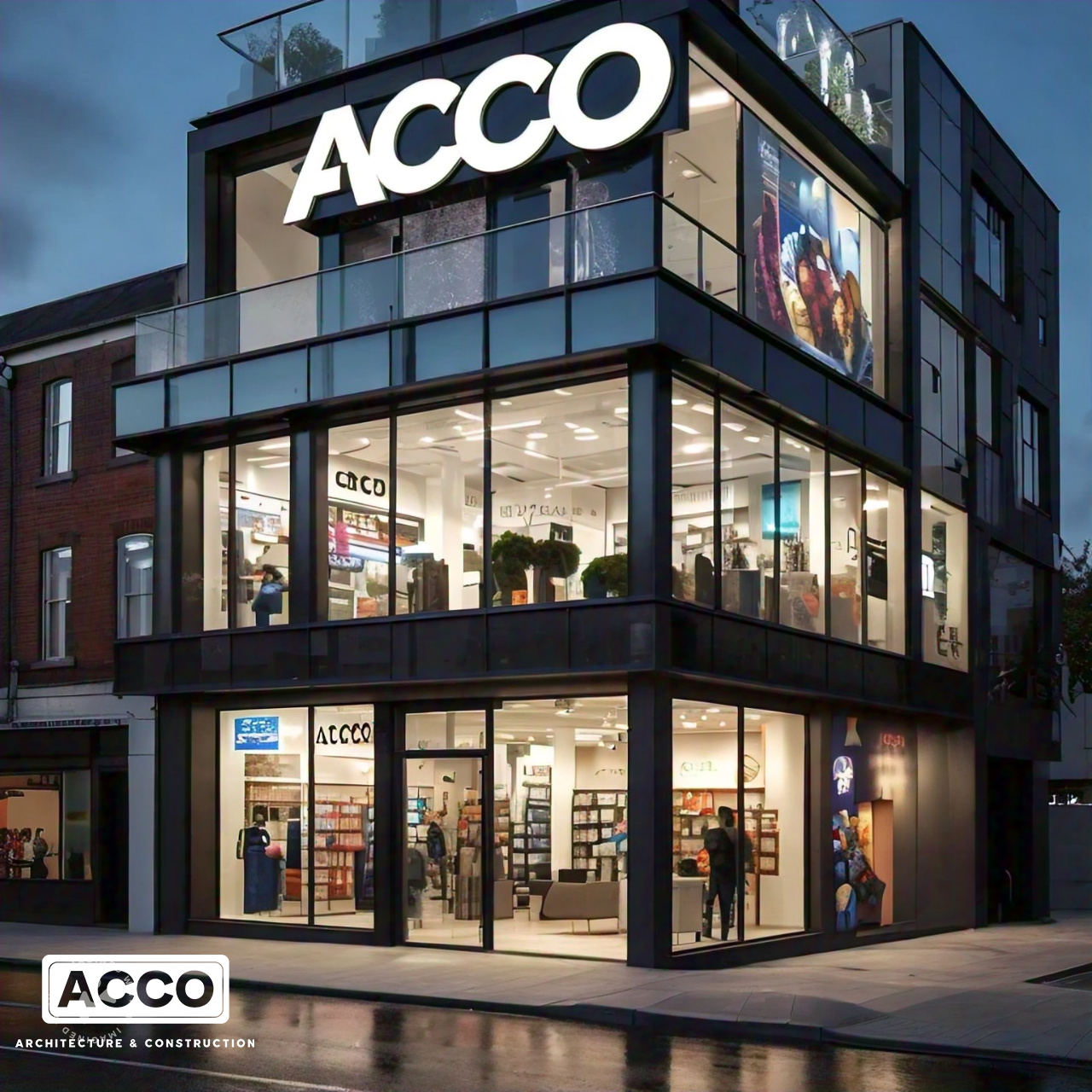
7. Poor façade and signage design affecting visibility
Problem: A bland facade or illegible signage makes units hard to identify from the street.
Why it matters: Visibility equals discoverability. If customers can’t see or read store names easily, conversion suffers.
Fixes / Best practices:
- Design coherent façade language that highlights tenant storefronts while maintaining overall character.
- Allocate logical signage zones and ensure signage complies with local bylaws.
- Use lighting and contrast for evening visibility and brand prominence.
8. Ignoring microclimate and outdoor comfort
Problem: No shade, poor wind protection, or inadequate seating and landscaping for outdoor spaces.
Why it matters: Outdoor comfort affects how long people stay and whether they return. Harsh sun or wind drives people away.
Fixes / Best practices:
- Provide shaded walkways, pergolas, and planted buffers.
- Design windbreaks and water features thoughtfully — they must be low maintenance.
- Include flexible outdoor seating and event spaces to increase activation.
9. Overcomplicated vertical circulation (stairs/escalators/elevators)
Problem: Poorly located escalators or elevators that interrupt flow or create bottlenecks.
Why it matters: Vertical circulation is a prime determinant of how customers move between floors. Bad placement reduces exposure to shops and leads to empty upper levels.
Fixes / Best practices:
- Place escalators to create natural circulation loops and to draw customers through multiple retail levels.
- Provide visible, conveniently-located elevators for accessibility and service lifts for staff.
- Avoid hidden staircases; stairs can become an amenity when designed as inviting terraces or seating.
10. Failing to design for flexibility and future change
Problem: Rigid layouts with fixed walls, bespoke MEP routing and lack of modularity.
Why it matters: Retail trends change quickly. Plazas that can’t adapt lose competitiveness and require costly renovations.
Fixes / Best practices:
- Use modular structural grids and raised floors where possible.
- Provide accessible ceiling cavities and service zones for easy changes.
- Design units with knock-out panels and adaptable storefront systems.
How to audit your plaza for these errors
Conducting a focused audit before construction or during early operations can save money. A typical audit should include:
- Circulation & wayfinding survey (peak & off-peak)
- Parking & traffic flow analysis
- MEP & capacity review against tenant requirements
- Accessibility and safety compliance check
- Tenant mix and leasing flexibility assessment
ACCO Construction offers pre-construction audits and post-occupancy evaluations to identify friction points and propose prioritized fixes.
Pros & Cons: Fixing architectural errors vs. Doing nothing
Benefits of addressing errors early
- Higher tenant satisfaction and lower vacancy rates
- Improved customer experience and longer dwell times
- Reduced operational costs and maintenance headaches
- Stronger asset value and easier refinancing/resale
Costs & challenges
- Upfront capital for redesign and construction
- Potential temporary disruption during retrofits
- Need for stakeholder alignment (owners, tenants, local authorities)
Practical case example (short)
In one mid-size plaza, poor pedestrian flow and hidden upper-level retail led to 60% vacancy on the second floor. ACCO reconfigured escalators to create a continuous loop, added a double-height atrium to improve sightlines, and introduced pop-up kiosks to activate upper floors. Within 9 months footfall increased 45% and vacancy dropped to 10%.
Frequently Asked Questions (FAQs)
1. What is the single biggest architectural mistake in commercial plazas?
Poor circulation — if customers cannot move smoothly and intuitively through a plaza, everything else suffers: dwell time, sales, and tenant success.
2. How much does it cost to retrofit a plaza for circulation improvements?
Costs vary widely. Minor interventions (signage, walkways, seating) can be low cost; structural changes (escalator relocation, atrium cuts) are more expensive. A phased approach helps spread cost and minimize downtime.
3. Can landscaping really affect commercial performance?
Yes. Thoughtful landscaping improves microclimate, encourages linger time, and can increase perceived value — boosting sales for outdoor-facing tenants.
4. How should I plan for future retail trends?
Design for flexibility: varied unit sizes, modular MEP distribution, and adaptable façade systems help the plaza evolve with market needs.
5. Who should I hire to review my plaza design?
Hire a multidisciplinary team: architect, MEP engineer, traffic/parking consultant, and an operational planner experienced with retail and mixed-use projects. ACCO Construction provides integrated design and consulting.
Actionable checklist before finalizing plaza design
- Map customer journeys and peak flows.
- Verify parking ratios and entry/exit geometry with traffic study.
- Confirm MEP capacity with likely tenant loads.
- Design service routes independent of customer areas.
- Plan signage zones and unify façade language.
- Include accessible routes and emergency egress in early stages.
- Model future use-cases and allow for modularity.
Internal & External Resources
- ACCO Construction – Services & Contact
- Whole Building Design Guide (design best practices)
- Urban Land Institute – Retail & Mixed-Use Research
Conclusion
A successful commercial plaza starts with smart architecture that prioritizes circulation, flexibility, service logistics, and user comfort. Many costly problems are avoidable with thoughtful planning and an integrated design team. If you’re planning or managing a commercial plaza, start with a design audit — it’s the fastest way to uncover hidden losses and unlock your property’s potential.
Call to Action
Need an expert audit or help fixing architectural flaws in your commercial plaza? ACCO Construction offers plaza design reviews, retrofit planning, and turnkey construction services.
- Phone / WhatsApp: 0322-8000190
- Email: info@acco.com.pk
- Request a site audit: Contact ACCO
Problem: Plazas with dead ends, narrow walkways, or unclear movement paths discourage visitors and create congestion during peak hours.
Why it matters: People avoid places that are hard to navigate. If customers can’t easily find anchor stores, restrooms, or exits, dwell time drops and so does spend-per-visit.
Fixes / Best practices:
- Design clear primary and secondary circulation routes — wide, accessible and direct.
- Place anchors and high-draw tenants at logical termini to pull people through the plaza.
- Use consistent, visible signage and sightlines — avoid visual clutter.
- Include resting/meeting nodes and clear access to public transit and parking.
2. Inadequate parking design (quantity & layout)
Problem: Insufficient parking, awkward entry/exit points, or poorly planned accessible parking.
Why it matters: Parking frustration is one of the quickest ways to lose customers. Bad layout also creates safety hazards and traffic backups onto public roads.
Fixes / Best practices:
- Plan parking ratios appropriate to local demand and tenant mix (retail vs. office vs. F&B).
- Design clear vehicle circulation with separate entry/exit lanes where possible.
- Include generous accessible parking and safe pedestrian crossings to plaza entrances.
- Consider shared parking, valet, or stacked parking solutions for constrained sites.
3. Poor tenant mix and inflexible unit sizing
Problem: Designing only one unit size or clustering incompatible tenants (e.g., loud nightlife next to a medical clinic).
Why it matters: A rigid layout limits leasing flexibility and reduces the plaza’s ability to adapt to market shifts. Tenant conflicts hurt long-term occupancy.
Fixes / Best practices:
- Design a variety of unit sizes (small kiosks to large anchors) with flexible partitions.
- Group compatible uses together — place restaurants near later-night activity zones and services near daytime anchors.
- Provide separate loading/service zones so deliveries don’t disrupt shoppers.
4. Neglecting service and delivery logistics
Problem: Deliveries and waste collection are routed through customer areas or use the same entrances as shoppers.
Why it matters: Poor logistics lead to operational conflicts, odors, safety risks, and visual clutter.
Fixes / Best practices:
- Design dedicated service lanes, back-of-house corridors, and concealed waste areas.
- Separate service vehicle circulation from customer parking and pedestrian zones.
- Provide adequate loading bays sized for tenant needs and local delivery vehicles.
5. Insufficient utilities and MEP planning
Problem: Undersized electrical supply, poor HVAC zoning, limited duct/gas/IT capacity and lack of redundancy.
Why it matters: Tenants — especially F&B and medical/technical users — require robust utilities. Retrofitting is costly and disruptive.
Fixes / Best practices:
- Plan MEP capacity with growth and diverse tenant loads in mind.
- Provide dedicated plant rooms and easy access for maintenance.
- Design redundancy for critical systems (backup power, chilled water loops).
- Install flexible risers and distribution zones to simplify tenant fit-outs.
6. Overlooking safety, security & accessibility
Problem: Inadequate lighting, missing CCTV sightlines, poor ADA access and lack of emergency egress routes.
Why it matters: Safety concerns reduce footfall, and failure to meet accessibility codes can create legal liabilities and exclude customers.
Fixes / Best practices:
- Follow local building codes for accessible routes, ramps and restrooms.
- Design for natural surveillance, proper night-time lighting and CCTV coverage.
- Ensure multiple, well-marked emergency exits and fire-fighting access.
7. Poor façade and signage design affecting visibility
Problem: A bland facade or illegible signage makes units hard to identify from the street.
Why it matters: Visibility equals discoverability. If customers can’t see or read store names easily, conversion suffers.
Fixes / Best practices:
- Design coherent façade language that highlights tenant storefronts while maintaining overall character.
- Allocate logical signage zones and ensure signage complies with local bylaws.
- Use lighting and contrast for evening visibility and brand prominence.
8. Ignoring microclimate and outdoor comfort
Problem: No shade, poor wind protection, or inadequate seating and landscaping for outdoor spaces.
Why it matters: Outdoor comfort affects how long people stay and whether they return. Harsh sun or wind drives people away.
Fixes / Best practices:
- Provide shaded walkways, pergolas, and planted buffers.
- Design windbreaks and water features thoughtfully — they must be low maintenance.
- Include flexible outdoor seating and event spaces to increase activation.
9. Overcomplicated vertical circulation (stairs/escalators/elevators)
Problem: Poorly located escalators or elevators that interrupt flow or create bottlenecks.
Why it matters: Vertical circulation is a prime determinant of how customers move between floors. Bad placement reduces exposure to shops and leads to empty upper levels.
Fixes / Best practices:
- Place escalators to create natural circulation loops and to draw customers through multiple retail levels.
- Provide visible, conveniently-located elevators for accessibility and service lifts for staff.
- Avoid hidden staircases; stairs can become an amenity when designed as inviting terraces or seating.
10. Failing to design for flexibility and future change
Problem: Rigid layouts with fixed walls, bespoke MEP routing and lack of modularity.
Why it matters: Retail trends change quickly. Plazas that can’t adapt lose competitiveness and require costly renovations.
Fixes / Best practices:
- Use modular structural grids and raised floors where possible.
- Provide accessible ceiling cavities and service zones for easy changes.
- Design units with knock-out panels and adaptable storefront systems.
How to audit your plaza for these errors
Conducting a focused audit before construction or during early operations can save money. A typical audit should include:
- Circulation & wayfinding survey (peak & off-peak)
- Parking & traffic flow analysis
- MEP & capacity review against tenant requirements
- Accessibility and safety compliance check
- Tenant mix and leasing flexibility assessment
ACCO Construction offers pre-construction audits and post-occupancy evaluations to identify friction points and propose prioritized fixes.
Pros & Cons: Fixing architectural errors vs. Doing nothing
Benefits of addressing errors early
- Higher tenant satisfaction and lower vacancy rates
- Improved customer experience and longer dwell times
- Reduced operational costs and maintenance headaches
- Stronger asset value and easier refinancing/resale
Costs & challenges
- Upfront capital for redesign and construction
- Potential temporary disruption during retrofits
- Need for stakeholder alignment (owners, tenants, local authorities)
Practical case example (short)
In one mid-size plaza, poor pedestrian flow and hidden upper-level retail led to 60% vacancy on the second floor. ACCO reconfigured escalators to create a continuous loop, added a double-height atrium to improve sightlines, and introduced pop-up kiosks to activate upper floors. Within 9 months footfall increased 45% and vacancy dropped to 10%.
Frequently Asked Questions (FAQs)
1. What is the single biggest architectural mistake in commercial plazas?
Poor circulation — if customers cannot move smoothly and intuitively through a plaza, everything else suffers: dwell time, sales, and tenant success.
2. How much does it cost to retrofit a plaza for circulation improvements?
Costs vary widely. Minor interventions (signage, walkways, seating) can be low cost; structural changes (escalator relocation, atrium cuts) are more expensive. A phased approach helps spread cost and minimize downtime.
3. Can landscaping really affect commercial performance?
Yes. Thoughtful landscaping improves microclimate, encourages linger time, and can increase perceived value — boosting sales for outdoor-facing tenants.
4. How should I plan for future retail trends?
Design for flexibility: varied unit sizes, modular MEP distribution, and adaptable façade systems help the plaza evolve with market needs.
5. Who should I hire to review my plaza design?
Hire a multidisciplinary team: architect, MEP engineer, traffic/parking consultant, and an operational planner experienced with retail and mixed-use projects. ACCO Construction provides integrated design and consulting.
Actionable checklist before finalizing plaza design
- Map customer journeys and peak flows.
- Verify parking ratios and entry/exit geometry with traffic study.
- Confirm MEP capacity with likely tenant loads.
- Design service routes independent of customer areas.
- Plan signage zones and unify façade language.
- Include accessible routes and emergency egress in early stages.
- Model future use-cases and allow for modularity.
Internal & External Resources
- ACCO Construction – Services & Contact
- Whole Building Design Guide (design best practices)
- Urban Land Institute – Retail & Mixed-Use Research
Conclusion
A successful commercial plaza starts with smart architecture that prioritizes circulation, flexibility, service logistics, and user comfort. Many costly problems are avoidable with thoughtful planning and an integrated design team. If you’re planning or managing a commercial plaza, start with a design audit — it’s the fastest way to uncover hidden losses and unlock your property’s potential.
Call to Action
Need an expert audit or help fixing architectural flaws in your commercial plaza? ACCO Construction offers plaza design reviews, retrofit planning, and turnkey construction services.
- Phone / WhatsApp: 0322-8000190
- Email: info@acco.com.pk
- Request a site audit: Contact ACCO