Columbia Business School by Diller Scofidio + Renfro and FXCollaborative: Design Review
By Tanveer Ahmed, CEO, Ahmed Construction Company (ACCO) · Updated · Reviewed by ACCO architects and engineers
Quick Answer
Columbia Business School by Diller Scofidio + Renfro and FXCollaborative: two linked halls, social stairs, a public park and lessons for Pakistan. Ahmed Construction Company (ACCO), based in Gulberg-III Lahore since 1998, provides ACCO design & construction services with design drawings free on award of construction.
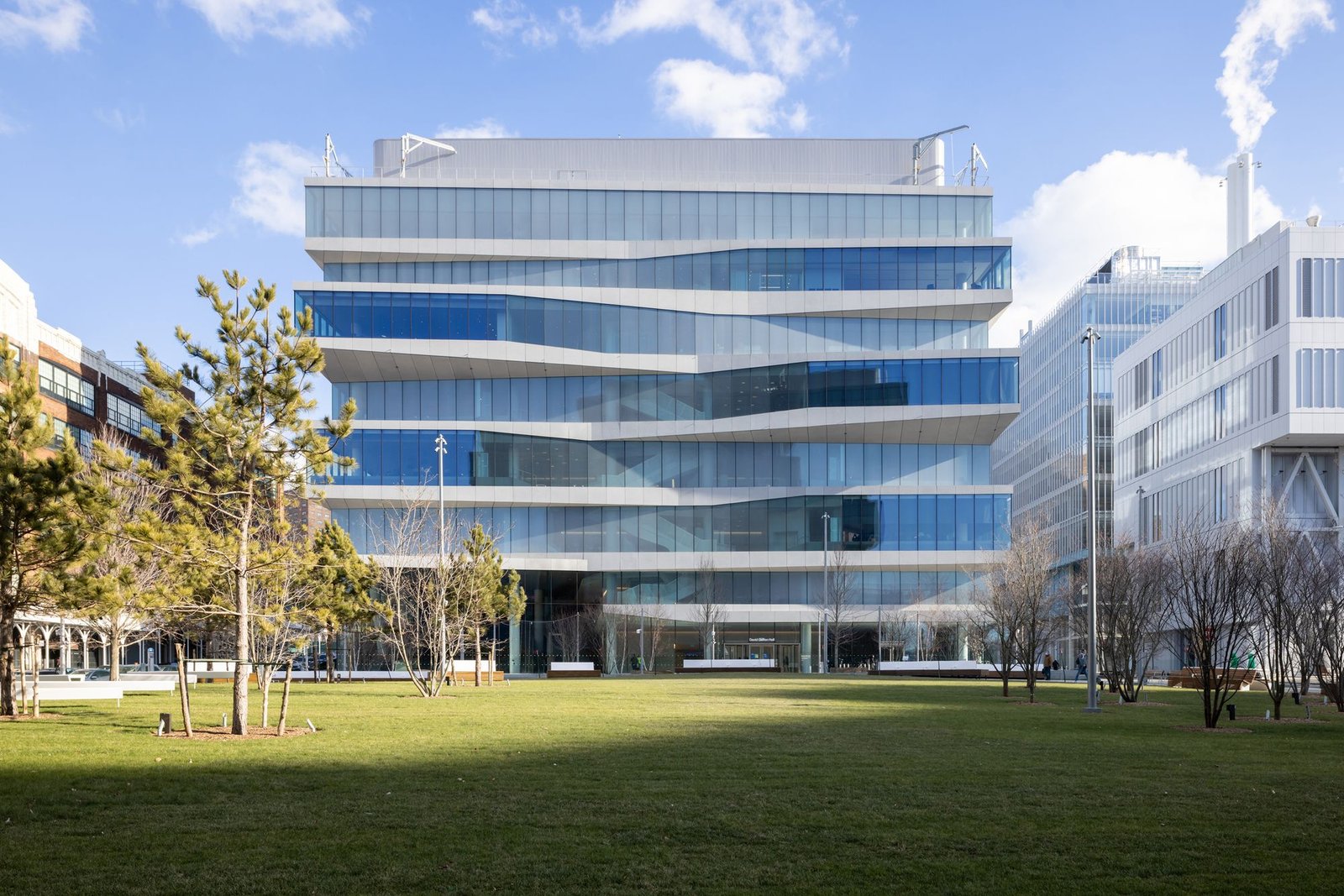
The new Columbia Business School campus in New York, designed by Diller Scofidio + Renfro (DS+R) with FXCollaborative, shows how a business school can be planned around conversation rather than lecture halls alone. Completed in 2022 on Columbia University’s Manhattanville campus in West Harlem, the project adds roughly 492,000 square feet across two buildings, Henry R. Kravis Hall and David Geffen Hall, and roughly doubles the school’s previous space. This review explains the design ideas, how the buildings are organised, the engineering team behind them, and what Pakistani universities, developers and architects can take from the project.
Columbia Business School at a Glance
| Architects | Diller Scofidio + Renfro with FXCollaborative |
|---|---|
| Location | Manhattanville campus, West Harlem, New York, United States |
| Completed | 2022 |
| Floor area | About 492,000 sq ft across two buildings |
| Buildings | Henry R. Kravis Hall (11 storeys) and David Geffen Hall (8 storeys) |
| Engineering team | Arup (structure), Buro Happold (mechanical), Stantec (civil), Turner Construction (construction management) |
| Key ideas | Informal learning spaces mixed with classrooms, vertical circulation networks, a public park and community space at ground level |
Background: A Business School Built for Interaction
Business education has moved away from the idea that learning happens only in a tiered lecture theatre. Case discussions, team projects, start-up incubation and networking with alumni and industry now take up a large share of a student’s week. The brief for the new Columbia Business School reflected this. The school wanted buildings that would work as hubs for students, faculty, alumni and visiting professionals, open for long hours and able to host formal teaching and informal meetings side by side.
The site is part of Columbia’s Manhattanville expansion, a long-term plan to extend the university north of its historic Morningside Heights campus. The master plan for this district was prepared by Renzo Piano Building Workshop with Skidmore, Owings & Merrill, and it emphasises open ground floors, pedestrian routes through the blocks and public space shared with the surrounding neighbourhood. The business school buildings had to work within that framework.
The Design Concept: A Layer Cake of Uses
The central idea is what the architects describe as a layered, or “layer cake”, organisation. Instead of putting all classrooms on some floors and all offices on others, the design interleaves them.
Henry R. Kravis Hall
Kravis Hall rises eleven storeys. Faculty offices are interspersed with student learning spaces through the height of the building, so that teachers and students cross paths in everyday use. The building has a 360-degree orientation, making the most of its exposure to the Hudson River and the city around it.
David Geffen Hall
Geffen Hall is eight storeys and holds administrative offices together with further learning spaces. It is aligned with the mid-block pedestrian axis of the Manhattanville master plan, which ties it into the street network and the movement of people through the campus.
Façades that express the plan
The layered arrangement is visible from outside. Each building’s façade changes in rhythm and depth to match the uses behind it, so the stacking of classrooms, lounges and offices can be read in the elevation. This is a useful principle: the envelope is designed from the inside out rather than applied as a uniform skin.
Circulation as Learning Space
A key feature of both buildings is a network of intersecting circulation routes and collaborative spaces that runs vertically through each block. Stairs, landings and lounges are combined so that moving between floors becomes an opportunity to meet people. The architects describe the result as a continuous space for teaching, socialising and studying that can operate around the clock.
Social stairs
Generous stairs connect floors and encourage people to walk rather than wait for lifts, creating chance encounters.
Breakout lounges
Informal seating clusters next to classrooms let groups continue a discussion after a session ends.
Views from every classroom
The orientation of both buildings gives each classroom outlook to the city or the river, which improves daylight and comfort.
For a building of this size, open vertical connections also have to be designed carefully for fire safety. Connected floors need smoke control, compartmentation and protected escape routes, the same principles found in the NFPA life-safety standards widely referenced in Pakistan for public buildings.
Community Engagement and the Ground Floor
One of the strongest aspects of the project is its relationship with West Harlem. The design includes several elements aimed at the wider neighbourhood rather than only the university:
- Small business support. A dedicated area on the second floor of Geffen Hall houses the Columbia-Harlem Small Business Development Center, continuing the school’s long-running programme of support for local entrepreneurs.
- Public open space. A public park of around 40,000 square feet sits between the buildings and the surrounding streets.
- Retail at street level. New retail spaces, including a café featuring local products, keep the ground floor active and open to non-students.
This approach reduces the “fortress campus” effect that many universities create, where tall boundary walls and guarded gates separate students from the city.
Engineering and Project Team
Large institutional buildings depend as much on the engineering team as on the architect. Published project information lists Arup as structural engineer, Buro Happold for mechanical engineering, Stantec for civil engineering, Turner Construction as construction manager, Tillotson Design Associates for lighting, Cerami & Associates for acoustics and Van Deusen and Associates for vertical transportation. The presence of specialist acoustic and vertical transportation consultants is telling: in a building planned around open stairs and shared spaces, noise control and lift strategy are critical to day-to-day comfort.
Traditional vs Interaction-Led Campus Design
| Factor | Traditional teaching block | Columbia Business School approach |
|---|---|---|
| Floor organisation | Classrooms, offices and admin on separate floors | Faculty offices and student spaces interleaved |
| Circulation | Narrow corridors and enclosed stair cores | Open, connected stairs and lounges |
| Façade | Uniform elevation | Elevation varies with the uses behind it |
| Ground floor | Closed to the public | Park, café, retail and community business centre |
| Hours of use | Mainly teaching hours | Designed for round-the-clock activity |
Strengths and Questions
Strengths
- A clear organising idea that links plan, section and façade.
- Strong integration with the master plan and surrounding streets.
- Real public benefit through the park, café and small business centre.
Questions
- Open vertical spaces need careful acoustic treatment and smoke management.
- Highly glazed façades can increase cooling loads unless shading and glazing performance are well specified.
- Interleaved uses require good wayfinding so that visitors understand where they are.
Lessons for Pakistan
Pakistan’s universities, colleges and private business schools are expanding, especially in Lahore, Islamabad and Karachi. Many new campus buildings still follow a corridor-and-classroom model. The Columbia project suggests several practical ideas that can be adapted to local budgets and climate.
Plan for informal learning
Add breakout spaces next to classrooms and widen key stair landings so they can be used for group work.
Design the façade for climate
Use deep reveals, external shading and high-performance glass on west and south faces to control heat gain in Pakistani summers.
Engineer shared spaces properly
Coordinate fire safety, smoke control and acoustics early, following the Building Code of Pakistan (PEC) and NFPA principles.
Open the ground floor
Where security allows, give part of the campus edge to cafés, bookshops or community uses to connect with the city.
ACCO designs and builds educational buildings through its school and college construction services in Lahore, and the same planning principles apply to office building construction where companies want collaborative workplaces. For budgeting, ACCO prices each project through an itemised BOQ; the construction cost per square foot guide for Lahore explains the main cost drivers. You can see the full range of design and build work on our services page.
Frequently Asked Questions
Who designed the new Columbia Business School buildings?
The buildings were designed by Diller Scofidio + Renfro in collaboration with FXCollaborative. The wider Manhattanville campus master plan was prepared by Renzo Piano Building Workshop with Skidmore, Owings & Merrill.
How big is the Columbia Business School expansion?
The project provides around 492,000 square feet across Henry R. Kravis Hall and David Geffen Hall, roughly doubling the school’s previous space.
What is the layer-cake design idea?
It means interleaving different uses, such as faculty offices and student learning spaces, through the height of the building instead of separating them by floor, and expressing that layering on the façade.
How does the campus engage with the local community?
It includes a public park, street-level retail with a café, and space for the Columbia-Harlem Small Business Development Center, which supports local entrepreneurs.
Can these ideas work in Pakistani universities?
Yes, with adaptation. Breakout spaces, social stairs and active ground floors can be built within local budgets, provided the façade is designed for heat and the shared spaces meet fire-safety requirements.
Does ACCO build educational buildings?
Yes. ACCO provides architectural design, structural and MEP coordination, approvals support and construction for schools, colleges and university buildings, priced through an itemised BOQ.
Conclusion
The Columbia Business School campus by Diller Scofidio + Renfro and FXCollaborative is a clear example of architecture shaped around how people learn and meet. Its layered plan, connected circulation and public ground floor make the buildings work as part of the city rather than apart from it. For Pakistani institutions planning new campuses, the lesson is to design for interaction and climate from the first sketch, and to engineer shared spaces properly so they remain safe and comfortable for decades.
Related articles
ACCO services
Contact ACCO
- +92 322 8000190
- info@acco.com.pk
- Office 2, 3rd Floor, Bigcity Plaza, Gulberg-III, Lahore
Planning a Project with ACCO?
Architecture, engineering and construction from one Lahore team since 1998. Design drawings are free when ACCO is awarded the construction.
Discuss Your ProjectWhatsApp +92 322 8000190