Children’s Forest Nursery School by Takashige Yamashita Office: Design Review
By Tanveer Ahmed, CEO, Ahmed Construction Company (ACCO) · Updated · Reviewed by ACCO architects and engineers
Quick Answer
Children’s Forest Nursery School near Mount Fuji: age-group rooms, ramps, courtyards and a central hall on a forest slope. Lessons for Pakistan. Ahmed Construction Company (ACCO), based in Gulberg-III Lahore since 1998, provides ACCO design & construction services with design drawings free on award of construction.
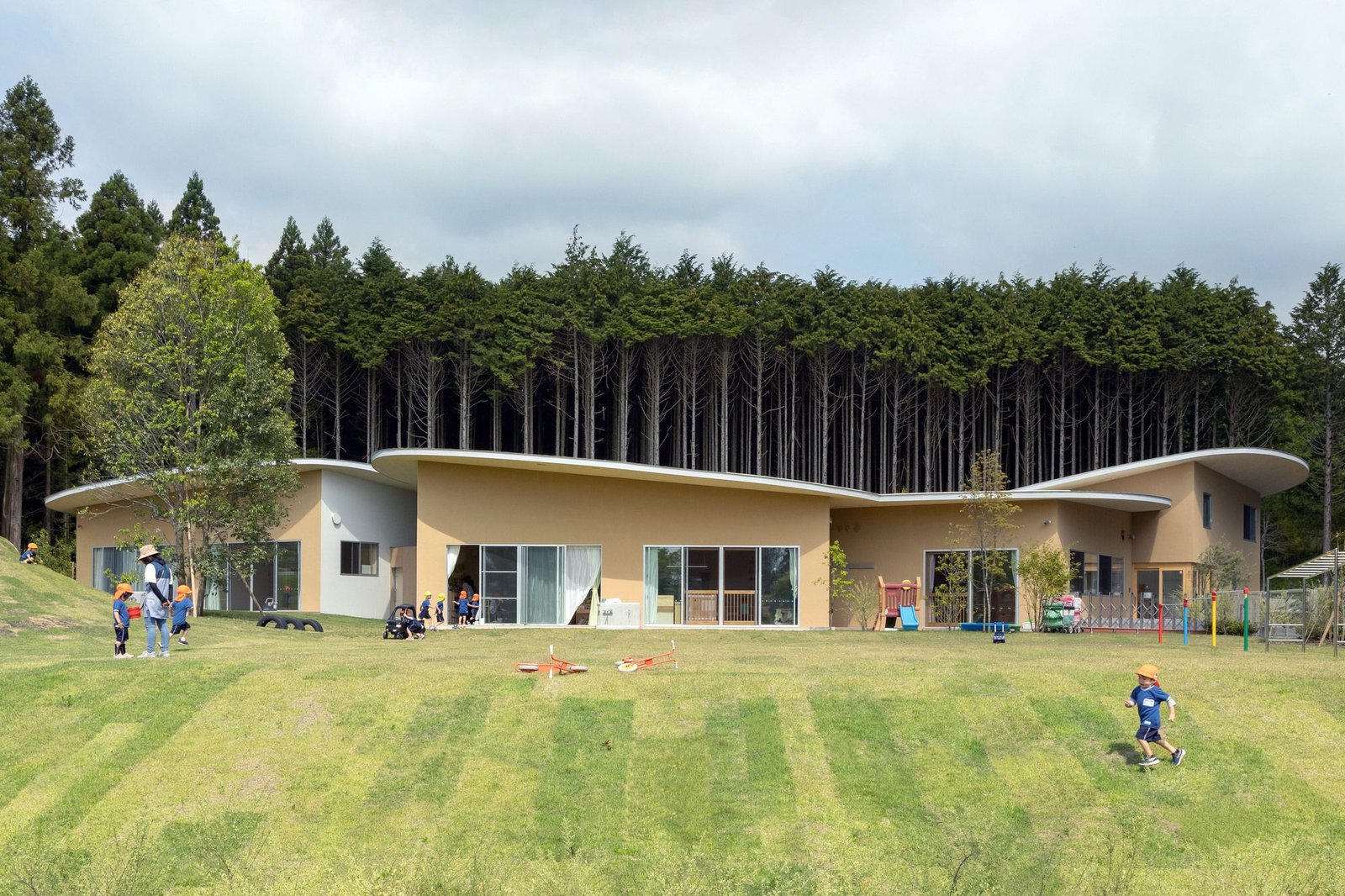
Children’s Forest Nursery School, designed by Takashige Yamashita Office, is a preschool for children aged 0 to 5 on a forested hillside in Gotemba, near Mount Fuji in Japan. Completed in 2023 with about 1,008 m² of floor area, the Children’s Forest Nursery School is made of separate cube-like rooms set at different levels and angles across the slope, linked by ramps and courtyards around a central hall. The design keeps the site’s trees and natural landform and turns them into part of the children’s daily learning. This review explains the design and what Pakistani schools, Montessori and early years centres can learn from it.
Children’s Forest Nursery School at a Glance
| Architect | Takashige Yamashita Office; principal architect Takashige Yamashita |
|---|---|
| Location | Gotemba, Shizuoka, Japan, near Mount Fuji |
| Completed | 2023 |
| Area | About 1,008 m² |
| Age range | Children aged 0 to 5 |
| Key ideas | Separate room units for each age group, preserved slopes and trees, ramps and courtyards, central multipurpose hall for up to 150 people |
| Team | Hiraiwa Structural Consultants, Nagano Engineering (MEP), Usuko Sangyo and Tonbo Sougo Kensetsu (contractors) |
The Site: A Hillside of Hinoki Trees
When the architects first visited, the site was covered in Hinoki cypress trees. Sunlight filtering through the branches created patterns of light on the ground, and this inspired the idea of a sunlit space gently nestled in the woods.
The land itself is uneven, with undulating slopes and a small hill rising three to four metres on the west side. Many developers would level such a site to simplify construction. Here, the architects treated the topography as something to preserve, so that children could experience slopes, heights and natural features as part of their education.
The Design Concept: A Village of Rooms
Instead of one large building with a corridor of classrooms, the nursery is broken into individual cube-like units. Each unit houses a room for a particular age group, or a support space such as temporary care or the teachers’ lounge.
Different levels and angles
The units are placed on different ground levels and at different angles, following the slope. Each one is oriented to its own view of the natural surroundings, so every group has a distinct outlook and character.
Rooms matched to activity
The terrace for 2- to 5-year-olds faces an open grass field for easy access to active play. This area includes a symbolic tree about eight metres tall for shade, and a small hill with a tunnel for crawling. Other rooms, intended for a calmer atmosphere, are surrounded by forest, while rooms near the central courtyard look out to the changing sky above the trees.
Age-group units
Each room suits the needs and pace of a specific age, from infants to five-year-olds.
Preserved landform
Slopes, the hill and trees become play and learning features.
Varied views
Each unit looks onto a different part of the forest, field or sky.
Ramps, Courtyards and the Internal Landscape
The room units are connected by ramps and courtyards. On the side opposite the outdoor views, these connections form an internal landscape: a sheltered, secure area where children can play, crawl and climb even in bad weather.
Ramps are particularly suitable for young children. They allow toddlers to move independently between levels, make it easy for staff to push prams and trolleys, and provide accessible routes for children and adults with disabilities.
The Central Hall
At the centre of the plan is a multipurpose hall that can hold up to 150 people. Surrounded by the room units, it is easy to reach from every age group, making it simple to gather everyone for daily play or special events.
Despite its large roof, the hall includes deliberate gaps and openings that let natural light and views of greenery into the interior. This keeps a visual and physical connection between the children inside and the surrounding forest.
Outdoor Play for Different Ages
The design provides outdoor play spaces tailored to different stages of development:
- Wooden deck courtyard. Accessible from the hall, an open courtyard with a timber deck offers a safe playground, especially for the youngest children.
- Bouldering structure. On the opposite side of the hall, more active children can climb a bouldering wall that connects to a higher backyard surrounded by forest.
- Grass field and hill. The open field, symbolic tree and tunnel hill support running, crawling and imaginative play.
Graded challenges like these let children build confidence and physical skills at their own pace, while staff can supervise from the connected spaces.
Building on a Sloping Site
Keeping the natural landform brings design benefits but also construction challenges. Placing separate units at different levels on a slope typically involves:
- Stepped foundations. Each unit sits on its own platform or stepped footing, which reduces cut and fill but requires careful setting out.
- Retaining structures. Where levels change, low retaining walls or embankments hold back soil, and they must drain properly to avoid pressure build-up.
- Surface water management. Rain running down the slope must be guided around buildings and play areas so that it does not flood rooms or erode paths.
- Tree protection. Roots of retained trees need protection zones during construction, with no heavy machinery, material storage or trenching close to the trunks.
- Accessible gradients. Ramps must be gentle enough for toddlers, prams and wheelchairs, with handrails at both adult and child heights.
In Pakistan, sloping sites are common in Islamabad, Murree, the northern areas and parts of Rawalpindi. The same principles apply, with added attention to seismic design and to monsoon rainfall, which can turn slopes into fast-flowing channels.
Why Nature Matters in Early Childhood Design
Research and practice in early childhood education widely support regular outdoor play and contact with nature. Natural environments offer varied surfaces, slopes, textures and changing light that encourage movement, curiosity and exploration. The WHO recommends that young children be physically active for substantial periods every day, and well-designed outdoor spaces make that easier.
Buildings for young children also have specific technical requirements: low window sills for views, non-slip and soft floor surfaces, finger-safe door hinges, child-height sanitary fittings, good daylight, fresh air and robust fire safety with clear evacuation routes, often designed with reference to standards such as those from NFPA.
Conventional Nursery vs Children’s Forest Nursery School
| Factor | Conventional nursery | Children’s Forest Nursery School |
|---|---|---|
| Site | Levelled, trees removed | Slopes and trees preserved |
| Plan | Corridor with classrooms | Separate room units around a central hall |
| Circulation | Stairs and corridors | Ramps and courtyards |
| Outdoor play | One playground | Deck, field, hill, tunnel and bouldering wall |
| Daylight | Windows on one side | Varied orientations and roof openings |
Strengths and Questions
Strengths
- A design shaped by the site’s natural features rather than imposed on them.
- Spaces tailored to each age group with varied outdoor challenges.
- A central hall that supports community and events.
Questions
- Many separate units increase external wall and roof area, adding cost and heat loss or gain.
- Ramps and levels require careful supervision planning.
- Timber decks and forest settings need regular maintenance and checks for hazards.
Lessons for Pakistan
Many early years centres and Montessori schools in Pakistan operate from converted houses with little outdoor space, steep stairs and small, dark rooms. Even purpose-built preschools often follow a simple corridor plan. Children’s Forest Nursery School suggests ideas that can work at smaller scales and lower budgets.
Keep existing trees
Plan buildings around mature trees for shade, which is essential in Pakistan’s summer heat.
Use ramps for little ones
Ramps and ground-floor rooms are safer and more accessible than stairs for young children.
Create graded play
Combine soft play for toddlers with climbing and mounds for older children.
Build safely
Design structure, fire escape and electrical safety to the Building Code of Pakistan, with child-safe details throughout.
For another early years project, see our review of the Au Grand Air nursery and kindergarten. ACCO designs and builds educational buildings through its school and college construction services in Lahore, and can convert or extend houses for educational use alongside its house construction services. Every project is priced through an itemised BOQ; the construction cost per square foot guide explains typical cost drivers.
Frequently Asked Questions
Where is Children’s Forest Nursery School?
It is in Gotemba, Japan, on a forested hillside near Mount Fuji, and serves children aged 0 to 5.
Who designed Children’s Forest Nursery School?
The nursery was designed by Takashige Yamashita Office and completed in 2023, with about 1,008 m² of floor area.
How is the nursery organised?
It is made of separate room units for each age group, placed at different levels and angles on the slope and linked by ramps and courtyards around a central hall for up to 150 people.
What outdoor play spaces does it have?
It includes a timber deck courtyard, an open grass field with a tall shade tree, a small hill with a crawling tunnel, and a bouldering structure leading to a higher backyard.
How can Pakistani preschools apply these ideas?
By keeping trees for shade, using ramps and ground-floor rooms, creating graded play areas and designing child-safe details, even on modest plots.
Does ACCO build schools and preschools?
Yes. ACCO provides design, engineering, approvals support and construction for schools and early years centres, priced through an itemised BOQ.
Conclusion
Children’s Forest Nursery School by Takashige Yamashita Office shows how architecture for young children can work with nature instead of against it. Separate room units, preserved slopes and trees, ramps, courtyards and a light-filled central hall create a varied, safe and stimulating environment. For Pakistan, the most useful lessons are to protect shade trees, design for easy movement on one level or by ramp, and give children outdoor spaces that challenge them at every age.
Related articles
ACCO services
Contact ACCO
- +92 322 8000190
- info@acco.com.pk
- Office 2, 3rd Floor, Bigcity Plaza, Gulberg-III, Lahore
Planning a Project with ACCO?
Architecture, engineering and construction from one Lahore team since 1998. Design drawings are free when ACCO is awarded the construction.
Discuss Your ProjectWhatsApp +92 322 8000190

Grey Structure Construction Cost in Pakistan 2027: What You’ll Actually Pay