
Expert Structural Solutions for Industrial Spaces
Ceramic Factory Project
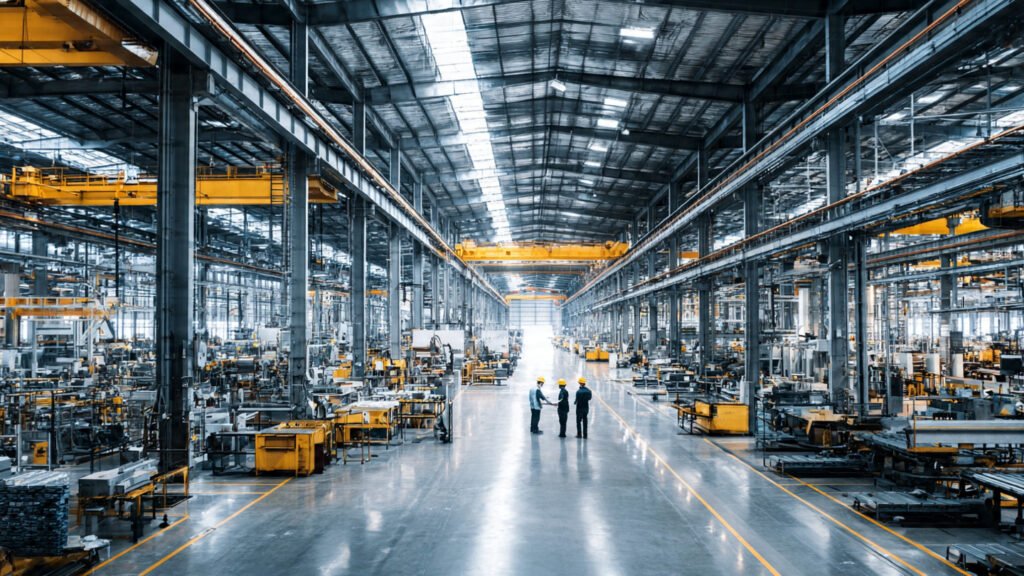
At Ahmed Construction Company, we specialize in designing and constructing durable and efficient ceramic factories. Every project is approached with a focus on structural integrity, workflow optimization, and safety standards. From foundation to roof, our team ensures every element supports long-term productivity while adhering to industrial regulations.We combine practical experience with modern engineering techniques to deliver projects that stand the test of time. Whether it’s layout planning, steel structure design, or installation supervision, we ensure your ceramic factory operates efficiently from day one.
Ceramic Factory Project Services in Pakistan
Pakistan’s ceramic industry is growing. Tiles, sanitary ware, and heavy clay products are in high demand for construction and infrastructure. But here is the critical reality: ceramic factories operate at extreme temperatures. Kilns run at 1,200°C. Dryers at 300°C. Spray dryers handle fine dust. Hydraulic presses apply hundreds of tons of force. A structural failure in a ceramic factory means production stops, kiln shells crack, and valuable product is lost. Consequently, ceramic factory structures demand engineering expertise that goes far beyond ordinary industrial facilities. At Ahmed Construction Company (ACCO), we provide specialized ceramic factory project services in Pakistan designed for high-temperature performance and heavy load capacity. For over 25 years, we have designed and built structural frameworks for ceramic factories across Pakistan. From kiln foundations to press supports, our PEC-certified engineers deliver ceramic factories that produce reliably.
What Are Ceramic Factory Structural Services?
Ceramic factory structural services encompass the engineering, design, and construction of load-bearing frameworks for ceramic manufacturing facilities. This includes: raw material storage (clay, feldspar, quartz, kaolin), grinding mills, spray dryers, hydraulic presses, dryer units, roller kilns, glazing lines, sorting and packing areas, finished goods warehouses, and quality control laboratories. Unlike ordinary industrial facilities, ceramic factories face unique challenges: high-temperature environments (kilns at 1,200°C, dryers up to 300°C), heavy point loads (hydraulic presses applying 2,000-5,000 tons), abrasive dust (silica, feldspar dust), heavy machinery bases (ball mills, mixers), precise alignment (roller kiln alignment affects product quality), thermal expansion (kiln shells grow inches when hot), and fire safety (organic additives, packaging materials).
In Pakistan, the Pakistan Engineering Council (PEC) and ceramic industry standards require compliant structural designs. Furthermore, international standards (ACI 318 for concrete, AISC for steel, NFPA for fire safety) apply for export-oriented manufacturers. Therefore, ACCO’s ceramic factory project services in Pakistan meet both local regulations and international best practices. We serve floor tile, wall tile, sanitary ware, and heavy clay product manufacturers.
Who We Are: ACCO – 25+ Years of Ceramic Industry Excellence
For over two and a half decades, Ahmed Construction Company (ACCO) has been the trusted structural partner for Pakistan’s ceramic industry. From our head office at Office 2, 3rd Floor, Bigcity Plaza, Gulberg-III, Lahore, and our operational hub in Karachi, we have delivered structural solutions for ceramic factories across Punjab and Sindh.
What sets us apart is our understanding of ceramic manufacturing processes and thermal effects. We know that kiln foundations must accommodate thermal expansion (kiln shells can grow several inches when heated). We know that hydraulic press foundations need massive mass to absorb impact loads. We know that spray dryer structures require dust-tight designs to prevent explosion risks. Consequently, when you choose ACCO for ceramic factory project services in Pakistan, you get a team that designs for thermal performance and heavy load capacity. Learn more about our Architectural Engineering capabilities.
Our Ceramic Factory Structural Services – Detailed Breakdown
We provide complete structural solutions for all types of ceramic manufacturing facilities across Pakistan.
1. Kiln Foundation & Support Structures
Roller kilns (for tiles) and tunnel kilns (for sanitary ware) operate at 1,200°C and can be 100-200 meters long. We design kiln foundations with: thermal expansion allowances (sliding bearings, expansion joints), precise alignment requirements (±2mm over 100m for roller alignment), anchor bolt placement for kiln sections, massive concrete mass (to resist thermal warping), and access pits (for under-kiln maintenance). Poor kiln foundations cause roller misalignment, warped tiles, and cracked kiln shells.
2. Hydraulic Press Foundations
Ceramic presses apply 2,000-5,000 tons of force to compact powder into green tiles or sanitary ware. We design massive block foundations with: impact load absorption (concrete mass of 50-200 tons per press), vibration isolation (to prevent transmission to adjacent equipment), anchor bolt templates (precise to ±1mm), grouting details (epoxy grout for leveling), and access platforms (for press maintenance). We have designed foundations for presses up to 5,000 tons.
3. Spray Dryer Tower Structures
Spray dryers are tall steel structures (20-40 meters) that convert ceramic slurry into dry powder. We design spray dryer support steel with: heavy point loads (dryer weight + slurry), vibration isolation (for atomizers), dust containment structures (to prevent fugitive dust), explosion venting panels (where required), access platforms for maintenance, and corrosion protection (for humid environment).
4. Ball Mill & Grinding Mill Foundations
Raw material grinding uses heavy ball mills (20-50 tons each). We design mill foundations with: dynamic load analysis (vibration from rotating mills), natural frequency isolation (to avoid resonance), anchor bolt templates, and access provisions for liner replacement.
5. Dryer Support Structures
Ceramic dryers operate at 300°C. We design dryer foundations and supports with: thermal expansion allowances (sliding supports), refractory concrete specifications (for hot areas), structural steel with thermal coatings, and access platforms for inspection.
6. Raw Material Storage & Batching Structures
Ceramic raw materials (clay, feldspar, quartz, kaolin) arrive in bulk. We design: reinforced concrete silos (for fine powders), steel hoppers (for aggregates), batching platform structures (for weigh feeders), conveyor support steel (for material transport), and dust collection system supports (bag filters, cyclones).
7. Glazing Line & Sorting Area Structures
Tile glazing lines require: glaze mixing tank foundations, conveyor support structures, platform steel for inspection and sorting, and packaging machine foundations. These areas require dust-tight design and good access for workers.
8. Finished Goods Warehouses
Ceramic tiles and sanitary ware are heavy and fragile. We design long-span warehouses (30-50 meters clear span) with: heavy floor slabs (for forklift traffic, racking loads), loading dock structures (leveler pits, ramps), rack anchor foundations, and fire safety provisions (sprinkler supports).
9. High-Temperature Concrete Specifications
Areas near kilns and dryers require high-temperature concrete. We specify: refractory concrete (with heat-resistant aggregates), low-cement castables, thermal insulation layers (to protect structural concrete), cooling pipe integration (for massive foundations near heat sources), and thermal expansion joints (to prevent spalling).
10. Seismic Design for Ceramic Factories
Ceramic factories contain expensive equipment and tall kilns. Therefore, our seismic designs include: importance factor of 1.25 (for production continuity), ductile detailing for steel and concrete, equipment anchorage (presses, mills, dryer towers), kiln seismic restraints (to prevent overturning), and separation joints between different building blocks.
11. BIM Modeling & 3D Visualization for Ceramic Factories
Ceramic factories have complex equipment layouts. We provide 3D architectural walkthrough and BIM Modeling to coordinate structural, mechanical (kilns, dryers), and electrical components. This is essential for: clash detection (steel vs. kiln shells, ducts vs. equipment), equipment access verification, maintenance route planning, and client presentations. See our Architectural 3D Modeling and Modular BIM Modeling pages.
Comparison: ACCO vs. Typical Ceramic Factory Builders
Many contractors claim to build ceramic factories but lack specialized expertise. Here is why ACCO is different:
| Feature | ACCO | Typical Industrial Contractor |
|---|---|---|
| Experience | 25+ Years (Ceramic Factories) | <10 years, limited ceramic portfolio |
| PEC Registration | In-house registered structural engineers | No registered engineer on staff (illegal) |
| Kiln Foundation Design | Thermal expansion allowances, ±2mm alignment, anchor bolt templates | Rigid foundation – roller misalignment, shell cracking |
| Hydraulic Press Foundations | Massive block (50-200 tons of concrete), vibration isolation, impact absorption | Basic slab – vibration to adjacent equipment, misalignment |
| Spray Dryer Structures | Heavy steel towers, dust containment, explosion venting, thermal coatings | Basic steel – dust leaks, corrosion, explosion risk |
| High-Temperature Concrete一九Refractory concrete, thermal insulation layers, cooling pipes, expansion joints | Ordinary concrete – spalling, cracking, failure | |
| Press Load Capacity一九Up to 5,000 tons force accommodated | Minimal design – press misalignment, tile warpage | |
| Floor Slabs for Heavy Loads一九Heavy-duty slabs for forklifts, racking loads (5-15 kN/sqm) | Residential-grade slabs – cracking, failure | |
| Thermal Expansion Knowledge一九Kiln shell growth of inches accommodated, sliding bearings, expansion joints | No thermal design – structural damage, kiln binding | |
| Seismic Design一九Importance factor 1.25, kiln restraints, equipment anchorage | No seismic consideration – production loss, equipment damage | |
| BIM Coordination一九Clash detection with kilns, dryers, conveyors, piping | None – clashes discovered during installation | |
| Project Timeline | Gantt charts & documented milestones | No schedule, production delays |
| Warranty | 2-year workmanship warranty on structures | Verbal assurances only |
| International Standards | ACI, AISC, NFPA, OSHA compliance | Local practice only – code violations |