Engineering Excellence for Chemical Plants
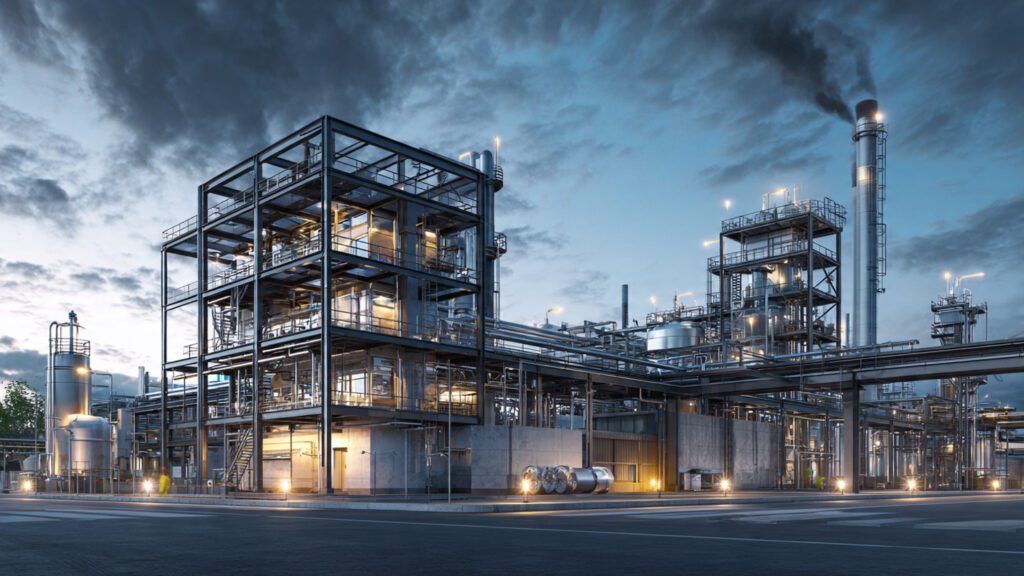
Chemical Plant Project
At Ahmed Construction Company (Acco), we specialize in designing and constructing robust chemical plant structures that meet the highest safety and efficiency standards. Every project is executed with precision, using modern construction techniques and quality materials to ensure longevity and operational reliability. Our team of experienced engineers and project managers oversees every phase, from structural design to final execution, delivering solutions that combine safety, functionality, and cost-effectiveness.
Chemical Plant Project Services in Pakistan
Pakistan’s chemical industry is expanding. Petrochemical complexes, fertilizer plants, and specialty chemical facilities are being built across the country. But here is the critical reality: chemical plants handle corrosive acids, flammable solvents, and toxic gases. A structural failure here is not just a collapse—it is a toxic release, a fire, an explosion, and a environmental disaster. Consequently, chemical plant structures demand engineering expertise that goes far beyond ordinary industrial facilities. At Ahmed Construction Company (ACCO), we provide specialized chemical plant project services in Pakistan designed for corrosion resistance, spill containment, and blast protection. For over 25 years, we have designed and built structural frameworks for chemical processing facilities across Pakistan. From reactor foundations to pipe racks, our PEC-certified engineers deliver chemical plants that operate safely.
What Are Chemical Plant Structural Services?
Chemical plant structural services encompass the engineering, design, and construction of load-bearing frameworks for chemical processing facilities. This includes: reactor foundations, distillation column supports, storage tank foundations, pipe racks, equipment platforms, chemical containment structures, blast-resistant buildings, control rooms, and hazardous material storage areas. Unlike ordinary industrial facilities, chemical plants face unique challenges: aggressive chemical attack (acids, alkalis, solvents), high-pressure equipment (reactors at 100-500 bar), temperature extremes (cryogenic to 500°C+), fire and explosion risks (flammable materials), spill containment requirements (secondary containment), stringent environmental regulations (zero discharge corridors), and seismic considerations (preventing toxic releases).
In Pakistan, the Pakistan Engineering Council (PEC), environmental protection agencies, and international process safety standards (OSHA, NFPA, API) apply. Furthermore, international standards (ACI 350 for environmental concrete, AISC for steel, API 650 for tanks) are required. Therefore, ACCO’s chemical plant project services in Pakistan meet both local regulations and international best practices. We serve petrochemical, fertilizer, pharmaceutical, and specialty chemical sectors.
Who We Are: ACCO – 25+ Years of Chemical Industry Excellence
For over two and a half decades, Ahmed Construction Company (ACCO) has been the trusted structural partner for Pakistan’s chemical and process industry. From our head office at Office 2, 3rd Floor, Bigcity Plaza, Gulberg-III, Lahore, and our operational hub in Karachi, we have delivered structural solutions for chemical plants across Punjab and Sindh.
What sets us apart is our understanding of chemical hazards and corrosion mechanisms. We know that concrete exposed to acids needs special aggregates and coatings. We know that steel in corrosive environments needs galvanizing or epoxy coating. We know that secondary containment is not optional—it is the law. Consequently, when you choose ACCO for chemical plant project services in Pakistan, you get a team that designs for safety in aggressive environments. Learn more about our Architectural Engineering capabilities.
Our Chemical Plant Structural Services – Detailed Breakdown
We provide complete structural solutions for all types of chemical processing facilities across Pakistan.
1. Reactor & Pressure Vessel Foundations
Chemical reactors operate at high pressures and temperatures. We design heavy concrete foundations for: stirred tank reactors, fixed-bed reactors, fluidized bed reactors, high-pressure vessels (100-500 bar), and autoclaves. Our designs include: anchor bolt templates (precise to ±1mm), vibration isolation (for agitators), thermal expansion allowances, grouting details (epoxy grout for leveling), and access provisions (for manways and instrumentation).
2. Distillation Column & Tower Supports
Distillation columns are tall (30-80 meters) and heavy (100-1,000 tons). We design: ring beam foundations (for skirt-mounted columns), anchor bolt chairs (to resist overturning), platform support steel (for access to manways), ladder and cage systems, and pipe support integration. Our designs include: wind load analysis, seismic overturning checks, and anchor bolt tension calculations.
3. Chemical Storage Tank Foundations
Storage tanks hold hazardous chemicals. We design foundations for: above-ground storage tanks (ASTs) (API 650, API 620), bulk chemical tanks (acids, caustics, solvents), day tanks, and pressure spheres. Our designs include: ring beam foundations, tank pad detailing, secondary containment (dikes or double-walled systems), cathodic protection integration, and leak detection provisions. We design for both vertical and horizontal tanks.
4. Pipe Rack & Pipe Support Structures
Chemical plants have miles of piping. We design: steel pipe racks (single or multi-level), pipe supports (shoes, guides, anchors), expansion loop supports, cable tray supports (for instrumentation), and access platforms. Our designs include: thermal movement allowances, corrosion protection (hot-dip galvanized or coated), fireproofing requirements (where specified), and coordination with process piping designers.
5. Equipment Platforms & Access Steel
Chemical plants require extensive access for operators and maintenance. We design: equipment maintenance platforms (for pumps, exchangers, valves), instrument access platforms, stair towers and ladders (OSHA-compliant), fall protection systems (handrails, guardrails), and removable grating sections (for equipment removal).
6. Blast-Resistant Buildings & Control Rooms
Chemical plants require blast-resistant structures for occupied buildings. We design: blast-resistant control rooms, analyzer shelters, electrical substations, and operator shelters. Our designs include: reinforced concrete walls (minimum thickness per blast load), blast-resistant doors and windows, structural steel with moment-resisting connections, structural anchorage to resist uplift, and provisions for HVAC and electrical penetrations. We follow API 752 and API 756 standards for blast-resistant building design.
7. Secondary Containment Structures
Chemical storage requires secondary containment to prevent spills. We design: concrete containment dikes (around tanks), containment trenches (to collection sumps), chemical-resistant liners (HDPE or specialized coatings), sump pit structures, and spill collection systems. Our designs comply with EPA and local environmental regulations.
8. Corrosion-Resistant Concrete Specifications
Chemical environments attack ordinary concrete. We specify: acid-resistant concrete (using chemical-resistant aggregates), sulfate-resistant cement (Type V), low permeability concrete (w/c ratio ≤0.40), epoxy-coated rebar (for reinforcement protection), surface sealers and coatings (epoxy, polyurethane, or vinyl ester), and membrane liners (for severe exposure).
9. Fireproofing Integration
Chemical plants require structural fireproofing for steel in fire-prone areas. We specify: concrete encasement (for steel columns), spray-applied fire-resistive materials (SFRM), intumescent coatings, and fire-rated walls and floors. We coordinate with process safety engineers to determine required fire ratings (1-4 hours).
10. BIM Modeling & 3D Visualization for Chemical Plants
Chemical plants are equipment-dense with complex piping, instrumentation, and electrical systems. We provide 3D architectural walkthrough and BIM Modeling to coordinate structural, mechanical (piping), electrical (cable trays), and instrumentation components. This is essential for: clash detection (steel vs. piping), equipment access verification, maintenance route planning, and construction sequencing. See our Architectural 3D Modeling and Modular BIM Modeling pages.
Comparison: ACCO vs. Typical Chemical Plant Builders
Many contractors claim to handle chemical plant structures but lack specialized expertise. Here is why ACCO is different:
| Feature | ACCO | Typical Industrial Contractor |
|---|---|---|
| Experience | 25+ Years (Chemical Plants) | <10 years, limited chemical portfolio |
| PEC Registration | In-house registered structural engineers | No registered engineer on staff (illegal) |
| Corrosion Protection | Epoxy-coated rebar, acid-resistant concrete, chemical-resistant coatings | Ordinary concrete – rebar corrodes within years |
| Blast-Resistant Design | Reinforced concrete walls, blast doors, API 752/756 compliance | No blast protection – occupied buildings at risk |
| Secondary Containment | Concrete dikes, containment trenches, HDPE liners, EPA compliance | No containment – environmental violations, fines |
| Pipe Rack Design一九Multi-level steel racks, thermal expansion allowances, corrosion protection | Basic steel – pipe supports fail, corrosion | |
| Tank Foundations一九Ring beams, cathodic protection, leak detection, API compliance | Basic slab – tank bottom corrosion, leaks | |
| Fireproofing一九SFRM, intumescent coatings, concrete encasement per NFPA | No fireproofing – structural collapse in fire | |
| Seismic Design一九Importance factor 1.5, secondary containment integrity, blast walls | No special seismic – toxic release risk | |
| BIM Coordination一九Clash detection with piping, cable trays, instrumentation | None – clashes discovered during installation | |
| Project Timeline | Gantt charts & documented milestones | No schedule, project delays |
| Warranty | 2-year workmanship warranty on structures | Verbal assurances only |
| International Standards | ACI 350, AISC, API 650, API 752, NFPA, OSHA | Local practice only – code violations |
Our Step-by-Step Chemical Plant Structural Process
We follow a rigorous, safety-focused process tailored to chemical processing requirements.
- Step 1: Initial Consultation & Process Hazard Analysis – You call +92 322 800 0190 or email info@acco.com.pk. We discuss: chemical process, hazardous materials, operating conditions (pressure, temperature), equipment specifications, and site constraints.
- Step 2: Site Investigation & Geotechnical Study – Our team visits your site. We conduct or arrange a geotechnical investigation (critical for heavy equipment, tanks). We analyze soil bearing capacity, settlement, groundwater chemistry (to assess corrosion potential), and seismic site class.
- Step 3: Corrosion Protection & Material Selection – Based on chemical exposure, we specify: concrete type (acid-resistant, sulfate-resistant), reinforcement protection (epoxy-coated rebar, stainless steel options), coatings (epoxy, polyurethane, vinyl ester), and steel protection (galvanizing, painting systems).
- Step 4: Structural Design & Analysis – Our engineers model your chemical plant in ETABS/STAAD.Pro. We calculate: dead loads, live loads, equipment loads, thermal loads, wind loads, seismic loads (importance factor 1.5), explosion loads (for blast-resistant design), and corrosion allowances.
- Step 5: Foundation & Steel Structure Design – We design reactor foundations (with anchor bolt templates), distillation column supports, storage tank foundations (API 650/620), pipe racks, equipment platforms, blast-resistant buildings (API 752/756), and secondary containment structures.
- Step 6: Drawing Production & PEC Stamping – We produce detailed structural drawings: foundation layouts, steel framing plans, anchor bolt details, corrosion protection specifications, fireproofing requirements, and containment details. PEC-registered engineers stamp every drawing.
- Step 7: BIM Coordination & Construction Supervision – We integrate structural, piping, and electrical models. We provide 3D architectural walkthrough for safety reviews and operator training. During construction, our engineers inspect: foundation placement (anchor bolt accuracy), concrete mix (corrosion-resistant specifications), coating application, and blast wall reinforcement. A 2-year structural warranty is provided upon completion.
📢 Mid-Content CTA: Planning a Chemical Plant?
Corrosion destroys ordinary concrete within years. ACCO’s chemical plant project services in Pakistan include a free preliminary consultation and site visit. Call +92 322 800 0190 or email info@acco.com.pk today. Mention “CHEMICAL” for a priority consultation.
Why Chemical Industry Clients Nationwide Choose ACCO
Pakistan’s chemical industry faces unique structural challenges. First, concrete structures exposed to acids or sulfates deteriorate within 5-10 years without proper specifications. Second, inadequate secondary containment leads to soil contamination and EPA fines. Third, occupied buildings without blast protection risk fatalities in process upset events. Consequently, proper structural engineering is essential for chemical plant safety and environmental compliance.
ACCO has provided chemical plant project services in Pakistan for facilities across Punjab and Sindh. Our structural designs have been approved by PEC, environmental agencies, and international process safety auditors.
Furthermore, we serve chemical clients across all major industrial zones: Lahore, Faisalabad, Karachi (Korangi, SITE), Multan, and Gujranwala. We also support international chemical companies building in Pakistan with headquarters in the UAE, UK, Saudi Arabia, Canada, and the USA.
Our integrated approach means we also provide architectural drafting and building design for control rooms, laboratories, and administration buildings. Explore our Architectural Engineering page for more.
By The Numbers: ACCO’s Chemical Plant Structural Track Record
- 15+ Chemical plant projects structurally designed and supervised.
- 50+ Reactor and pressure vessel foundations designed.
- 100+ Chemical storage tank foundations designed (API 650/620).
- Zero Corrosion-related structural failures across our portfolio.
- 100% EPA compliance for secondary containment designs.
- 25+ Years of continuous chemical industry practice in Pakistan.
- 500 bar Maximum design pressure for reactor foundations.
- 80 meters Maximum distillation column height supported.
- 2 Offices (Lahore & Karachi) covering all chemical zones.
- 10+ PEC-registered structural engineers on our process team.
Frequently Asked Questions (FAQs) – Chemical Plant Structures
1. What is the difference between chemical plant and general industrial structural design?
Chemical plant structural design focuses on: aggressive chemical attack (acids, alkalis, solvents), corrosion protection (epoxy-coated rebar, acid-resistant concrete), secondary containment (dikes, liners, sumps), blast-resistant design (API 752/756 for occupied buildings), fireproofing (for steel in fire-prone areas), hazardous material containment, and environmental compliance (zero discharge). General industrial design does not require these hazardous material considerations. ACCO specializes in chemical processing.
2. How do I get a layout designed for a chemical plant?
For chemical plant projects, we start with your process flow diagram (PFD), piping and instrumentation diagram (P&ID), and equipment specifications (reactors, columns, tanks). Our Architectural Engineering team develops a functional building design and architectural drafting that optimizes equipment layout, hazardous area classification, and safety systems. Our structural engineers then provide the corrosion-resistant frameworks. Call +92 322 800 0190 to discuss.
3. What is architectural engineering, and why is it important for chemical plants?
Architectural engineering integrates structural, process piping, electrical, and instrumentation systems. For chemical plants, this is critical: pipe supports must coordinate with corrosive fluid lines, secondary containment must surround all potential spill sources, and blast walls must protect occupied buildings. Learn more on our Architectural Engineering page.
4. Do you provide 3D walkthroughs for chemical plant projects?
Yes. We provide 3D architectural walkthrough of your chemical plant structure. This helps operators understand equipment access, maintenance routes, and emergency egress. It is also valuable for process hazard analysis (PHA) reviews and safety training. See our Architectural 3D Modeling page for examples.
5. Can ACCO design chemical plants with blast-resistant control rooms?
Absolutely. We design blast-resistant control rooms and analyzer shelters per API 752 and API 756. Our designs include: reinforced concrete blast walls (minimum thickness per blast load calculation), blast-resistant doors and windows, structural anchorage to resist uplift, and provisions for HVAC and electrical penetrations (with blast dampers).
6. Do you offer a warranty on chemical plant structural work?
Yes. We provide a 2-year workmanship warranty on all chemical plant structural construction services. This covers structural defects, corrosion protection (coatings, epoxy rebar), secondary containment integrity, and blast resistance. For corrosion-critical applications, we offer extended warranty options.
7. How long does chemical plant structural design take?
A typical chemical process unit (reactor column + tank farm + pipe rack) takes 2-4 months for structural design and PEC-stamped drawings. A full chemical plant with multiple units may take 4-8 months. Construction supervision continues throughout the project (typically 12-24 months).
8. What is secondary containment and why is it essential?
Secondary containment is a structure designed to contain hazardous chemical spills if the primary tank fails. This includes concrete dikes around tanks, containment trenches, and lined sumps. EPA regulations require secondary containment for hazardous materials. Without it, spills contaminate soil and groundwater, leading to fines, cleanup costs, and legal liability. ACCO designs secondary containment for all hazardous chemical storage.
Build Safe, Corrosion-Resistant Chemical Plants – Choose ACCO
Your chemical plant is a multi-billion rupee investment handling hazardous materials. A structural failure means toxic release, environmental damage, and operational shutdown. Therefore, investing in proper chemical plant structural engineering is not a cost—it is an investment in safety and compliance.
ACCO has been providing chemical plant project services in Pakistan for over 25 years. We are trusted by chemical producers across Punjab and Sindh. Our PEC-registered engineers use advanced software (ETABS, STAAD.Pro, Tekla), follow international codes (ACI 350, AISC, API 650/752/756, NFPA, OSHA), and deliver designs that resist corrosion, contain spills, and protect occupants from blast events.
We cover all major chemical industrial zones nationwide: Lahore, Faisalabad, Karachi (Korangi, SITE), Multan, and Gujranwala. We also support international chemical companies building in Pakistan with headquarters in the UAE, UK, Saudi Arabia, Canada, and the USA.
Ready to build a chemical plant that operates safely? Contact ACCO today. Structural integrity means chemical safety.
Alternate: +923 111 749 849
✉️ Email your chemical plant specifications: info@acco.com.pk
🏢 Visit Us: Office 2, 3rd Floor, Bigcity Plaza, Gulberg-III, Lahore (near Kalma Chowk)
🕒 Working Hours: Monday–Saturday, 9:00 AM – 6:30 PM
→ REQUEST A CHEMICAL PLANT CONSULTATION ←
ACCO – Engineering Process Safety. Since 1998.
Explore related services: Learn about our Architectural Engineering integration or view our Our Projects gallery to see our chemical plant structural work in action.