
Shaping Industrial Spaces with Precision
Spinning and Weaving Plant
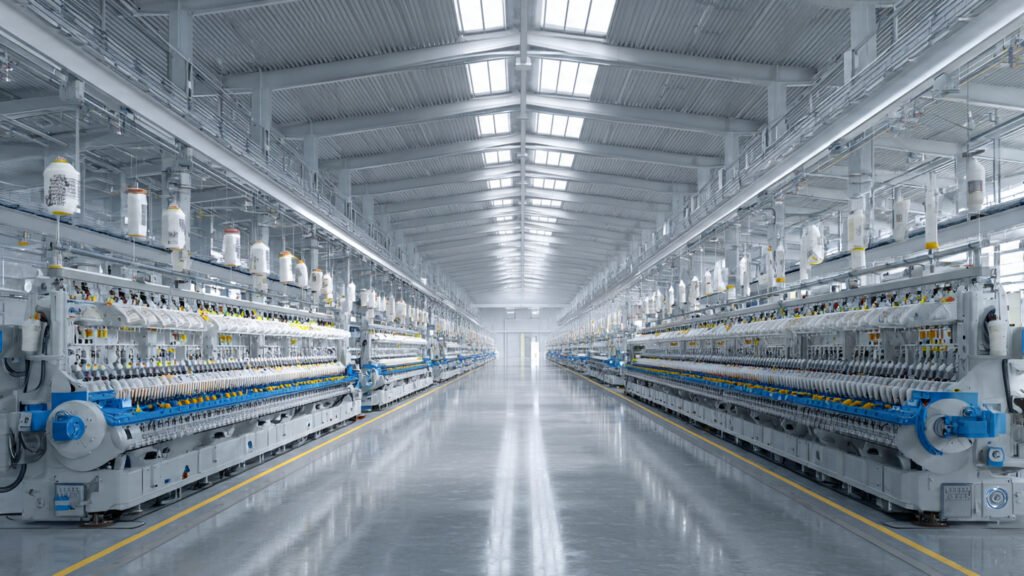
At Ahmed Construction Company, we specialize in designing and constructing spinning and weaving plants that are not only functional but also efficient and sustainable. Our team ensures that every facility meets industrial standards while optimizing workflow, safety, and energy efficiency.From planning the layout to selecting materials and managing the construction process, we handle every aspect to deliver a plant that supports your production goals seamlessly. With years of experience in industrial construction, our human-focused approach ensures practical solutions tailored to your specific requirements.
Specialized Spinning and Weaving Plant Services in Pakistan – Complete Textile Solutions
Textile manufacturing is the backbone of Pakistan’s economy. Spinning converts raw cotton into yarn. Weaving turns yarn into fabric. Both processes demand specialized facilities. Standard industrial buildings cannot meet textile requirements. Humidity must be controlled precisely. Floors must handle heavy machinery without vibration. Production flow must move material efficiently from blow room to finished fabric.
Many construction firms in Pakistan lack textile specialization. They build spinning and weaving plants like general factories. The results are disastrous. Humidification systems cannot maintain proper levels – yarn breaks constantly. Foundations settle unevenly – spinning frames go out of alignment. Production layouts create bottlenecks – material handling costs soar. These failures cost textile manufacturers millions in lost production and quality issues.
Ahmed Construction Company (ACCO) provides specialized spinning and weaving plant services across Pakistan. For over 25 years, we have designed and built textile mills that optimize production, maintain quality, and reduce operating costs. Our integrated team includes textile facility architects, process engineers, structural specialists, and MEP experts who understand textile industry requirements.
Our spinning and weaving plant portfolio includes blow rooms, carding sections, drawing and roving frames, spinning lines, winding, and weaving sheds. We have delivered projects for major textile manufacturers across Faisalabad, Lahore, Karachi, and other industrial zones.
With offices in Lahore (Gulberg-III) and Karachi, we serve textile clients nationwide. Let us show you how textile specialization transforms spinning and weaving facilities.
What Are Spinning and Weaving Plants? A Complete Overview
Spinning and weaving plants have specialized requirements that general industrial construction cannot meet. Understanding these differences is essential for successful spinning and weaving plant projects.
Spinning requires precise humidity control – typically 50-60% relative humidity. Too dry, and fibers break during drafting. Too humid, and machinery corrodes. Standard HVAC cannot maintain these tight ranges. Textile mills need specialized humidification systems with evaporative cooling, misting, or steam injection.
Heavy machinery foundations are critical. Spinning frames weigh tons and operate at high speeds (15,000-25,000 RPM). Vibration transmits through floors, affecting adjacent machines and reducing yarn quality. Foundations must be isolated, mass concrete with vibration-dampening materials. Looms generate similar vibration issues.
Process flow dictates layout. Spinning follows specific sequences: blow room (cleaning and blending), carding (fibers alignment), drawing (parallelizing), roving (reducing size), spinning (twisting into yarn), winding (packaging). Weaving requires warp preparation, sizing, and looms. Material movement must be efficient – typically using carts or automated systems.
In Pakistan, the textile industry remains a manufacturing cornerstone. Faisalabad alone hosts hundreds of spinning and weaving units. ACCO’s approach to spinning and weaving plant integrates architectural engineering with textile process expertise.
Our building design team collaborates with textile process consultants. We create architectural drafting that incorporates equipment layouts and material flow. Our 3D architectural walkthrough lets you visualize production workflows before construction.
ACCO: Your Trusted Partner for Spinning and Weaving Plant Services Across Pakistan
Ahmed Construction Company (ACCO) has been a leader in Pakistan’s textile construction sector for over 25 years. Our headquarters in Gulberg-III, Lahore, and our Karachi office serve textile clients nationwide. We bring specialized textile industry expertise to every spinning and weaving project.
Our client list includes major textile manufacturers alongside prestigious names like Meezan Bank, Bata, and BUITMS. This diversity demonstrates our capability across sectors, but textile work remains a core specialization.
What makes ACCO different for spinning and weaving plant services is our integrated textile expertise. We are not just architects or contractors. We are a full-service firm offering textile facility design, process engineering, structural engineering, MEP systems, humidification, and construction – all in-house.
This integration matters enormously for textile mills. When our industrial architects design spinning sections, our process engineers simultaneously plan blow room-to-spinning flow. When our structural team designs spinning frame foundations, they incorporate vibration isolation and precise alignment. No coordination gaps. No finger-pointing between consultants. Just seamless delivery of efficient, productive textile facilities.
We also provide detailed architectural drafting and shop drawings for every textile project. These documents support equipment installation, utility connections, and regulatory approvals. Our building design team ensures every square foot serves production efficiency.
Our Complete Spinning and Weaving Plant Services
ACCO delivers end-to-end design and construction services for textile spinning and weaving facilities. Below is our comprehensive service breakdown for spinning and weaving plant projects.
Spinning Mill Process Design
Our textile engineers design complete spinning lines – blow room (cleaning and blending), carding (fiber alignment), drawing (parallelizing), roving (reducing size), spinning (twisting into yarn), winding (packaging). We optimize material flow between stages.
Weaving Shed Design
Weaving requires specialized facilities. Our team designs warp preparation areas, sizing machines, and loom sheds. We plan air jet, rapier, or projectile looms with proper vibration isolation. Warp beam storage and cloth inspection areas integrated.
Heavy Machinery Foundations
Spinning frames and looms need specialized foundations. Our architectural engineering team designs mass concrete foundations with vibration isolation, precise alignment tolerances, and access pits for under-machinery cleaning. Foundations for cards, draw frames, and roving frames.
Textile Humidification Systems
Precise humidity is critical. Our MEP team designs humidification systems – evaporative cooling for dry climates, misting systems, or steam injection. We maintain 50-60% RH ±2% with temperature control (typically 25-30°C). Monitoring systems ensure consistency.
Dust Collection & Waste Handling
Textile processing generates dust and waste. Our team designs dust collection at blow room, carding, and spinning. Waste handling systems for comber noils, fly, and floor sweeps. Bale presses for waste packaging.
Utility Systems for Textile Mills
Textile mills need robust utilities. Our MEP team designs high-capacity electrical distribution (transformers, switchgear, panel boards), compressed air systems for automatic winders and looms, lighting (typically 400-500 lux in production areas), and fire protection (sprinklers, dust explosion prevention).
Why Choose ACCO? A Direct Comparison
Not every firm can deliver successful spinning and weaving plant projects. Here is how ACCO compares to typical alternatives.
| Feature | ACCO | Typical Contractor |
|---|---|---|
| Textile Industry Experience | 25+ years, multiple spinning/weaving plants | Limited or no textile specialization |
| Spinning Frame Foundations | Mass concrete with vibration isolation, precise alignment | Standard floors – settling causes alignment loss, yarn defects |
| Humidification Systems | 50-60% RH ±2% – evaporative cooling, misting, steam | Standard HVAC – RH too low, fiber breaks; too high, corrosion |
| Process Flow Design | Blow room → carding → drawing → roving → spinning → winding | Generic layout – inefficient material movement |
| Dust Collection | Blow room, carding, spinning dust and waste handling | Minimal – dust accumulation, fire risk, quality issues |
| Weaving Shed Design | Vibration isolation for looms, warp preparation, sizing | Standard shed – loom vibration affects adjacent machines |
| 3D Visualization for Process Flow | 3D architectural walkthrough – test material flow, machine access | Rarely offered – flow issues discovered after opening |
| Project Management | Textile-dedicated project managers | General construction – textile needs overlooked | Equipment Coordination | Work with textile machinery vendors (spinning frames, looms) | No coordination – equipment may not fit, foundations incorrect |
| Coverage Areas | Lahore, Karachi, Faisalabad, nationwide | Usually local only |
Our 6-Step Spinning and Weaving Plant Process
Textile mill construction demands rigorous process management. Here is our proven approach for spinning and weaving plant projects.
Step 1: Production Requirements & Site Analysis
We meet with textile manufacturers to understand yarn counts, spinning capacity (spindles), weaving capacity (looms, width), equipment specifications, and process requirements. Our team analyzes your site for access, utilities, and expansion potential.
Step 2: Process Flow Design & Layout Planning
Our textile engineers develop process flow diagrams from bale opening to finished yarn or fabric. We create layout options with equipment placement, material handling, and waste storage. Production staff review and provide feedback on operational efficiency.
Step 3: Detailed Design & Architectural Drafting
After layout approval, our team produces complete textile facility architectural drafting packages. These include floor plans, equipment foundation details, humidification ductwork, dust collection, and utility layouts. We coordinate all disciplines.
Step 4: 3D Architectural Walkthrough & Process Simulation
We create a photorealistic 3D architectural walkthrough of your spinning and weaving plant. Production managers walk through virtually, testing material flow, machine access, and cleaning procedures. Does cotton flow efficiently from blow room to cards? Do looms have adequate access? Changes happen in 3D – not after construction.
Step 5: Approvals & Pre-Construction
Our team submits documentation to building authorities and environmental regulators. We manage the approval process. Simultaneously, we coordinate with textile machinery vendors to verify equipment dimensions, foundation requirements, and utility needs.
Step 6: Construction, Commissioning & Handover
Our textile construction team executes the project following approved drawings and schedule. We maintain rigorous quality control with specialized inspections for spinning frame foundations, humidification systems, dust collection, and electrical systems. After completion, we commission all systems and conduct final walkthroughs with production staff.
Why Pakistani Textile Manufacturers Nationwide Choose ACCO
Pakistan’s textile industry drives exports and employment. Faisalabad, Lahore, Karachi, and other industrial zones host thousands of spinning and weaving units. Modernization and expansion require specialized industrial construction – not standard building contractors.
ACCO has delivered spinning and weaving plant projects across Pakistan’s major textile regions. Our portfolio includes blow rooms, carding sections, spinning lines, winding departments, and weaving sheds. We understand the unique requirements of different yarn counts and fabric constructions.
Our industrial expertise extends beyond textile to include other manufacturing sectors. This broad industrial knowledge informs our textile work. We bring best practices from multiple manufacturing sectors to every spinning and weaving project.
Our international experience in the UAE, UK, Saudi Arabia, Canada, and the USA brings global textile industry standards to Pakistani facilities. Yet we know local conditions – supply chains, labour skills, humidity patterns – intimately. This combination delivers textile mills that compete globally.
ACCO by the Numbers: Textile Industry Excellence
Numbers demonstrate our textile capability clearly.
- 25+ years of textile construction experience in Pakistan
- 50+ spinning and weaving plants designed and constructed
- 500,000+ spindles installed across ACCO-built spinning mills
- 1,000+ looms installed across ACCO-built weaving sheds
- 100+ humidification systems designed and validated
- 2 offices in Lahore and Karachi serving nationwide textile clients
- 100% humidity control reliability across all textile projects
These numbers represent real textile mills producing real yarn and fabric. When you need spinning and weaving plant services delivered professionally, choose ACCO.
Frequently Asked Questions About Spinning and Weaving Plants
1. How long does spinning plant construction take?
Timelines vary with capacity. A small spinning plant (10,000 spindles) typically takes 12-15 months. A medium plant (25,000 spindles) takes 15-18 months. A large spinning mill (50,000+ spindles) takes 18-24 months. Weaving sheds similarly sized take 12-18 months. We provide detailed schedules during feasibility.
2. How do you control humidity in spinning and weaving plants?
We design humidification systems for 50-60% RH ±2%. Options include evaporative cooling (efficient in dry climates like Faisalabad), misting systems (medium efficiency), and steam injection (precise control). Systems include monitoring and automatic adjustment. Proper humidity reduces fiber breakage by 30-50%.
3. How do you design spinning frame foundations?
Our structural engineers design mass concrete foundations (typically 12-18 inches thick) isolated from surrounding slabs, with vibration-dampening pads under frame feet, precise alignment tolerances (within 0.1mm over frame length), and access pits for under-frame cleaning. Foundations prevent vibration transmission to adjacent frames.
4. What dust collection do you provide for spinning mills?
Dust collection at all dust-generating points – blow room cleaners and openers, carding machine undercard waste, spinning frame floor sweeps (pneumatic). Systems typically use cyclone pre-separators and bag filters. Collected waste (comber noils, fly) baled for sale to lower-grade yarn producers.
5. Do you provide 3D walkthroughs for textile mills?
Yes. Every spinning and weaving plant project includes a detailed 3D architectural walkthrough. Production managers walk through virtually, testing material flow, machine access, and cleaning procedures. This service prevents costly operational problems after opening. Many textile clients use our 3D visualizations for worker training before the facility is built.
6. What utilities do spinning and weaving plants need?
Spinning plants need high-capacity electrical (typically 500-2,000 kW depending on spindle count), compressed air (for automatic winders), lighting (400-500 lux), humidification systems, dust collection. Weaving plants need additional compressed air (for air jet looms) or loom drives (for rapier/projectile). All utilities integrated.
7. How much does a spinning or weaving plant cost?
Costs vary with capacity and equipment. A small spinning plant (10,000 spindles) building only might cost PKR 200-300 million. Complete plant with imported machinery ranges PKR 500 million-1 billion. A weaving shed (100 looms) building costs PKR 150-250 million. Complete with looms PKR 400-800 million. Contact us for a detailed feasibility assessment based on your specific requirements.
Ready to Build a Productive Textile Mill? Contact ACCO Today
Spinning and weaving demands specialized facilities. Standard industrial construction leads to humidity problems, foundation failures, inefficient layouts, and high operating costs – all affecting your yarn quality and fabric production. Your textile mill deserves better.
ACCO brings specialized textile industry expertise to every spinning and weaving plant project. From blow room to weaving shed, we deliver facilities designed for efficient textile production. Our integrated team handles everything – process design, textile architecture, structural engineering, humidification systems, and construction.
With 25+ years of experience, in-house textile specialists, and a proven track record across Pakistan’s textile sector, ACCO is your trusted partner for spinning and weaving plant services. Do not risk productivity with inexperienced builders. Choose textile industry specialists.
Call us today: +92 322 800 0190 or +923 111 749 849
Email: info@acco.com.pk
Visit our Lahore office: Office 2, 3rd Floor, Bigcity Plaza, Gulberg-III
Request your textile mill consultation online: https://acco.com.pk/contact-us/
We are available Monday to Saturday, 9:00 AM to 6:30 PM. Let us build a spinning and weaving plant that maximizes your production efficiency and yarn quality.
Internal links (embedded naturally throughout the content above):
– Learn how our architectural engineering team designs spinning frame foundations and humidification systems.
– Explore our home floor plan design service for residential projects (different from textile).
– See how architectural 3D modeling helps visualize textile production workflows.
– For complex textile mills, ask about our BIM modeling capabilities.
– View examples of our textile projects on our projects page.
– Ready to start your spinning or weaving plant? Contact us for a free consultation.
External authoritative resources (embedded naturally):
– All our textile projects comply with Pakistan Engineering Council (PEC) standards.
– Textile building aspects follow Pakistan Council of Architects and Town Planners (PCATP) guidelines.
– For textile manufacturing standards, refer to Wikipedia’s textile manufacturing overview.