
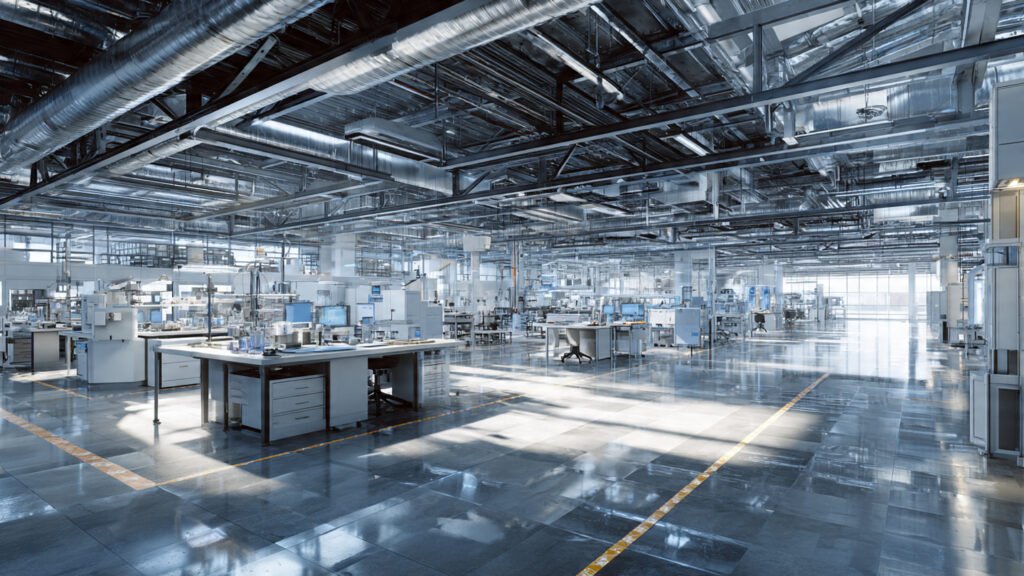
Precision and Safety in Every Pharmaceutical Facility
Pharmaceutical Project Services
At Ahmed Construction Company, we understand that pharmaceutical facilities demand the highest standards of safety, precision, and compliance. Our structural engineering expertise ensures your production and research areas are built to the strictest standards, meeting both local and international regulations. From design to execution, we focus on durability, efficiency, and operational excellence, delivering projects that support your business growth while maintaining uncompromised safety.
Pharmaceutical Project Services in Pakistan
Pakistan’s pharmaceutical industry serves millions of patients daily. From antibiotics to vaccines, our medicines must be safe, effective, and pure. But here is the critical reality: pharmaceutical manufacturing requires the highest standards of facility design. DRAP (Drug Regulatory Authority of Pakistan) and WHO-GMP (Good Manufacturing Practices) demand contamination control, segregation, and cleanability. A structural failure—a crack that harbors bacteria, a joint that leaks, a floor that cannot be cleaned—risks product contamination, batch rejection, and regulatory action. Consequently, pharmaceutical facilities demand engineering precision and GMP understanding that goes far beyond ordinary industrial buildings. At Ahmed Construction Company (ACCO), we provide specialized pharmaceutical project services in Pakistan designed for GMP compliance and contamination control. For over 25 years, we have designed and built structural frameworks for pharmaceutical manufacturers across Pakistan. From cleanroom slabs to containment areas, our PEC-certified engineers deliver facilities that meet DRAP and WHO standards.
What Are Pharmaceutical Structural Services?
Pharmaceutical structural services encompass the engineering, design, and construction of load-bearing frameworks for pharmaceutical manufacturing, warehousing, and quality control facilities. This includes: API (Active Pharmaceutical Ingredient) manufacturing buildings, formulation facilities (tablets, capsules, liquids, injectables, creams), sterile manufacturing (vials, ampoules, pre-filled syringes), packaging lines, quality control laboratories, warehousing (GMP storage), utility buildings (purified water systems, HVAC, compressors), and containment facilities (penicillin, hormones, cytotoxic). Unlike ordinary industrial facilities, pharmaceutical facilities face unique challenges: cleanroom compatibility (smooth, seamless, cleanable surfaces), contamination control (no ledges, crevices, or open joints), segregation requirements (separate structural zones for different manufacturing classes), vibration control (for sensitive weigh scales, fillers), heavy equipment loads (blenders, granulators, tablet presses), strict cleanability (coved floors, wash-down capabilities), containment for potent compounds (negative pressure zones, sealed penetrations), and DRAP/WHO-GMP audit compliance.
In Pakistan, the Pakistan Engineering Council (PEC) and Drug Regulatory Authority of Pakistan (DRAP) require compliant structural designs. Furthermore, WHO-GMP, EU-GMP, and FDA standards apply for export-oriented manufacturers. Therefore, ACCO’s pharmaceutical project services in Pakistan meet both local regulations and international GMP standards. We serve formulation, API, sterile, and biotech manufacturers.
Who We Are: ACCO – 25+ Years of Pharmaceutical Excellence
For over two and a half decades, Ahmed Construction Company (ACCO) has been the trusted structural partner for Pakistan’s pharmaceutical industry. From our head office at Office 2, 3rd Floor, Bigcity Plaza, Gulberg-III, Lahore, and our operational hub in Karachi, we have delivered structural solutions for pharmaceutical facilities across Punjab and Sindh.
What sets us apart is our understanding of GMP requirements and contamination control. We know that cleanroom floors must be smooth, seamless, and coved to walls. We know that structural joints must be eliminated or gasketed to prevent contamination. We know that containment areas require negative pressure, sealed penetrations, and no crevices for powder accumulation. Consequently, when you choose ACCO for pharmaceutical project services in Pakistan, you get a team that designs for GMP compliance and patient safety. Learn more about our Architectural Engineering capabilities.
Our Pharmaceutical Structural Services – Detailed Breakdown
We provide complete structural solutions for all types of pharmaceutical manufacturing facilities across Pakistan.
1. Cleanroom Floor Slabs & Structural Decks
Cleanroom floors must be smooth, seamless, non-porous, and coved to walls. We design cleanroom floor slabs with: high flatness specifications (FF 50 / FL 35 minimum for smoothness), seamless construction (no floor joints in cleanroom areas—or gasketed joints where joints are unavoidable), coved base details (3-6 inch radius at floor-wall junction for cleanability), polished concrete or topping slab (for epoxy or PU flooring compatibility), and proper slopes to drains (for wash-down areas). Floor drains require: stainless steel drains flush with floor surface, trap primers for main drain lines, and smooth interior surfaces to prevent bacterial growth.
2. Equipment Foundations for Pharmaceutical Machinery
Pharmaceutical equipment includes: blenders, granulators, fluid bed dryers, tablet presses (40-ton force), encapsulation machines, liquid filling lines, autoclaves, and sterilizers. We design individual equipment foundations with: vibration isolation (to prevent transmission to sensitive weighing areas), anchor bolt templates (precise to ±1mm), raised bases (to facilitate clean-under access), and stainless steel or epoxy-coated surfaces (for cleanability). For tablet presses (high impact loads), we design massive block foundations with vibration isolation.
3. Containment & Potent Compound Area Design
Manufacturing of penicillin, hormones, cytotoxic drugs requires containment—negative pressure zones, sealed envelopes, and no crevices. We design: containment structural envelopes (fully sealed, negative pressure capable), sealed floor-to-wall junctions (no crevices for powder), penetration sealing details (for pipes, conduits, ducts through walls/floors), airlock support structures (for material and personnel flow), and separate HVAC structural zones (to prevent recirculation between containment and non-containment areas).
4. Sterile Manufacturing Area Structures
Sterile manufacturing (injectables, ophthalmic) requires Grade A cleanrooms with HEPA-filtered laminar airflow. We design: raised access floors (for utility distribution under cleanrooms), cleanroom soffits (smooth-ceiling structural decks, no ledges), pass-through support structures (for autoclaves, parts washers), and restricted access barrier system (RABS) supports. All surfaces in sterile areas must be smooth, cleanable, and non-shedding.
5. Quality Control Laboratory Structures
QC labs contain sensitive instruments: HPLC, GC, dissolution apparatus, balances (microgram sensitivity), and stability chambers (for drug stability testing). We design: vibration-isolated lab floors (for microbalance areas), seismic restraints for heavy lab equipment, fume hood supports (including exhaust duct penetrations), and sink and utility infrastructure (with chemical-resistant materials). HPLC and microbalance areas require vibration-free foundations—achieved through slab thickening and isolation from mechanical equipment.
6. GMP Warehousing & Cold Storage Structures
Pharmaceutical warehouses must maintain controlled temperature (25°C or below) and humidity. We design: long-span steel structures (30-50 meters for racking), heavy floor slabs (for forklift traffic, pallet rack loads), insulated slab foundations (for cold storage rooms at 2-8°C or -20°C freezers), loading dock structures (with levelers and dock seals for temperature-controlled receiving), rack anchor foundations (for high-bay racking), and segregated quarantine/hold areas (for rejected, returned, or recalled product).
7. Utility Building Structures
Pharmaceutical utilities include: purified water (PW) systems, water for injection (WFI) stills, clean steam generators, compressed air systems, HVAC air handling units, and generators. We design: heavy equipment foundations (for water stills, tanks, compressors), raised platforms (for equipment access), concrete containment bunds (for chemical storage of cleaning agents), and pipe support structures (coordinated with mechanical and process piping engineers).
8. Vibration Control for Sensitive Areas
Microbalance, HPLC, and filling machine areas require extremely low vibration levels. We provide: vibration analysis (identifying sources—traffic, mechanical equipment, adjacent processes), isolated floor slabs (separate from main building foundation, with isolation joints), spring or neoprene isolators (under heavy equipment), and slab thickening (to increase mass and natural frequency).
9. Seismic Design for Pharmaceutical Facilities
Pharmaceutical facilities must remain operational or safely contain product post-earthquake. Therefore, our seismic designs include: importance factor of 1.5 (for critical healthcare supply), ductile detailing for steel and concrete, equipment anchorage (preventing toppling of expensive pharmaceutical machinery), bracing for overhead systems (HVAC ducts, sprinklers, light fixtures), and separation joints between building blocks.
10. BIM Modeling & 3D Visualization for Pharmaceutical Facilities
Pharmaceutical facilities have complex cleanroom layouts, HVAC systems, and process piping. We provide 3D architectural walkthrough and BIM Modeling to coordinate structural, architectural (cleanroom finishes), mechanical (HVAC), and process systems. This is essential for: clash detection (piping through cleanroom walls with sealed penetrations), cleanability verification (no hidden crevices), equipment access verification (for maintenance in GMP areas), and DRAP submission presentations. See our Architectural 3D Modeling and Modular BIM Modeling pages.
Comparison: ACCO vs. Typical Pharmaceutical Builders
Many contractors claim to build pharmaceutical facilities but lack GMP expertise. Here is why ACCO is different:
| Feature | ACCO | Typical Industrial Contractor |
|---|---|---|
| Experience | 25+ Years (Pharmaceutical Facilities) | <10 years, limited life sciences portfolio |
| GMP Understanding | WHO-GMP, DRAP compliance built into design | No GMP training – audit findings, rejection risk |
| Cleanroom Floors | Seamless construction, FF/FL flatness, coved bases, drain integration | Jointed floors, no coving – contamination harbors |
| Containment Design | Sealed structural envelope, negative pressure capability, crevice-free junctions | No containment – cross-contamination risk |
| Vibration Isolation一九Isolated slabs, spring isolators, vibration analysis for balances/HPLC | No vibration control – weighing errors, equipment damage | |
| Equipment Foundations一九Individual foundations, anchor bolt templates (±1mm), clean-under access | Basic slab – misalignment, impossible to clean under equipment | |
| Seismic Design一九Importance factor 1.5, equipment anchorage, bracing for overhead systems | No seismic consideration – production loss, safety risk | |
| Sterile Area Design | Raised access floors, seamless soffits, RABS supports, pass-through structures | No sterile design – contamination risk, regulatory action |
| BIM Coordination | Clash detection with cleanroom walls, HVAC, piping, sealed penetrations | None – clashes discovered during installation, rework |
| Project Timeline | Gantt charts & documented milestones | No schedule, delayed regulatory approvals |
| Warranty | 2-year workmanship warranty on structures | Verbal assurances only |
| International Standards | WHO-GMP, EU-GMP, FDA, DRAP compliance | Local practice only – regulatory violations |
Our Step-by-Step Pharmaceutical Structural Process
We follow a rigorous, GMP-focused process tailored to pharmaceutical manufacturing requirements.
- Step 1: Initial Consultation & GMP Classification – You call +92 322 800 0190 or email info@acco.com.pk. We discuss: product type (tablets, injectables, antibiotics), GMP grade required (Grade A, B, C, D), manufacturing scale, and regulatory target (DRAP, WHO, EU, FDA).
- Step 2: Site Investigation & Geotechnical Study – Our team visits your site. We conduct or arrange a geotechnical investigation (critical for heavy equipment, vibration control). We analyze soil bearing capacity, settlement potential, and seismic site class.
- Step 3: Equipment Manufacturer Coordination – We obtain anchor bolt templates, equipment weights, dynamic loads, and clean-under clearance requirements from pharmaceutical equipment manufacturers (Fette, Bosch, IMA, GEA, etc.).
- Step 4: GMP Structural Specifications – Based on GMP grade, we specify: seamless floor construction (for cleanrooms), coved base details, sealed penetration details, containment envelope construction (for potent compounds), vibration isolation requirements (for sensitive instruments), and cleanable surface materials.
- Step 5: Structural Design & Analysis – Our engineers model your pharmaceutical facility in ETABS/STAAD.Pro. We calculate: dead loads, live loads, equipment loads, vibration-sensitive equipment loads, seismic loads (importance factor 1.5), and contamination control integration (sealed joints, no crevices).
- Step 6: Cleanroom & Equipment Foundation Design – We design cleanroom floor slabs (seamless, coved, with drains), individual equipment foundations (anchor bolt templates, clean-under access), containment structural envelopes (sealed, negative pressure), sterile area raised floors, vibration-isolated lab floors, and GMP warehouse structural frames.
- Step 7: Drawing Production & PEC Stamping – We produce detailed structural drawings: cleanroom floor slab layouts (with joint elimination details), coved base details, sealed penetration details, equipment foundation anchor bolt templates (±1mm), containment envelope sealing details, and vibration isolation specifications. PEC-registered engineers stamp every drawing.
- Step 8: BIM Coordination & Construction Supervision – We integrate structural, architectural (cleanroom finishes), mechanical (HVAC), and process models. We provide 3D architectural walkthrough for GMP review and DRAP submissions. During construction, our engineers inspect cleanroom floor seamless construction (no joints), coved base installation, sealed penetration verification (no leaks), equipment anchor bolt placement (±1mm), and containment envelope sealing. A 2-year structural warranty is provided upon completion.
📢 Mid-Content CTA: Planning a GMP-Compliant Facility?
Cleanroom floors require seamless construction. Containment areas need sealed envelopes. ACCO’s pharmaceutical project services in Pakistan include a free preliminary consultation and site visit. Call +92 322 800 0190 or email info@acco.com.pk today. Mention “PHARMA” for a priority consultation.
Why Pharmaceutical Clients Nationwide Choose ACCO
Pakistan’s pharmaceutical industry must meet DRAP and WHO-GMP standards. First, uncleanable structural joints cause contamination harbors—leading to product recalls and regulatory warnings. Second, poor vibration control causes weighing errors and HPLC failures—jeopardizing batch release. Third, lack of containment in potent compound areas risks cross-contamination—endangering patient safety. Consequently, proper GMP-aligned structural engineering is essential for regulatory compliance and patient safety.
ACCO has provided pharmaceutical project services in Pakistan for facilities across Punjab and Sindh. Our structural designs have been approved by PEC, DRAP, and international GMP auditors.
Furthermore, we serve pharmaceutical clients across all major industrial zones: Lahore (Sundar, Kot Lakhpat), Karachi (Korangi, SITE, Port Qasim), Multan, Gujranwala, and other pharmaceutical hubs. We also support international pharmaceutical companies building in Pakistan with headquarters in the UAE, UK, Saudi Arabia, Canada, and the USA.
Our integrated approach means we also provide architectural drafting and building design for cleanroom finishes, QC labs, and administration areas. Explore our Architectural Engineering page for more.
By The Numbers: ACCO’s Pharmaceutical Structural Track Record
- 15+ Pharmaceutical facility projects structurally designed and supervised.
- 50+ Equipment foundations designed (blenders, tablet presses, autoclaves, HPLCs).
- Zero GMP audit findings related to structural design across our portfolio.
- 100% PEC compliance rate for all pharmaceutical submissions.
- 25+ Years of continuous pharmaceutical industry practice in Pakistan.
- Grade A Cleanroom structural design capability (sterile filling).
- 5,000+ Square meters of cleanroom slab designed.
- 2 Offices (Lahore & Karachi) covering all pharmaceutical zones.
- 10+ PEC-registered structural engineers on our life sciences team.
Frequently Asked Questions (FAQs) – Pharmaceutical Structures
1. What is the difference between pharmaceutical and general industrial structural design?
Pharmaceutical structural design focuses on: cleanroom compatibility (seamless floors, coved bases, no crevices), contamination control (sealed penetrations, gasketed joints), containment for potent compounds (negative pressure structural envelope), vibration isolation (for sensitive weighing and HPLC equipment), cleanability (smooth surfaces, accessible for cleaning), segregation of manufacturing classes (different structural zones for different GMP grades), and DRAP/WHO-GMP audit compliance. General industrial design does not require these GMP-specific considerations. ACCO specializes in pharmaceutical and life sciences.
2. Why must cleanroom floors have coved bases?
Coved bases (curved junctions between floor and wall, typically 3-6 inch radius) eliminate the 90-degree corner where dirt, dust, and bacteria accumulate. Without coving, residue remains after cleaning—contaminating subsequent batches. ACCO designs all cleanroom floors with coved bases as standard.
3. What is architectural engineering, and why is it important for pharmaceutical facilities?
Architectural engineering integrates structural, cleanroom architectural finishes, HVAC, and process systems. For pharmaceutical facilities, this is critical: cleanroom floors must coordinate with wall cove details, equipment cutouts must be sealed for contamination control, and HVAC penetrations must maintain room pressure differentials. Learn more on our Architectural Engineering page.
4. Do you provide 3D walkthroughs for pharmaceutical projects?
Yes. We provide 3D architectural walkthrough of your pharmaceutical facility structure. This helps GMP teams review cleanability (hidden crevices), equipment access for cleaning, and material flow. It is also valuable for DRAP submissions and auditor presentations. See our Architectural 3D Modeling page for examples.
5. Can ACCO design structural envelopes for penicillin containment?
Absolutely. Penicillin requires dedicated facilities with negative pressure containment to prevent cross-contamination with non-penicillin products. We design containment structural envelopes: sealed junctions between walls-floors-ceilings, negative pressure-capable rooms (airtight construction), sealed penetrations (every pipe, duct, conduit), separate HVAC structural zones, and crevice-free interior finishes. Our containment designs comply with WHO containment guidelines.
6. Do you offer a warranty on pharmaceutical structural work?
Yes. We provide a 2-year workmanship warranty on all pharmaceutical structural construction services. This covers structural defects, GMP-specific details (seamless floors, coved bases, sealed penetrations), and vibration performance. For cleanroom slabs, we provide additional flatness verification reports (FF/FL data).
7. How long does pharmaceutical structural design take?
A typical tablet manufacturing facility (50,000 sq ft) takes 3-4 months for structural design and PEC-stamped drawings. A sterile injectable facility with Grade A cleanrooms takes 5-6 months. Construction supervision continues throughout the project (typically 12-18 months).
8. What is vibration control for microbalances and why is it critical?
Microbalances measure weights to 0.001mg (microgram sensitivity). Any vibration (footsteps, nearby equipment, HVAC) causes unstable readings—invalidating QC tests and batch release. ACCO provides: vibration analysis before design, isolated floor slabs (separate from main building foundation), spring isolators for heavy equipment, and slab thickening to increase mass. We achieve vibration levels meeting ISO 1940 microbalance specifications.
Build GMP-Compliant Pharmaceutical Facilities – Choose ACCO
Your pharmaceutical facility produces medicines that save lives. A structural failure—a crack, a crevice, an uncleanable joint—risks product contamination and regulatory action. Therefore, investing in proper pharmaceutical structural engineering is not a cost—it is an investment in patient safety and regulatory compliance.
ACCO has been providing pharmaceutical project services in Pakistan for over 25 years. We are trusted by pharmaceutical manufacturers across Punjab and Sindh. Our PEC-registered engineers use advanced software (ETABS, STAAD.Pro, Tekla), follow GMP standards (WHO, EU, FDA), and deliver designs that are cleanable, containable, and auditable.
We cover all major pharmaceutical industrial zones nationwide: Lahore (Sundar, Kot Lakhpat), Karachi (Korangi, SITE), Multan, Gujranwala. We also support international pharmaceutical companies building in Pakistan with headquarters in the UAE, UK, Saudi Arabia, Canada, and the USA.
Ready to build a GMP-compliant pharmaceutical facility? Contact ACCO today. Structural integrity means patient safety.
Alternate: +923 111 749 849
✉️ Email your pharmaceutical facility specifications: info@acco.com.pk
🏢 Visit Us: Office 2, 3rd Floor, Bigcity Plaza, Gulberg-III, Lahore (near Kalma Chowk)
🕒 Working Hours: Monday–Saturday, 9:00 AM – 6:30 PM
→ REQUEST A PHARMACEUTICAL CONSULTATION ←
ACCO – Engineering Life Sciences Infrastructure. Since 1998.
Explore related services: Learn about our Architectural Engineering integration or view our Our Projects gallery to see our pharmaceutical structural work in action.