
Engineering Excellence for Industrial Spaces
Textile Mill Project
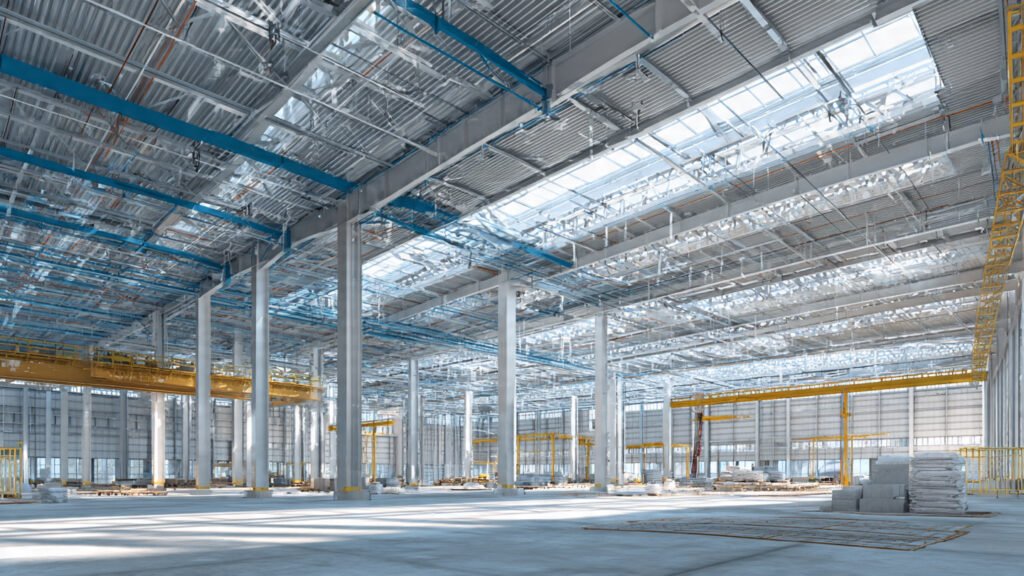
At Ahmed Construction Company, we bring expertise and precision to every industrial project. Our textile mill construction focuses on durability, efficiency, and safety, ensuring a facility that meets both operational and structural standards. From initial design to final execution, we prioritize quality workmanship and timely delivery, making your industrial vision a reality.
Textile Mill Project Services in Pakistan
Faisalabad—the Manchester of Pakistan. Karachi’s industrial zones. Lahore’s growing textile sector. Pakistan’s textile industry is the backbone of our economy, contributing over 60% of exports. But here is the critical reality: textile mills are among the most demanding industrial environments. Spinning machines vibrate 24/7. Weaving sheds require perfect humidity control. Processing units use aggressive chemicals. A structural failure in a textile mill means production stops, export orders are lost, and jobs are at risk. Consequently, textile mill structures demand engineering expertise that goes far beyond ordinary industrial buildings. At Ahmed Construction Company (ACCO), we provide specialized textile mill project services in Pakistan designed for the unique demands of textile production. For over 25 years, we have designed and built structural frameworks for textile mills across Faisalabad, Karachi, and Lahore. From spinning machinery foundations to humid weaving sheds, our PEC-certified engineers deliver textile mills that produce consistently.
What Are Textile Mill Structural Services?
Textile mill structural services encompass the engineering, design, and construction of load-bearing frameworks for textile manufacturing facilities. This includes: spinning units (ring frames, open-end rotors), weaving sheds (looms, preparatory machinery), processing houses (dyeing, printing, finishing), garment factories (cutting, sewing), warehouses (fabric, yarn, finished goods), and utility buildings (boiler houses, ETPs, compressors). Unlike ordinary industrial facilities, textile mills face unique challenges: continuous vibration (spinning frames operate 24/7/365), humid environments (weaving sheds require 70-85% relative humidity, which corrodes steel), heavy machinery loads (spinning frames weigh 5-10 tons each, hundreds per shed), precise alignment requirements (roller alignment affects yarn quality), chemical exposure (dyeing processes use acids, alkalis, reducing agents), and fire safety (cotton dust is highly flammable).
In Pakistan, the Pakistan Engineering Council (PEC) and textile industry standards require compliant structural designs. Furthermore, international standards (ACI 318 for concrete, AISC for steel, NFPA for fire safety) apply for export-oriented mills. Therefore, ACCO’s textile mill project services in Pakistan meet both local regulations and international best practices. We serve spinning, weaving, processing, and garment manufacturing sectors.
Who We Are: ACCO – 25+ Years of Textile Industry Excellence
For over two and a half decades, Ahmed Construction Company (ACCO) has been the trusted structural partner for Pakistan’s textile industry. From our head office at Office 2, 3rd Floor, Bigcity Plaza, Gulberg-III, Lahore, and our operational hub in Karachi, we have delivered structural solutions for textile mills across Faisalabad, Lahore, Karachi, Multan, and other textile hubs.
What sets us apart is our understanding of textile manufacturing processes and environmental demands. We know that spinning floors must be perfectly level (within 2mm over 100 meters) to maintain yarn quality. We know that weaving sheds require corrosion-resistant steel (due to high humidity). We know that processing areas need acid-resistant concrete and secondary containment for chemicals. Consequently, when you choose ACCO for textile mill project services in Pakistan, you get a team that designs for textile production quality and reliability. Learn more about our Architectural Engineering capabilities.
Our Textile Mill Structural Services – Detailed Breakdown
We provide complete structural solutions for all types of textile manufacturing facilities across Pakistan.
1. Spinning Mill Floor Slabs for Ring Frames
Spinning frames (ring frames, open-end rotors) require perfectly level floors to maintain roller alignment. We design heavy-duty reinforced concrete floor slabs with: high flatness specifications (FF 50 / FL 35 minimum), vibration isolation (to transfer machine vibration without causing resonance), heavy load capacity (5-15 kN/sqm depending on machine spacing), shrinkage reinforcement (to prevent cracking), and dust-proof surfaces (to maintain clean room conditions). For hundreds of machines per shed, levelness is critical—misalignment causes yarn breakage and quality defects.
2. Weaving Shed Humid Environment Design
Weaving sheds operate at 70-85% relative humidity (to maintain yarn elasticity). This environment corrodes ordinary steel. We design: concrete structures (preferred for weaving sheds) with corrosion-resistant reinforcement (epoxy-coated rebar), steel structures (if used) with hot-dip galvanizing (zinc coating) or stainless steel, roof structures designed for humid air condensation (sloped for drainage), and foundation details for heavy looms (each weaving loom weighs 3-8 tons, hundreds per shed).
3. Processing House Chemical-Resistant Structures
Dyeing and finishing use aggressive chemicals: acids (acetic, formic), alkalis (caustic soda), reducing agents (hydrosulfite), and salts. We design: acid-resistant concrete floors (with chemical-resistant aggregates, epoxy coatings), stainless steel or coated steel platforms (for machine access), secondary containment floors (with curbs and drains to collection sumps), chemical storage tank foundations (with spill containment), and effluent treatment plant structures (corrosion-resistant).
4. Heavy Machinery Foundations for Textile Equipment
Textile machinery includes: blow room lines (heavy openers, cleaners, mixers), carding machines (vibrating dynamic loads), draw frames, combers, speed frames, ring frames (hundreds of spindles), winding machines, and autoconers. We design individual machine foundations with: mass calculations (to control vibration), spring isolators (for vibration-sensitive machines), anchor bolt templates (precision alignment), and grouting details (epoxy grout for leveling). For blow room and carding, we design vibration isolation foundations to prevent transmission through the floor slab.
5. Overhead Conveyor & Duct Support Structures
Textile mills have overhead systems: lint collection ducts (for dust control), compressed air lines, electrical cable trays, fire protection piping (sprinklers), and HVAC ductwork (for temperature/humidity control). We design steel support structures for overhead systems: roof-mounted or column-mounted supports, seismic bracing (where required), corrosion protection (galvanized for humid areas), and coordination with MEP engineers.
6. Warehouses for Yarn, Fabric & Finished Goods
Textile warehouses store rolls of fabric, cones of yarn, and finished garments. We design: long-span steel structures (30-50 meters clear span for racking), heavy floor slabs (for forklift traffic and rack loads), loading dock structures (dock leveler pits, ramps), rack anchor foundations (for pallet racking), and fire-rated compartment walls (for high-value goods).
7. Humidification Plant & Utility Building Structures
Textile mills require humidification plants (to maintain 70-85% RH), air compressors, generators, and boiler houses. We design: equipment foundations for humidification units (with vibration isolation), platform structures for compressor and generator access, boiler house structures (with blast-resistant design for gas-fired boilers), and cooling tower foundations. For boiler houses, see our Boiler House services.
8. Fire Safety & Dust Explosion Protection
Cotton dust is highly flammable. Textile mills have high fire risk. We design: fire-rated compartment walls (2-4 hour ratings between process areas), fire sprinkler support structures (roof-mounted pipe supports), fire escape staircases (OSHA-compliant), dust collection system supports (lint filters, cyclone separators), and explosion venting panels where required.
9. Seismic Design for Textile Mills
Textile mills contain expensive machinery. Post-earthquake production interruption costs millions. Therefore, our seismic designs include: importance factor of 1.25 (for production continuity), ductile detailing for steel and concrete, equipment anchorage (to prevent toppling of heavy frames), pipe support bracing (for overhead systems), and seismic separation joints (between different building blocks).
10. BIM Modeling & 3D Visualization for Textile Mills
Textile mills have dense machinery layouts and overhead systems. We provide 3D architectural walkthrough and BIM Modeling to coordinate structural, mechanical, electrical, and piping components. This is essential for: clash detection (steel vs. ducts, pipes vs. machines), equipment access verification, maintenance route planning, and client presentations. See our Architectural 3D Modeling and Modular BIM Modeling pages.
Comparison: ACCO vs. Typical Textile Mill Builders
Many contractors claim to build textile mills but lack specialized expertise. Here is why ACCO is different:
| Feature | ACCO | Typical Industrial Contractor |
|---|---|---|
| Experience | 25+ Years (Textile Mills across Pakistan) | <10 years, limited textile sector portfolio |
| PEC Registration | In-house registered structural engineers | No registered engineer on staff (illegal) |
| Spinning Floor Flatness | FF 50 / FL 35, level to ±2mm over 100m, vibration isolation | Ordinary slab – yarn breakage, quality defects |
| Weaving Shed Humid Environment | Epoxy-coated rebar, hot-dip galvanized steel, corrosion-resistant coatings | Ordinary steel/concrete – corrosion within 3 years |
| Processing Chemical Resistance一九Acid-resistant concrete, epoxy coatings, secondary containment | Ordinary concrete – floor failure, chemical leaks | |
| Machinery Foundations | Individual foundations, anchor bolt templates, vibration isolation | Basic slab – misalignment, vibration damage |
| Dust Collection Supports一九Steel structures for lint filters, explosion venting coordination | No supports – inefficient dust control, fire risk | |
| Fire Safety一九Fire-rated walls, sprinkler supports, escape stairs per NFPA | No fire protection – high fire risk | |
| Seismic Design一九Importance factor 1.25, equipment anchorage, separation joints | No seismic consideration – production loss | |
| BIM Coordination一九Clash detection with machinery, ducts, cable trays | None – clashes discovered during installation | |
| Project Timeline | Gantt charts & documented milestones | No schedule, delayed production start |
| Warranty | 2-year workmanship warranty on structures | Verbal assurances only |
| International Standards | ACI, AISC, NFPA, OSHA compliance | Local practice only – code violations |
Our Step-by-Step Textile Mill Structural Process
We follow a rigorous, quality-controlled process tailored to textile manufacturing requirements.
- Step 1: Initial Consultation & Production Specifications – You call +92 322 800 0190 or email info@acco.com.pk. We discuss: mill type (spinning, weaving, processing, garment), capacity, machinery list (manufacturer models, weights), and site constraints.
- Step 2: Site Investigation & Geotechnical Study – Our team visits your site. We conduct or arrange a geotechnical investigation (critical for heavy machinery foundations). We analyze soil bearing capacity, settlement potential, water table, and seismic site class.
- Step 3: Machinery Manufacturer Coordination – We obtain anchor bolt templates, equipment weights, dynamic loads, and alignment requirements from textile machinery manufacturers (Rieter, Trützschler, Toyota, Picanol, etc.).
- Step 4: Environmental Design Specifications – Based on process type, we specify: floor flatness (FF/FL numbers for spinning), corrosion protection (for weaving humid environment), chemical resistance (for processing), and fire protection (for cotton dust).
- Step 5: Structural Design & Analysis – Our engineers model your textile mill in ETABS/STAAD.Pro. We calculate: dead loads, live loads, machinery loads (static and dynamic), environmental loads (humidity, chemical exposure), wind loads, and seismic loads (importance factor 1.25).
- Step 6: Floor Slab & Foundation Design – We design spinning floor slabs (FF 50/FL 35 flatness), weaving shed structures (corrosion-resistant), processing area chemical-resistant floors, individual machinery foundations (with anchor bolt templates), and warehouse long-span steel structures.
- Step 7: Drawing Production & PEC Stamping – We produce detailed structural drawings: floor slab layouts, foundation plans, steel framing details, anchor bolt templates, corrosion protection specifications, and fire safety details. PEC-registered engineers stamp every drawing.
- Step 8: BIM Coordination & Construction Supervision – We integrate structural, mechanical (HVAC, compressed air), and electrical models. We provide 3D architectural walkthrough for client presentations and machinery layout verification. During construction, our engineers inspect floor slab flatness (FF/FL testing), anchor bolt placement (precision alignment), and corrosion protection application. A 2-year structural warranty is provided upon completion.
📢 Mid-Content CTA: Planning a Textile Mill?
Spinning floor flatness affects yarn quality. Humid environments corrode ordinary steel. ACCO’s textile mill project services in Pakistan include a free preliminary consultation and site visit. Call +92 322 800 0190 or email info@acco.com.pk today. Mention “TEXTILE” for a priority consultation.
Why Textile Industry Clients Nationwide Choose ACCO
Pakistan’s textile sector is highly competitive. Export orders require consistent quality. First, spinning floor flatness affects yarn quality—misalignment of even 2mm causes yarn breakage. Second, weaving shed corrosion reduces structural life—ordinary steel fails within 3 years in 80% humidity. Third, chemical spills in processing areas damage concrete and contaminate soil, leading to EPA penalties. Consequently, proper structural engineering is essential for textile mill profitability and compliance.
ACCO has provided textile mill project services in Pakistan for facilities across Faisalabad, Lahore, Karachi, Multan, and other textile hubs. Our structural designs have been approved by PEC, machinery manufacturers, and export auditors.
Furthermore, we serve textile clients across all major industrial zones: Faisalabad (M3 Industrial City, Khurrianwala), Lahore (Sundar, Kot Lakhpat), Karachi (Korangi, SITE, Landhi), Multan, and Gujranwala. We also support international textile companies building in Pakistan with headquarters in the UAE, UK, Saudi Arabia, Canada, and the USA.
Our integrated approach means we also provide architectural drafting and building design for administrative offices, staff facilities, and warehouses. Explore our Architectural Engineering page for more.
By The Numbers: ACCO’s Textile Mill Structural Track Record
- 30+ Textile mill projects structurally designed and supervised.
- 500+ Spinning frame foundations designed (thousands of spindles).
- 1000+ Weaving loom foundations designed.
- Zero Yarn quality issues due to structural misalignment.
- 100% PEC compliance rate for all textile mill submissions.
- 25+ Years of continuous textile industry practice in Pakistan.
- 2mm Floor levelness precision achieved over 100 meters.
- 85% Relative humidity accommodated (corrosion-resistant design).
- 2 Offices (Lahore & Karachi) covering all textile zones.
- 10+ PEC-registered structural engineers on our textile team.
Frequently Asked Questions (FAQs) – Textile Mill Structures
1. What is the difference between textile mill and general industrial structural design?
Textile mill structural design focuses on: spinning floor flatness (FF 50/FL 35 for ring frame alignment), humid environment corrosion protection (epoxy-coated rebar, galvanized steel), aggressive chemical resistance (acid-resistant concrete for dyeing), continuous vibration (fatigue design for 24/7 machinery operation), heavy machinery foundations (hundreds of frames per shed), and cotton dust fire safety (explosion venting, fire-rated compartments). General industrial design does not require these textile-specific considerations. ACCO specializes in textile manufacturing.
2. How do I get a layout designed for a textile mill?
For textile mill projects, we start with your process flow (blow room → carding → drawing → combing → speed frame → ring frame → winding → weaving/processing). Our Architectural Engineering team develops a functional building design and architectural drafting that optimizes material flow, machinery layout, and worker safety. Our structural engineers then provide the heavy-duty frameworks. Call +92 322 800 0190 to discuss.
3. What is architectural engineering, and why is it important for textile mills?
Architectural engineering integrates structural, mechanical (HVAC for temperature/humidity), electrical, and process systems. For textile mills, this is critical: floor slabs must support heavy ring frames while maintaining flatness, and overhead structures must support lint ducts and sprinklers without sagging. Learn more on our Architectural Engineering page.
4. Do you provide 3D walkthroughs for textile mill projects?
Yes. We provide 3D architectural walkthrough of your textile mill structure. This helps owners visualize machinery layouts, material flow, and worker access. It is also valuable for export buyers and investor presentations. See our Architectural 3D Modeling page for examples.
5. Can ACCO design foundations for high-speed ring frames?
Absolutely. High-speed ring frames (20,000+ RPM) require precise foundations to maintain roller alignment and prevent vibration transmission. We design individual machine foundations with: natural frequency analysis (to avoid resonance), spring isolators or neoprene pads (for vibration isolation), anchor bolt templates (precise to ±1mm), and epoxy grout (for leveling). We have designed foundations for over 500 ring frames.
6. Do you offer a warranty on textile mill structural work?
Yes. We provide a 2-year workmanship warranty on all textile mill structural construction services. This covers structural defects, floor flatness (FF/FL specifications), corrosion protection (coatings, galvanizing), and chemical resistance. For spinning floors, we provide additional flatness verification reports.
7. How long does textile mill structural design take?
A typical spinning mill (25,000-50,000 spindles) takes 3-4 months for structural design and PEC-stamped drawings. A composite mill with spinning, weaving, and processing may take 5-7 months. Construction supervision continues throughout the project (typically 12-18 months).
8. What is FF/FL floor flatness and why is it critical for spinning?
FF (Flatness) measures bumps and dips (smoothness for machinery). FL (Levelness) measures tilt (flatness for roller alignment). For spinning mills, we specify FF 50 / FL 35 minimum. Poor flatness causes: ring frame roller misalignment, yarn breakage, increased doffing time, and reduced production speeds. ACCO designs and supervises spinning floors to achieve these specifications.
Build Efficient, Durable Textile Mills – Choose ACCO
Your textile mill is a multi-billion rupee investment. A structural failure means production stops, export orders are lost, and jobs are at risk. Therefore, investing in proper textile mill structural engineering is not a cost—it is an investment in production quality and export competitiveness.
ACCO has been providing textile mill project services in Pakistan for over 25 years. We are trusted by textile producers across Faisalabad, Lahore, Karachi, Multan, and other textile hubs. Our PEC-registered engineers use advanced software (ETABS, STAAD.Pro, Tekla), follow international codes (ACI, AISC, NFPA, OSHA), and deliver designs that withstand vibration, humidity, chemicals, and heavy daily use.
We cover all major textile industrial zones nationwide: Faisalabad (M3 Industrial City, Khurrianwala), Lahore (Sundar, Kot Lakhpat), Karachi (Korangi, SITE, Landhi), Multan, and Gujranwala. We also support international textile companies building in Pakistan with headquarters in the UAE, UK, Saudi Arabia, Canada, and the USA.
Ready to build a textile mill that produces consistently? Contact ACCO today. Structural integrity means textile quality.
Alternate: +923 111 749 849
✉️ Email your textile mill specifications: info@acco.com.pk
🏢 Visit Us: Office 2, 3rd Floor, Bigcity Plaza, Gulberg-III, Lahore (near Kalma Chowk)
🕒 Working Hours: Monday–Saturday, 9:00 AM – 6:30 PM
→ REQUEST A TEXTILE MILL CONSULTATION ←
ACCO – Engineering Textile Industry Infrastructure. Since 1998.
Explore related services: Learn about our Architectural Engineering integration or view our Our Projects gallery to see our textile mill structural work in action.